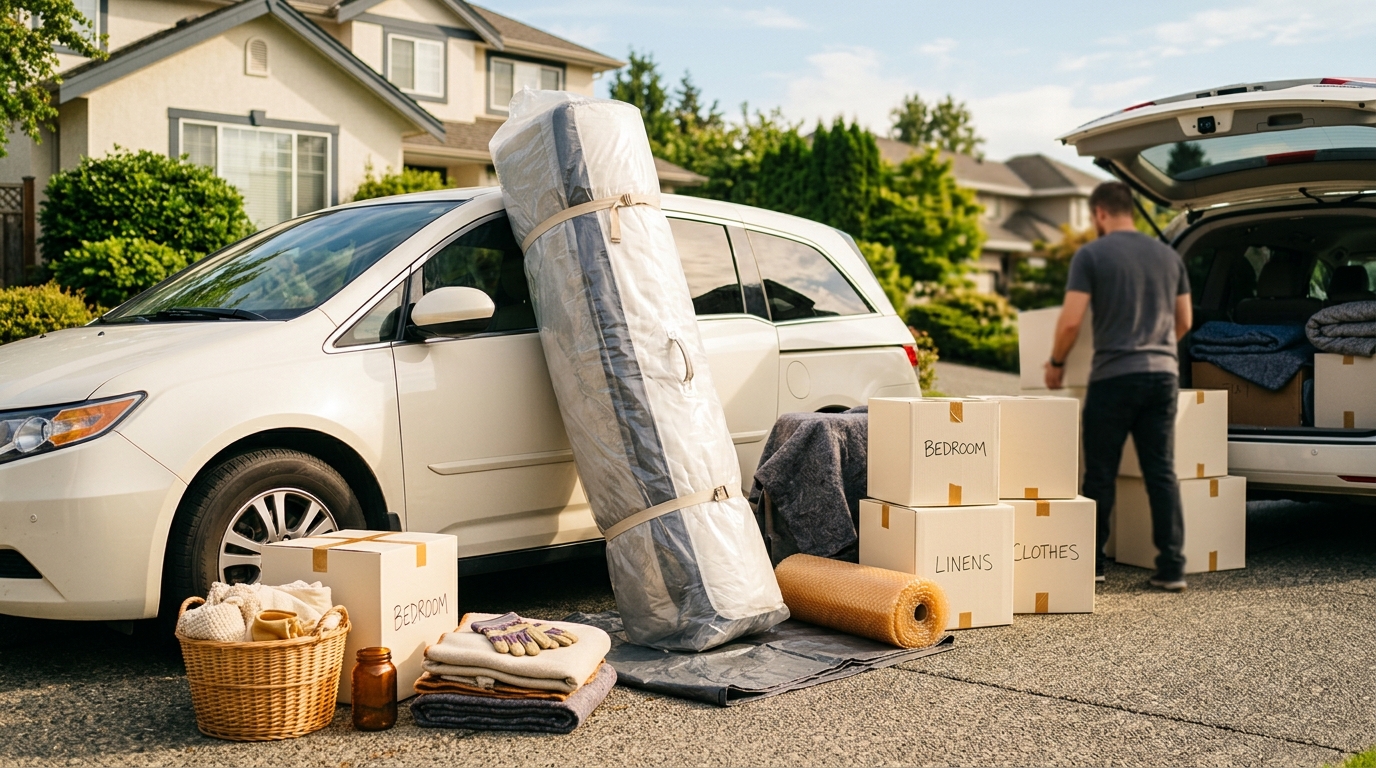
Moving a studio or one-bedroom apartment with professional movers typically costs $300–$900 for a local move and $1,200–$3,500 for a long-distance move, depending on distance, crew size, the time of year, and how much stuff you're bringing. The good news: small moves are the easiest category to control, because every decision you make — what to keep, when to book, how much you pack yourself — has an outsized impact on the final bill.
Here's exactly how those costs break down, what drives them up, and how to keep yours as low as possible.
What does a local studio move actually cost?
For a local move (typically under 50 miles), most professional movers charge by the hour. A studio or one-bedroom apartment usually takes 2–4 hours with a two-person crew.
| Move Size | Crew | Typical Hours | Hourly Rate | Estimated Total |
|---|---|---|---|---|
| Studio / efficiency | 2 movers | 2–3 hrs | $100–$150/hr | $200–$450 |
| Studio + lots of boxes | 2 movers | 3–4 hrs | $100–$150/hr | $300–$600 |
| Large 1-bedroom | 2–3 movers | 3–5 hrs | $120–$180/hr | $360–$900 |
Rates vary meaningfully by market. Movers in Chicago or Boston typically run $130–$160/hr for a two-person crew. Movers in mid-sized metros like Atlanta often come in closer to $100–$130/hr. Most companies also charge a travel fee or minimum — commonly a 1-hour minimum plus 30–60 minutes of travel time built into the bill.
For a deeper look at what pushes hourly rates up or down, our guide on how movers charge by the hour walks through every factor in detail.
What does a long-distance studio move cost?
Long-distance moves (crossing state lines or over 100 miles) are priced by weight and distance, not by the hour. A fully furnished studio typically weighs 1,500–3,000 lbs. Here's what that looks like on the road:
| Distance | Estimated Weight | Typical Cost Range |
|---|---|---|
| 100–300 miles | 1,500–2,000 lbs | $800–$1,500 |
| 300–1,000 miles | 1,500–2,500 lbs | $1,200–$2,200 |
| 1,000–2,500 miles (cross-country) | 2,000–3,000 lbs | $1,800–$3,500 |
Interstate movers are regulated by the FMCSA (Federal Motor Carrier Safety Administration) and must hold a valid USDOT number. By law, they must give you either a binding or non-binding estimate in writing before the move — never accept a verbal quote for a long-distance job. Our guide on binding vs. non-binding moving estimates explains exactly what those terms mean and which protects you better.
What drives the cost of a small move up (or down)?
Factors that push the price higher
- Stairs and elevator waits. No-elevator walkups add labor time fast — many movers charge a stair fee of $50–$75 per flight above the first, or it simply eats into your hourly clock.
- Long carries. If the truck can't park close to the building entrance, a "long carry" fee of $50–$150 is common.
- Moving during peak season. May through August and weekends year-round command 10–20% higher rates. Book a Tuesday or Wednesday in October if you can.
- Last-minute booking. Booking less than a week out often means higher rates or limited crew availability. Two to four weeks' notice is the sweet spot for a small move.
- Packing services. If you want movers to pack your boxes, add $25–$50/hr per packer, plus materials. For a studio, full packing typically adds $150–$400 to the bill.
Factors that bring the price down
- Decluttering before the move. Fewer items = fewer hours = lower bill. Every box you eliminate saves serious money. Our decluttering guide before a move has a room-by-room system that works even in tight spaces.
- Packing yourself. If your boxes are fully packed, taped, and labeled when the crew arrives, they load faster. Movers aren't waiting on you.
- Off-peak timing. Midweek and off-season (September–April, excluding holidays) consistently produce lower quotes.
- Booking a smaller crew. For a true studio with minimal furniture, two movers is almost always the right call. Three movers for a light load just means splitting the same work three ways at higher cost.
DIY vs. hiring movers: which makes sense for a small move?
For a studio or one-bedroom, this is genuinely the closest call in the moving world. Here's how to think about it:
| Option | Typical Cost | Best For |
|---|---|---|
| Rent a truck yourself | $100–$350 (truck + gas + fees) | Physically capable, local move, minimal furniture |
| Hire full-service movers | $300–$900 (local) | Anyone without help, fragile/heavy items, stairs |
| Hybrid (rent truck + hire labor) | $200–$600 | Budget-conscious, wants help loading only |
| Portable container (PODS-style) | $400–$900/month + delivery | Flexible timeline, no helpers, cross-country |
DIY is genuinely worth it if you have two reliable helpers, a ground-floor unit on both ends, and nothing fragile or oversized. The moment you add stairs, a heavy couch, or a cross-town drive through traffic, the math often shifts toward hiring help — especially when you factor in your time, a friend's truck or rental fees, and the risk of an injury or damage you didn't expect.
Our DIY vs. full-service movers guide lays out the full comparison with numbers on both sides.
While you’re reading
Skip the research — let Robert match you with movers.
Free quotes from movers in your area. Pick whichever is easiest.
How to get an accurate quote for a small move
Small moves are notorious for quote surprises — not because movers are dishonest, but because customers underestimate what they have. Before you call anyone, do this:
- Walk every room and write down every piece of furniture. Don't forget the bathroom cabinet, the coat closet, and that stuff under the bed.
- Count your boxes. Estimate how many you'll actually end up with, not how many you have today.
- Note any access issues. Stairs, elevators (and elevator reservation requirements), narrow hallways, street parking vs. a loading dock.
- Ask for a written estimate. For local moves, get an hourly rate plus any flat fees listed separately. For long-distance, insist on a weight-based binding estimate.
- Compare at least two quotes. You can find movers on our directory and read their reviews before calling.
Hidden fees are the biggest gotcha on small moves. Fuel surcharges, stair fees, and minimum-hour rules can quietly add $100–$200 to a bill that looked cheap on paper. Our breakdown of moving hidden fees and surcharges lists the most common ones to ask about before you sign.
Tips for keeping a small move under budget
- Pack everything yourself, completely, before moving day. Nothing slows a crew down more than a half-packed apartment.
- Disassemble furniture ahead of time. Bed frames, shelving units, and desk legs should be broken down before the movers arrive.
- Reserve the elevator (if you have one) in advance. Many buildings require 24–48 hours' notice and a deposit. Missing this step can cost you an hour of waiting time.
- Have your new address and parking situation figured out before moving day. Movers standing around while you sort out where the truck goes is billed time.
- Skip the box rental. For a small move, buying boxes from a hardware store or sourcing free ones from local shops is almost always cheaper than renting.
Frequently asked questions
How long does it take to move a studio apartment?
A studio or small one-bedroom apartment typically takes 2–4 hours with a professional two-person crew, including loading and unloading. If both locations are on upper floors, or if you have a lot of boxes in addition to furniture, budget 4–5 hours. Fully packing everything yourself before the crew arrives is the single most reliable way to stay at the low end of that range.
Is it worth hiring movers for a small apartment?
In most cases, yes — especially if you have any stairs, heavy furniture, or fragile items. For a $300–$600 investment on a local move, you eliminate the risk of injury, damage to your belongings, and the logistical hassle of renting a truck and recruiting friends. Where DIY makes the most sense is a ground-floor-to-ground-floor, short-distance move with minimal furniture and reliable help available.
What's the cheapest way to move a studio apartment?
The cheapest option is almost always a self-move: rent a cargo van or small truck ($80–$150/day), pack everything yourself, and recruit one or two helpers. If you're moving long-distance, a portable container shipped to your new address often beats full-service moving costs by 30–50% for small loads. You can also browse movers by state to compare rates in your market — prices vary significantly by region.
Do movers charge a minimum for small moves?
Yes, nearly all local movers have a minimum charge — typically 2–3 hours of labor, regardless of how fast the actual move goes. This minimum is standard across the industry and is usually disclosed in the estimate. Always ask about the minimum before booking, especially for a very small move that might only take 90 minutes physically.
When is the best time to book movers for a small apartment?
Book 2–4 weeks in advance for a weekend move, or as little as 1 week out for a weekday move (availability is better). Moving Tuesday through Thursday in September, October, or November typically gets you the best rates and the most crew options. Avoid the last weekend of any month — that's when leases turn over and movers are in peak demand, often at premium prices.
What should I ask before hiring movers for a small move?
Ask about: the hourly rate and minimum hours, travel/fuel fees, stair or long-carry fees, what's included in the estimate, whether they're licensed (USDOT number for interstate moves), and what valuation coverage is included. Our post on 10 questions to ask before hiring a moving company is a good checklist to run through before you commit to anyone.
Ready to find movers for your studio or small apartment? Search movers in your area on our directory — or chat with Robert, our moving concierge, who can help you compare options and figure out what's right for your specific move.
Tagged