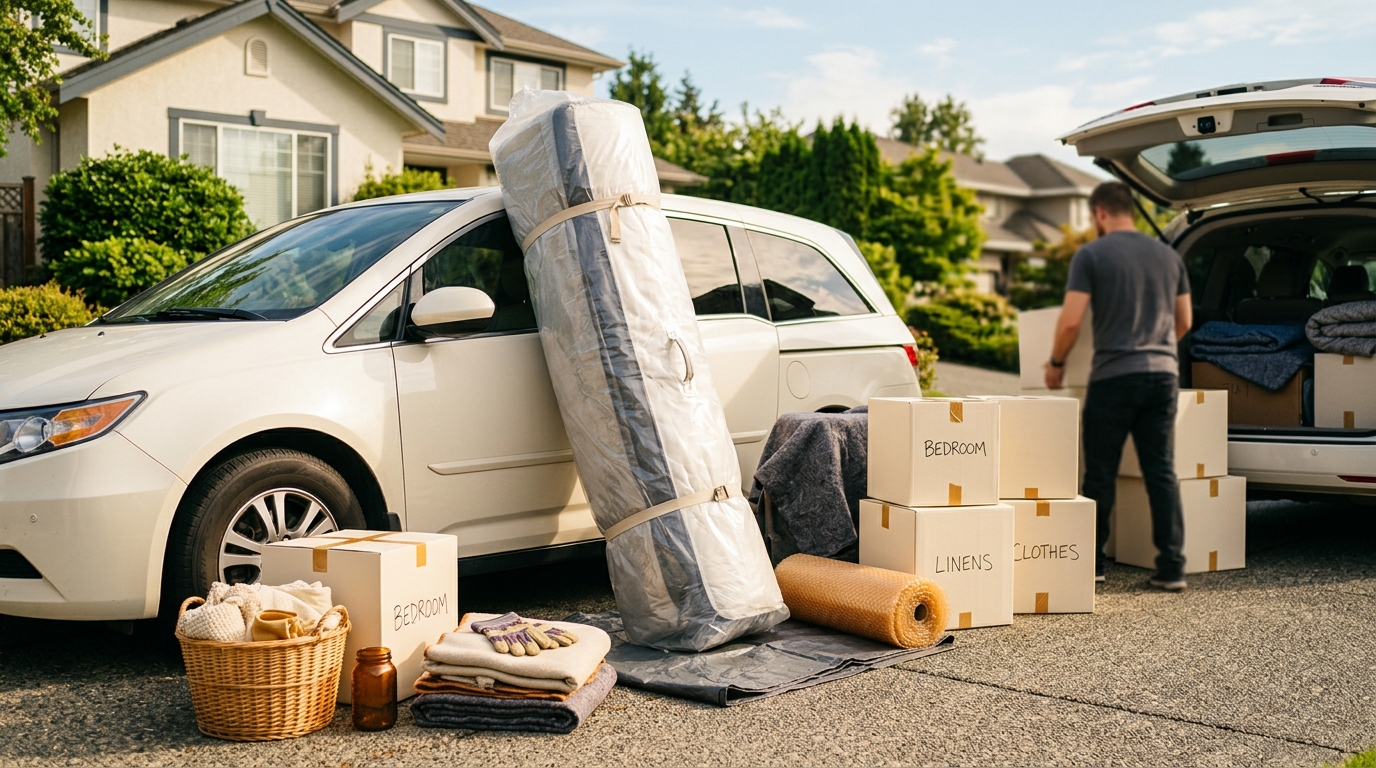
A small move — a studio apartment, a college room, or even just a couch and a bed — doesn't need a full moving truck or a four-person crew. The right service for a small load is typically a two-person crew with a cargo van or small truck, booked for a two-hour minimum, and it usually runs between $150 and $450 for a local haul. The mistake most people make is hiring more than they need — or, on the flip side, trying to DIY something that ends up costing them more in a rented truck and a wrenched back.
Here's exactly how to handle it.
What counts as a "small move"?
A small move is generally anything that fits in a cargo van or a 10–12 foot box truck. That typically includes:
- Studio or efficiency apartments (roughly 150–400 sq ft, 1–2 rooms of furniture)
- Single-room moves — one bedroom's worth of furniture and boxes
- Single-item moves — a couch, a dining table, a treadmill, a safe
- Partial moves — you're taking some things to a new place and leaving the rest for a later truck
If your total load would fill fewer than half of a standard 26-foot moving truck, you're in small-move territory.
What does a small move cost in 2026?
Cost depends mostly on distance, crew size, and how long the job takes. Here's a realistic breakdown:
| Move Type | Crew | Typical Cost (Local) | Typical Cost (50–150 mi) |
|---|---|---|---|
| Single item (couch, bed, etc.) | 2 movers | $150–$300 | $300–$600 |
| Studio / efficiency apartment | 2 movers | $250–$500 | $400–$900 |
| 1-bedroom apartment | 2–3 movers | $350–$700 | $500–$1,200 |
| Partial load (a few rooms) | 2–3 movers | $300–$650 | $500–$1,100 |
Most local moving companies charge a two-hour minimum, typically $100–$200 for that block, then an hourly rate of $90–$160 per hour for a two-person crew. Travel time to and from your location is often billed separately — usually 30–60 minutes each way at the same hourly rate. Always confirm this before booking.
For a deeper look at how hourly billing works, see our guide on how movers charge by the hour and what drives the final bill.
Which service is actually right for a small move?
You have more options than you might think. Here's how to choose:
Option 1: Hire a local moving company (best for most small moves)
Two movers, a cargo van or small truck, hourly billing. This is the most flexible and usually the most cost-effective for anything involving furniture or more than 20 boxes. You get licensed, insured professionals — which matters if anything gets damaged.
Option 2: Book a "man with a van" or labor-only service
Some independent operators offer just a driver and vehicle, or labor-only help while you provide a rented truck. Rates can be lower ($60–$100/hour per person), but verify licensing. Interstate moves require FMCSA registration regardless of load size — ask for the mover's USDOT number before booking.
Option 3: Rent a cargo van or small truck yourself
A cargo van rental runs roughly $35–$80/day plus mileage ($0.79–$1.29/mile for cargo vans from major rental chains). Add fuel, insurance, and your own labor. This pencils out only if you have people to help and a genuinely tiny load (a few boxes and one piece of furniture). For anything involving a sofa, appliances, or stairs, the DIY math rarely wins.
Option 4: Freight or container shipping (for longer distances)
For a partial load moving 200+ miles, look at consolidated freight or a portable container. Companies that offer consolidated shipping haul your items alongside other customers' loads — you pay only for your cubic footage. This can save significantly over chartering a full truck, though delivery windows are wider (typically 3–14 business days depending on route). See our guide on container and freight shipping costs for a full breakdown.
How to prepare for a small move
Small doesn't mean easy. These jobs can still go sideways if you haven't thought through the details.
1. Measure before moving day
Measure every piece of furniture you're moving — width, depth, height — and compare against doorways, hallways, and stairwells at both the origin and destination. A sectional sofa that fit through the original building's freight elevator may not make it up a narrow Victorian staircase. We've had to disassemble and reassemble sofas on job day more times than we can count.
2. Confirm building rules at both ends
Apartment buildings often require elevator reservations, loading dock permits, and certificates of insurance (COI) from your movers. Some buildings charge fees of $100–$500 for move-in/move-out days. Call the building manager at least a week out. For more on this, our apartment and condo moving guide covers what to ask.
3. Disassemble what you can beforehand
Remove legs from tables, take bed frames apart, detach shelving from wall units. Disassembly on the clock adds up — at $120/hour for a two-person crew, 20 minutes of fumbling with Allen keys costs you $40.
4. Box everything that can be boxed
Loose items are the enemy of a fast small move. Even if it's just one box of kitchen stuff, put it in a box. Movers can't stack loose lamps or unboxed glassware — it slows everything down and increases breakage risk. For specific packing guidance, see how to pack boxes for moving the right way.
5. Have a clear path on both ends
Park a cone or ask a neighbor to hold a parking spot near the front door the morning of your move. On a small job, the crew shouldn't be hauling your queen mattress 300 feet down the block because the loading zone is taken.
While you’re reading
Skip the research — let Robert match you with movers.
Free quotes from movers in your area. Pick whichever is easiest.
What to watch out for when booking a small move
Minimum charges: Most companies won't send a crew for less than two hours. Some charge a flat fee for cargo van moves regardless of time. Get this in writing before you book.
Fuel and truck surcharges: A common add-on, especially post-2022. Ask upfront: "Is there a fuel surcharge, and how is it calculated?"
Stair fees: Many companies charge $25–$75 per flight of stairs above the first floor, or per carry distance beyond 75–100 feet.
Same-day and short-notice premiums: Booking the day of or within 24 hours can add 20–40% to the base rate. If you can book even 3–4 days out, you'll often save.
Unlicensed movers: Interstate moves — any move that crosses a state line — require the mover to hold a USDOT number issued by the FMCSA, regardless of how small the load is. You can verify any mover at the FMCSA's online lookup tool (safer.fmcsa.dot.gov). Intrastate movers are regulated by state DOT or PUC agencies; requirements vary by state. Always ask to see the USDOT number and proof of cargo insurance before signing anything.
For a broader look at how to vet a company before you commit, our complete mover vetting checklist walks you through every step.
Single-item moves: what they really cost
Moving just one piece of furniture is a common situation — and often the most overpriced if you're not careful.
| Item | Typical Local Cost (2-mover crew) |
|---|---|
| Sofa / sectional | $150–$300 |
| King mattress + frame | $150–$275 |
| Refrigerator | $200–$400 (includes disconnect/reconnect time) |
| Treadmill or elliptical | $200–$450 (may require disassembly) |
| Gun safe (400–800 lbs) | $300–$700 (specialty rigging often required) |
| Piano (upright) | $300–$600 |
Single-item moves almost always involve the same two-hour minimum as any other job. The weight, floor level, stair count, and whether the item needs disassembly all push the price up. Get a written quote that specifies exactly what's included.
Finding the right movers for a small job
Not every moving company wants small jobs — their trucks and crews are sized for 3-bedroom houses. Look specifically for companies that advertise cargo van service, hourly local moves, or "man with a van" options. Then verify their licensing, read recent reviews on verified review platforms, and confirm they carry cargo liability insurance.
You can browse movers by state or find local movers near you on our directory — every listing includes licensing status to make vetting faster.
Frequently asked questions
How much does it cost to move a studio apartment locally?
A studio apartment move with a two-person crew and cargo van typically costs $250–$500 for a local move (under 30 miles), including a two-hour minimum and a travel fee. Stairs, long carries, and extra items push costs toward the top of that range. Always get a written quote that specifies hourly rate, minimum hours, and any surcharges.
Do I need a licensed mover for a small or single-item move?
Yes — especially for interstate moves. Any move crossing a state line requires the mover to hold a valid USDOT number from the FMCSA, regardless of how small the load is. For in-state moves, requirements vary by state (regulated by the state DOT or PUC), but you should still ask for proof of cargo insurance. An unlicensed mover who damages your sofa has no legal obligation to pay your claim.
Is it cheaper to rent a truck than hire movers for a small move?
Sometimes — but often not. A cargo van rental runs $35–$80/day plus mileage, fuel, and insurance (often $25–$40/day extra). Once you add it up and factor in your own time and physical labor, hiring a two-person crew for two hours at $150–$200 is frequently cheaper and always easier. The math tilts toward DIY only when you have plenty of help and a very small, easy load.
How far in advance should I book a mover for a small job?
For a local small move, booking 3–7 days in advance is usually sufficient on weekdays. Weekends and the last/first days of the month book out faster — sometimes 2–3 weeks ahead during peak summer season (May–September). Same-day bookings are possible but typically carry a 20–40% premium.
What's the difference between a cargo van move and a full moving truck?
A cargo van holds roughly 200–250 cubic feet — enough for a studio apartment's worth of furniture and boxes, or 1–2 large items. A standard 26-foot moving truck holds roughly 1,500–1,800 cubic feet. For a small move, a cargo van or 10-foot truck is almost always the right size and meaningfully cheaper to operate, which is why crew rates for small jobs are often lower.
Can movers refuse a small job?
Yes — some full-service companies have minimum revenue thresholds or won't send a crew for less than a half-day booking. If a company won't take your job, ask specifically for movers who advertise cargo van service or hourly local moves. Our mover reviews can help you find companies that specialize in smaller jobs in your area.
Moving a small load the right way comes down to matching the service to the job — the right crew size, the right vehicle, and a written quote that spells out every fee before anyone lifts a box. If you're ready to find a mover, our moving concierge Robert can help you narrow down options fast — just head to majesticmovingcompanies.com and get started.
Tagged