The safest way to pack jewelry for a DIY move is to sort by value, contain each piece individually so nothing tangles or scratches, and carry anything irreplaceable with you rather than putting it on the truck. The whole process takes one to two hours for a typical collection and costs almost nothing in materials. What follows is the exact system our team — which includes a former moving company operator with 18 years of hands-on experience — recommends to every household we connect with movers.
Why Jewelry Deserves Its Own Packing Session
Jewelry is uniquely risky on a move for three reasons: pieces tangle the moment they touch, small items disappear inside big boxes, and valuables should never travel on a moving truck if you can avoid it. A necklace chain knotted around a bracelet can take an hour to untangle — or snap entirely. A single earring that falls out of an unsealed bag is gone for good.
Treat jewelry as its own category, not an afterthought you stuff into a dresser drawer (and if you're wondering about those drawers, see our guide on whether movers need dresser drawers emptied before the move).
Step 1 — Sort Everything Into Three Tiers Before You Pack a Single Piece
Before you reach for a single bag or box, sort your collection into three tiers. This determines how you pack each item and — critically — whether it goes on the truck at all.
| Tier | What belongs here | How it travels |
|---|---|---|
| Everyday costume jewelry | Fashion earrings, plastic bangles, layering necklaces under ~$50 | Can go in a labeled moving box |
| Mid-value pieces | Sterling silver, gold-fill, semi-precious stones, sentimental items | Moving box, packed with extra care — or carry-on if possible |
| Fine and high-value jewelry | Gold, platinum, diamonds, heirlooms, anything appraised | Carry with you personally — never on the truck |
This is not an arbitrary rule. Moving valuation (what a mover is liable for) is based on weight, not monetary value, unless you purchase separate coverage. Under federal Released Value — the no-cost option customers can choose in writing — a mover's liability is 60 cents per pound per article. A diamond ring weighing a fraction of an ounce could be worth thousands and covered for pennies. Fine jewelry belongs in a small bag in your carry-on or locked in your car.
Step 2 — Gather Your Supplies (Most Are Already at Home)
You do not need a specialty jewelry packing kit. These household items cover almost everything:
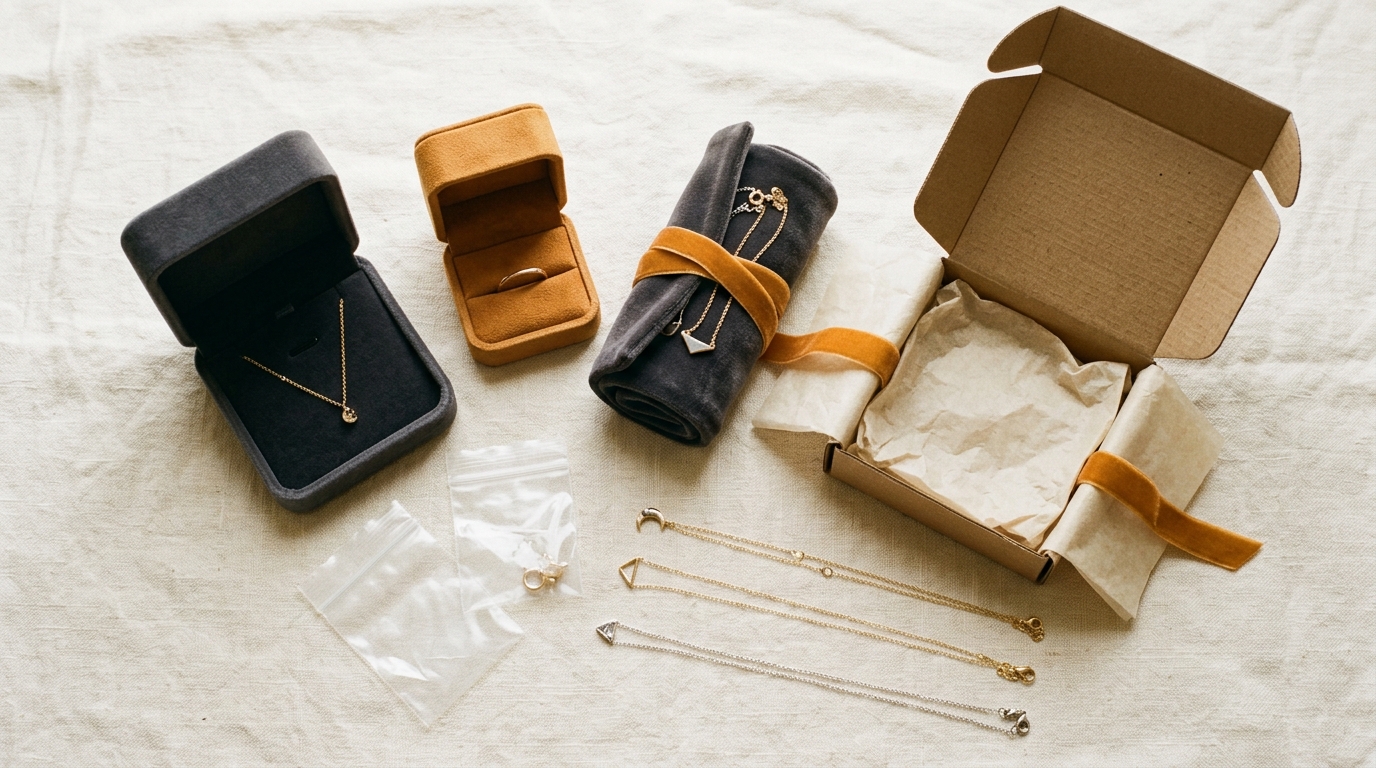
- Small zip-lock bags (sandwich and snack sizes) — one per necklace, one per pair of earrings
- Drinking straws — thread necklace chains through to prevent tangles
- Bubble wrap or foam sheets — wrap brooches, bracelets, and pendants
- Egg carton or pill organizer — holds earrings, rings, and small studs separated
- Velvet jewelry roll — the single best container for a mid-size collection; holds 10–20 pieces, rolls up, fits in a purse
- Small cardboard jewelry boxes (the ones your pieces came in, if you saved them)
- Tissue paper or crinkle-fill — cushions pieces inside a larger box
- A lockable box or small safe for fine jewelry traveling with you
For anything going into a labeled moving box, choose a small or medium box dedicated only to jewelry and soft valuables — never throw jewelry into a box with books, tools, or heavy items.
Step 3 — Pack Each Category the Right Way
Necklaces (the tangle problem)
The straw trick is the most reliable method:
- Unclasp the necklace.
- Thread one end of the chain through a drinking straw.
- Re-clasp the necklace so the clasp is at one end of the straw.
- Lay flat in a zip-lock bag and seal.
For longer or heavier chains, lay the necklace in a flat, loose coil on a piece of tissue paper, fold the tissue over it, and place in its own zip-lock bag. Label the bag (masking tape + marker works fine).
Earrings
- Stud earrings: Push the post through a small square of foam, bubble wrap, or a strip of cardboard, then fasten the back. Store pairs together in a zip-lock bag.
- Drop or dangle earrings: Keep pairs together in a small zip-lock bag with a folded tissue for cushioning.
- Statement earrings: Wrap individually in tissue paper, then place in a small box or bag.
An egg carton is an underrated tool — each cup holds one pair, the lid closes, and the whole thing fits in a box.
Rings
Rings scratch each other. Store each ring in its own small zip-lock bag, or push them onto a ring holder (a foam ring cone, a strip of foam, or even a piece of pool noodle cut to size). Never pile rings loose together.
Bracelets and bangles
Wrap each bracelet in bubble wrap or tissue, secure with a small piece of tape, and place in a zip-lock bag. Stack bangles together only if they are the same material and hardness — never mix glass or enamel bangles with metal ones.
Brooches and pins
Brooches have sharp pins that puncture bags and scratch neighbors. Wrap each brooch in bubble wrap, fold closed, and tape. Place in a small box rather than a bag.
Fine and heirloom pieces
Wrap each piece individually in acid-free tissue (available at craft stores for a few dollars). Place in the original jewelry box if you have it, or in a small padded pouch. Carry these personally — in a small lockable case inside a bag you keep with you on moving day.
While you’re reading
Skip the research — let Robert match you with movers.
Free quotes from movers in your area. Pick whichever is easiest.
Step 4 — Label and Inventory Everything
Write a quick inventory list before you seal anything. This takes ten minutes and can save enormous headaches:
- Photograph each piece with your phone before packing.
- Note any appraised or insured items separately (check with your homeowner's or renter's insurance provider about coverage during a move — policies vary).
- Label every bag, box, and pouch: "Master bedroom jewelry — earrings" or "Mom's silver bracelets."
- Pack all jewelry bags and boxes together in one dedicated labeled moving box, sealed with quality packing tape.
For a full labeling strategy that works across every room, see our guide on how to label moving boxes so you can find everything on day one.
Step 5 — Decide What Goes on the Truck vs. What Goes With You
This is the most important decision in the whole process. Our strong recommendation:
- Carry with you: anything appraised, insured separately, or irreplaceable.
- In a moving box (well-labeled, padded): costume and everyday pieces you could replace if lost.
- Never in a moving box: heirlooms, fine jewelry, watches, anything you'd file an insurance claim over.
If you are using a full-service mover, confirm with them how valuables are handled and what their liability policy covers. For a deeper look at what moving valuation actually means for your belongings, our guide on how to protect your belongings during a move walks through the options clearly.
What to Do if You're Using Full-Service Packers
If you've hired movers who will also pack your home, pull your jewelry aside before they arrive. Packers work quickly and efficiently — but they are not trained gemologists, and a fast-moving crew member will wrap a $3,000 pearl necklace the same way they wrap a costume bangle. Remove jewelry from all dressers, nightstands, and bathroom counters the night before and pack it yourself using the steps above.
You can find licensed, full-service movers in our directory — browse movers by state to compare options near you, or read mover reviews before you book.
Frequently Asked Questions
Should I pack jewelry in my checked luggage if I'm flying to my new home?
No. Checked luggage is not covered by airlines for jewelry losses (airlines typically exclude jewelry from liability for checked bags). If you're flying, keep jewelry in your carry-on bag in a small, organized pouch or roll. Never pack fine jewelry in checked bags.
Can I leave jewelry in my dresser drawers for the movers to move?
Technically movers can move a dresser with items inside if it is light enough and the contents are secure — but jewelry is exactly the type of item you should remove and pack yourself. Small pieces shift, roll, and fall out of drawer gaps during transit. Pack jewelry separately every time.
What's the easiest DIY container for a medium-sized jewelry collection?
A velvet or fabric jewelry roll is the single best all-in-one solution for a collection of 10–30 pieces. It has individual pockets for rings, loops for earrings, and rolls up to the size of a large burrito. It fits in a purse or a carry-on and costs $10–$25 at most home goods stores.
Do I need to declare jewelry value to my mover?
You don't have to declare it, but if you have high-value pieces and want more than the standard valuation coverage, you should discuss Full Value Protection with your mover before signing the contract. For interstate moves, Full Value Protection requires the mover to repair, replace, or pay the replacement value of any lost or damaged item. Separate moving insurance is also available through third-party providers — worth exploring for pieces with significant appraisal value. See our moving insurance coverage types explainer for how the options compare.
How do I pack jewelry for a long-distance move specifically?
The method is the same, but the stakes are higher because your belongings may be in transit for several days. Anything irreplaceable travels with you, full stop. For pieces going on the truck, double-bag each zip-lock bag (one inside the other), pack everything in a single small labeled box, and note it as "fragile — do not stack" on the outside. Place the box near the top of a load so it isn't crushed.
What if a piece of jewelry is lost or damaged on the move?
File a written claim with your mover within 9 months of delivery for an interstate move. A note on the delivery receipt is not a claim — you need to submit a separate written claim. The mover must acknowledge it within 30 days and resolve it within 120 days. For in-state moves, timelines vary by state; check with your mover or your state's consumer protection office. Our guide on how to file a moving damage claim covers the full process.
Packing jewelry well takes about an hour — far less time than untangling a knotted gold chain or trying to remember what went missing. Use the tier system, keep fine pieces with you, and label everything.
Ready to find the mover who handles the rest? Browse licensed movers near you and connect with Robert, our moving concierge, to get matched with movers in your area.
Tagged