The single most effective way to protect your belongings during a move is to treat every transition point — doorways, truck ramps, stacked boxes — as a damage opportunity and address it before anything starts moving. Most damage doesn't happen in transit; it happens at the first and last six feet of a move, during the load and unload. The patterns are predictable — and preventable.
Why most move damage happens (and where)
Damage clusters at a handful of predictable choke points:
- Doorframes and hallways — furniture corners catch drywall and wood trim when movers rush or when padding slips off.
- Stairwells — heavy items shift, scratch walls, and crack banisters if not controlled with shoulder dollies and proper hand placement.
- The truck ramp and lift gate — items tip or slide on metal surfaces that offer little friction.
- Inside the truck — unsecured items shift during braking, especially on cross-country hauls. (If you're doing a long haul, read our complete long-distance moving guide for more on transit protection.)
- Box stacking order — heavy boxes on top of fragile ones is the most common cause of crushed items we see on arrival.
Understanding where damage happens tells you exactly where to invest your protection effort.
What protection materials do you actually need?
You don't need to buy everything at the moving supply store. Here's what's genuinely worth it versus what you can skip:
| Material | Worth buying? | Approx. cost | What it protects |
|---|---|---|---|
| Moving blankets (furniture pads) | ✅ Yes — rent from mover or buy | $5–$12/pad to buy; often included by movers | Wood furniture, appliances, mirrors |
| Stretch wrap / shrink wrap | ✅ Yes | $10–$20/roll | Drawers, doors, upholstered fabric |
| Cardboard corner protectors | ✅ Yes | $10–$15 for 50 | Table corners, picture frames, headboards |
| Foam furniture feet pads | ✅ Yes | $5–$10/pack | Chair legs, lamp bases |
| Floor runners / Masonite boards | ✅ Yes — critical | $15–$30 rented per day | Hardwood, tile, carpet |
| Mattress bags | ✅ Yes | $5–$15 each | Mattresses and box springs |
| Bubble wrap | ⚠️ Only for items in boxes | $20–$40/roll | Fragile items inside boxes |
| "Furniture" foam rolls | ✅ Yes | $20–$30/roll | Table legs, glass, lamp shades |
| Wardrobe boxes | ⚠️ Optional | $15–$25 each | Hanging clothes (use only if needed) |
Professional movers should supply moving blankets and shrink wrap — confirm this when you book. If you're hiring hourly local movers, check our hourly pricing and crew size guide so you understand exactly what's included in your rate.
How to protect furniture before the first item leaves the room
Follow these steps in order — skipping prep to "save time" costs far more time at delivery when you're sorting out damage.
- Remove everything from drawers and shelves. Weight shifting inside a dresser or bookcase puts lateral stress on joints. Empty drawers also let you shrink-wrap them shut without adding load.
- Disassemble what can be disassembled. Bed frames, dining table legs, and L-shaped desks are far safer broken down. Bag all hardware in labeled zip-lock bags and tape them to the item they belong to.
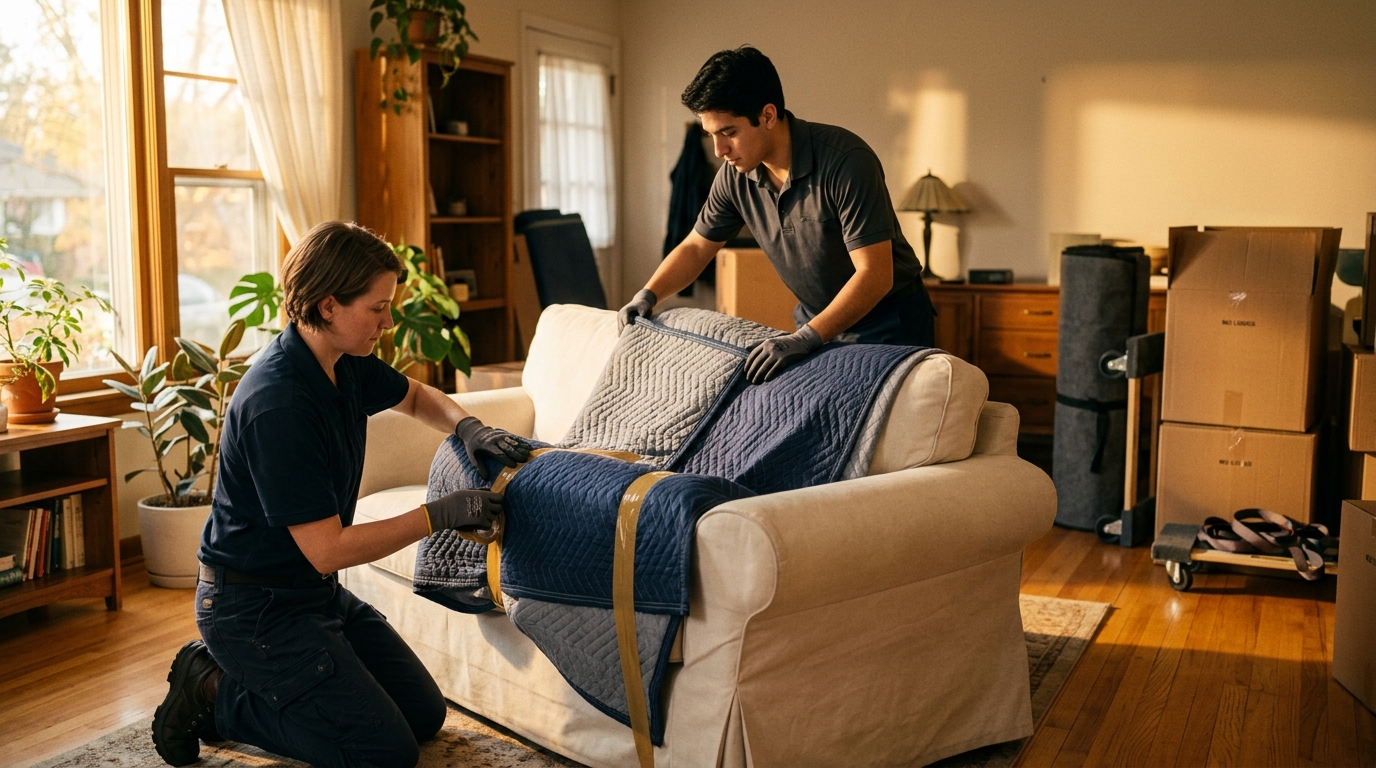
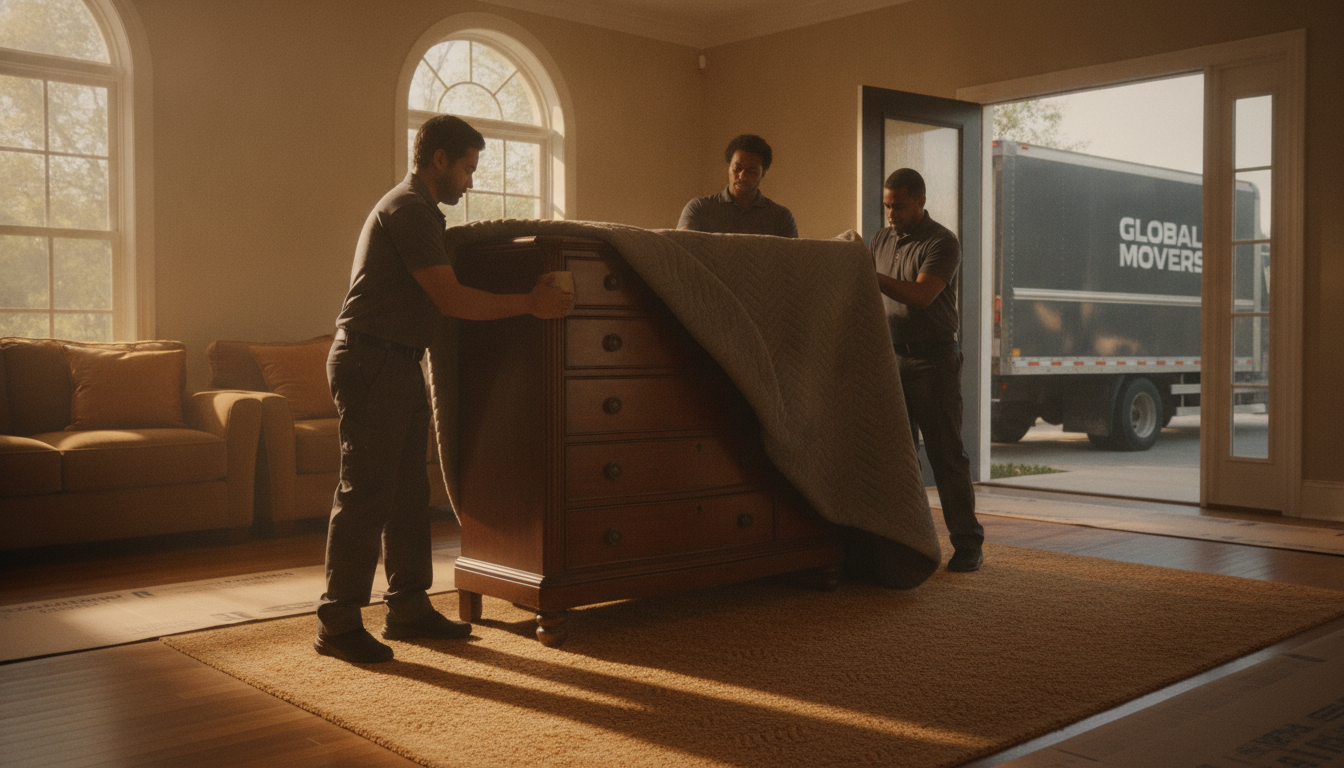
- Wrap every wood surface with at least one moving blanket before it leaves the room. Don't wait until it's in the hallway — that's where corners catch.
- Shrink-wrap over the blanket to hold it in place. One firm wrap around the middle, one around each end. The plastic keeps the pad on during the carry.
- Add cardboard corner protectors to table corners, headboards, and picture frame corners — these are the first contact points on a doorframe.
- Apply foam pipe insulation or foam rolls to exposed legs on chairs, bed frames, and sofa feet. These scuff hardwood floors badly if dragged even two inches.
How to protect your floors, walls, and doorframes
Your home is a damage zone in both directions. Here's how to protect the building:
- Lay floor runners or hardboard (Masonite panels) on all high-traffic paths — entry, hallway, kitchen, and any hardwood or tile. Carpet film ($30–$60 for a 200-ft roll) works on carpet.
- Apply doorframe protectors or stuff a folded moving blanket behind furniture as it passes through — a crew member walking backward through a door is the most common cause of gouged trim.
- Pad stair railings and banisters with blankets and tape. A dresser that shifts two inches on a stairwell will crack a banister that costs $800 to repair.
- Use door stops or wedge the door open fully — a door swinging shut on a loaded mover is a recipe for dropped boxes and body injuries.
If you're moving into an apartment or condo building, the building may require hallway protection and elevator padding. See our apartment move guide for building-specific rules you'll need to follow.
While you’re reading
Skip the research — let Robert match you with movers.
Free quotes from movers in your area. Pick whichever is easiest.
How to protect belongings inside the moving truck
Damage during transit is almost entirely about load order and tie-down discipline. We've seen trucks arrive with items shifted three feet during a highway stop. Here's how to prevent it:
- Load heaviest items first, against the cab wall. Appliances, dressers, and sofas go in first so they can't roll onto lighter items.
- Stand sofas on end (if the frame allows) to maximize vertical space and reduce contact points.
- Fill every gap with soft goods — bags of bedding, pillows, and bundled rugs wedged between furniture prevent lateral movement better than any strap alone.
- Use tie-down straps at every 4–5 feet of load — professional trucks have horizontal rails on the walls for exactly this purpose. At least two straps should cross the load at different heights.
- Never stack heavy boxes on top of fragile ones. Mark fragile boxes clearly and load them in the last section of the truck so they come off first. (Our labeling guide shows how to mark boxes so any mover knows exactly where they go and how to handle them.)
- Wrap mirrors and art in moving blankets, then slide them vertically between mattresses or sofa cushions — never lay them flat.
What your mover is responsible for (and what they're not)
Under federal FMCSA regulations, interstate movers must offer at least Released Value Protection at $0.60 per pound per article at no extra charge — the absolute minimum. A 50-pound TV damaged beyond repair gets you $30. That's it.
Full Value Protection — where the mover repairs, replaces, or pays current market value — is available for an additional fee, typically $100–$300+ depending on declared value and deductible. It's almost always worth buying for moves with high-value furniture.
For intrastate (in-state) moves, coverage rules are set by each state's PUC or DOT, not FMCSA. Requirements vary significantly. Confirm your mover's coverage in writing before moving day.
Before you sign anything, read our deep-dive on moving valuation versus insurance coverage — understanding the difference between these two things is one of the most important calls you'll make. And if something does get damaged, our damage claim guide walks you through exactly how to document and file.
The pre-move walkthrough nobody does (but should)
Before the truck pulls away, spend 10 minutes doing a documented condition survey:
- Photograph every piece of furniture on all sides, in natural light.
- Photograph existing wall scuffs, floor scratches, and doorframe dings in your old home — so you have proof of what was pre-existing.
- Do the same at delivery in your new home before movers arrive.
This photo record is what wins — or loses — a damage claim. Without it, disputes come down to your word against the mover's.
You can find movers with strong protection practices on our directory, or browse movers by state if you're still in the comparison stage.
Frequently asked questions
Do professional movers supply their own moving blankets and padding?
Most full-service movers include moving blankets and shrink wrap in their base rate, but this isn't universal — always confirm in writing when you book. Some hourly local movers charge a small equipment fee ($20–$50) for pads. If you're doing a hybrid move using a rental truck, you'll need to rent or buy your own pads, typically $5–$12 each or $50–$80 for a set of 12 from the truck rental company.
What's the best way to protect a large flat-screen TV during a move?
The original box is always best. If you don't have it, use a flat-screen TV box (available at moving supply stores for $15–$30), wrap the screen in foam or a moving blanket first, and slide it into the box with foam padding on all sides. Never lay a flat-screen TV face-down on a moving truck floor — the panel can crack from minor vibration. Transport it vertically, secured against the truck wall.
How do I protect hardwood floors during a move?
Lay hardwood-safe floor runners (rubber-backed fabric runners or Masonite boards cut to path width) before any item is moved. Stick adhesive carpet film over hardwood in high-traffic zones. Make sure all furniture legs are padded with felt or foam before anything slides — even a half-inch drag across bare hardwood leaves a visible scratch.
Should I wrap furniture myself or let the movers do it?
Both work — the key is that it happens before the item moves, not after it's been carried to the hallway. If you have the time, pre-wrapping furniture saves you money on hourly moves because it reduces crew time on site. Just use the correct technique: moving blanket first, shrink wrap over it to hold the pad in place.
How do I protect belongings during a long-distance move when I can't supervise the truck?
Use Full Value Protection (not Released Value), photograph everything before load, and make sure the driver gives you a signed inventory (called a "bill of lading") itemizing every piece. For high-value items, consider shipping separately via a specialty carrier. Ask the mover how the load will be secured and whether your shipment will share truck space with other customers (a "consolidated" load) — consolidated loads mean more handling and more risk.
What items do movers typically refuse to cover under any protection plan?
Most movers exclude items packed by owner (PBO boxes), pre-existing damage, items of "extraordinary value" (jewelry, cash, documents) not declared in advance, and perishables. Read your estimate's terms carefully — and see our full breakdown of what moving insurance actually covers before you assume you're protected.
Need a mover who takes protection seriously? Use our directory to find movers for licensing, insurance, and customer reviews — or ask Robert, our moving concierge, to help you compare options for your specific move.
Tagged