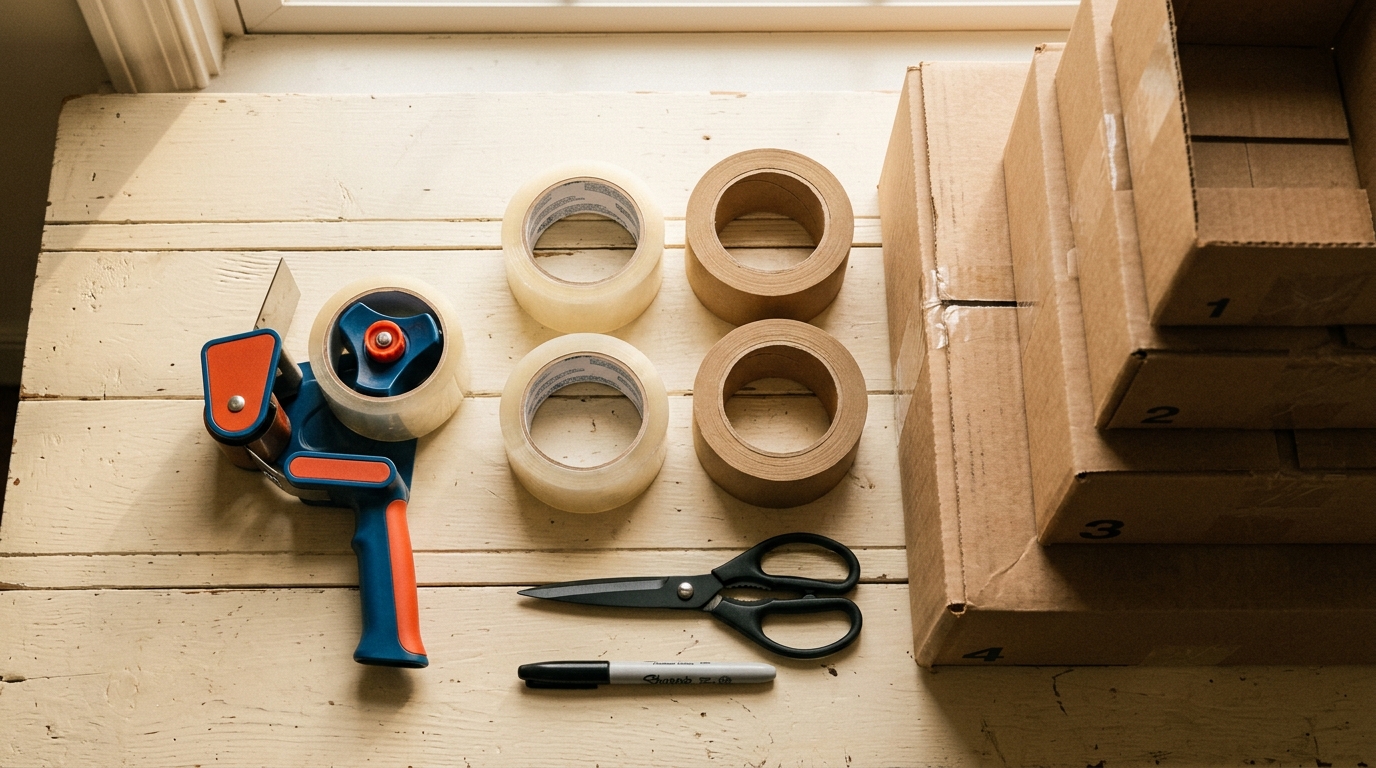
Professional movers overwhelmingly reach for 2- to 3-inch-wide, pressure-sensitive polypropylene packing tape — the clear or tan rolls you'll find at any box store or home-improvement retailer. It bonds tightly to cardboard, holds through temperature swings inside a truck, and doesn't leave a gummy residue the way masking or duct tape does. Everything else on this page flows from that one fact.
Why polypropylene tape — and not the tape you already have at home
Cardboard moving boxes have a coated exterior. That coating is what keeps them stiff in humidity, but it also makes most household tapes peel off under load. Polypropylene tape (also sold as "clear packing tape," "shipping tape," or "box-sealing tape") uses a hot-melt or acrylic adhesive designed to grip that coating and stay there across a 600-mile haul in summer heat.
Here's a quick comparison of every tape type you might consider:
| Tape type | Width | Sticks to cardboard? | Truck-safe? | Best use |
|---|---|---|---|---|
| Polypropylene packing tape | 2–3 in | ✅ Excellent | ✅ Yes | Sealing all boxes — your primary tape |
| Reinforced (fiberglass) strapping tape | 1–3 in | ✅ Excellent | ✅ Yes | Heavy boxes, bundles, reinforcing bottoms |
| Paper / Kraft gummed tape | 2–3 in | ✅ Excellent | ✅ Yes | Professional-grade seal; requires water activation |
| Painter's tape | 1–2 in | ⚠️ Weak | ❌ No | Labeling furniture hardware bags only |
| Masking tape | 1–1.5 in | ❌ Peels | ❌ No | Not for boxes |
| Duct tape | 2 in | ⚠️ Inconsistent | ❌ Avoid | Leaves residue; stiffens and cracks in cold trucks |
| Electrical tape | 0.75 in | ❌ No | ❌ No | Cord bundling only |
Bottom line: buy polypropylene tape as your workhorse. Add a roll of reinforced strapping tape if you're moving books, tools, or anything else that turns a box into a weight-training accessory.
What is "reinforced strapping tape" and when do movers use it?
Reinforced strapping tape has fiberglass or polyester threads embedded in the adhesive layer. Those threads keep it from tearing lengthwise even when you yank hard on it, which makes it the go-to choice for:
- Doubling the bottom of heavy boxes (books, cast iron, canned goods)
- Bundling disassembled furniture rails that won't fit in a box
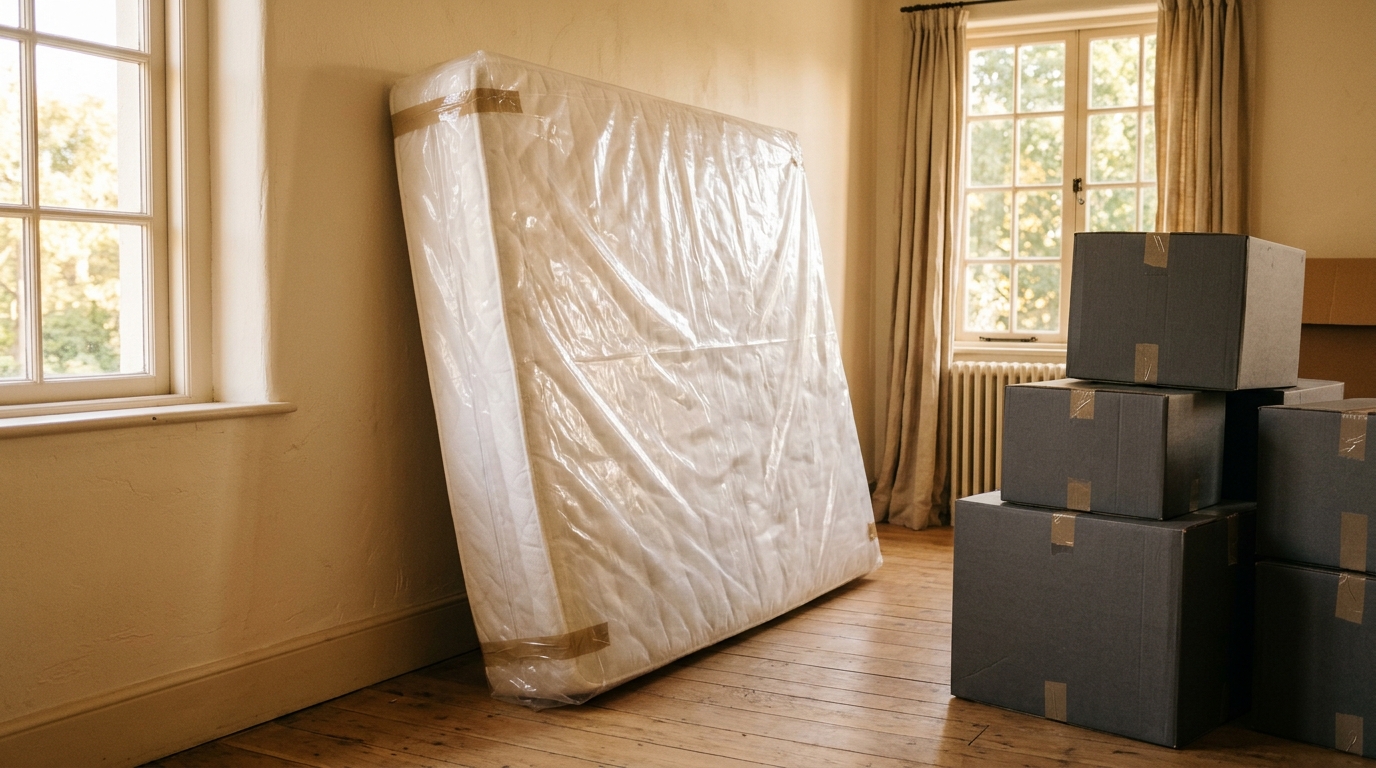
- Securing mattress bags that otherwise slide open mid-move
- Strapping rolled rugs so they stay rolled on the truck
You won't need a lot of it — one to two rolls typically covers a full household move — but having it on hand saves you from a box-bottom blowout at the worst possible moment.
Does tape width actually matter?
Yes, and it's one of the most common mistakes DIY packers make. 2-inch tape is the minimum for a moving box; 3-inch tape is better. Narrower tape concentrates stress on a smaller strip of cardboard. Under the vibration and bumping of a moving truck, that concentrated stress is what causes seams to fail.
Most professional tape dispensers (guns) are designed for 2- or 3-inch rolls. If you're doing any significant volume of packing, a $10–$15 tape gun is one of the smartest purchases you'll make — it speeds up sealing dramatically and keeps the tape from twisting on itself.
What about specialty tapes movers use for furniture and surfaces?
Beyond boxes, professional movers use a few targeted tapes that most people never think to buy:
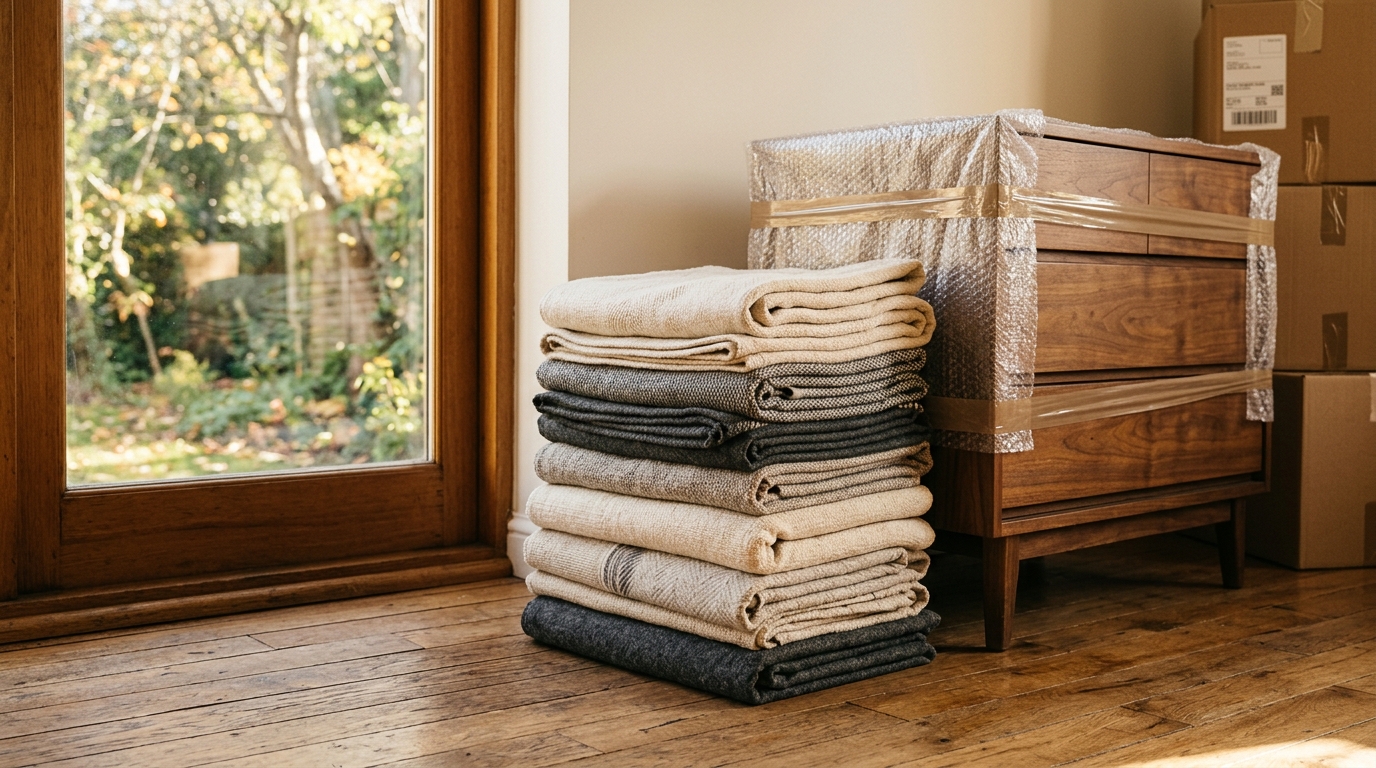
- Stretch wrap (not technically tape, but used like it): A thin plastic film wound around furniture to keep drawers shut, bundle chair legs, and protect upholstered surfaces. No adhesive touches the furniture itself. If you're packing furniture yourself before a crew arrives, a single roll of stretch wrap does more to protect sofas and dressers than almost anything else. Our guide on how to protect your belongings during a move goes deeper on wrapping and padding techniques.
- Painter's tape (blue or green): Movers use this only on surfaces they don't want to mark — masking off drawer pulls before wrapping a dresser, or taping a label to a finished wood piece. It is never used to seal a box.
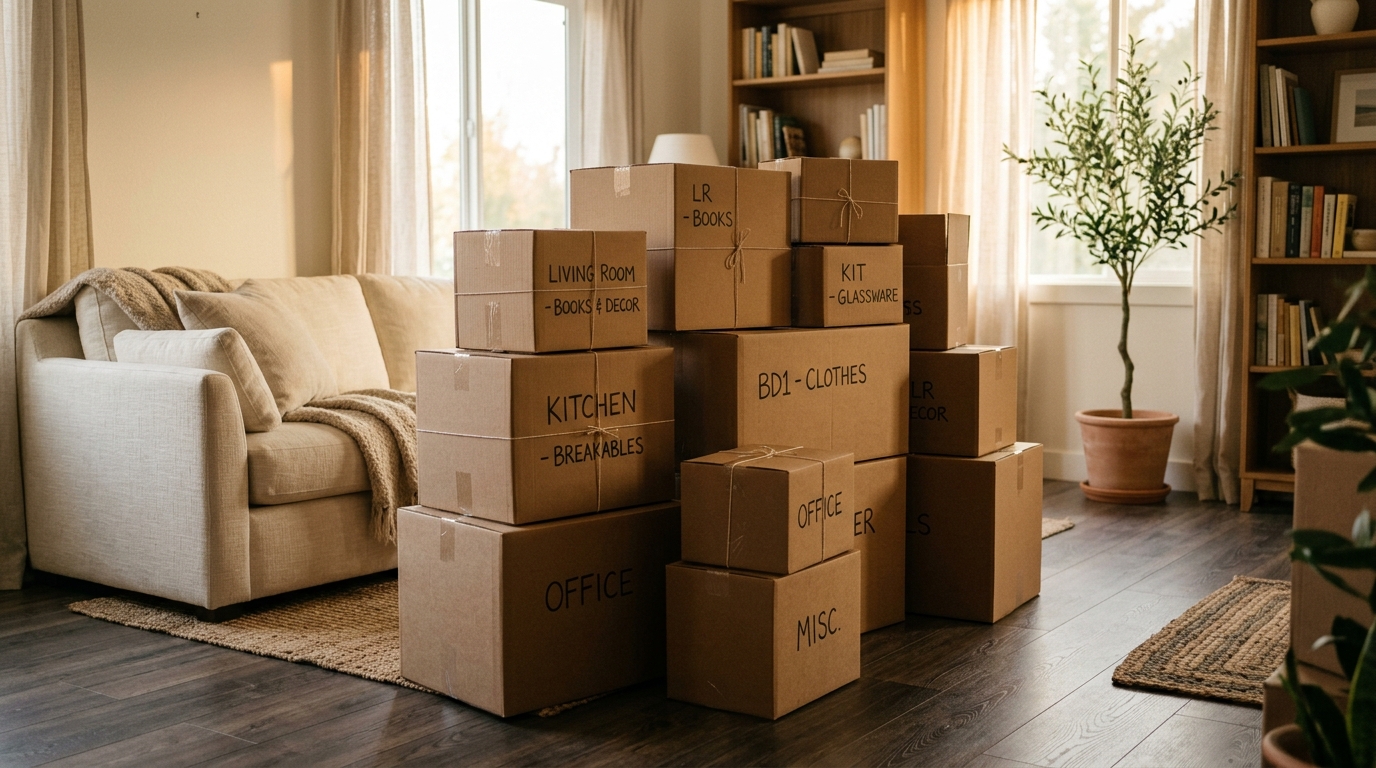
- Colored tape or colored dot stickers: Used as a room-coding system. Many movers put a strip of red tape on every box going to the master bedroom, blue for kitchen, and so on. You can replicate this yourself — it pairs well with a good labeling system. See how to label moving boxes like a pro for the full method.
How many rolls of packing tape do you actually need?
Experienced packers typically use one standard 55-yard roll of 2–3 inch tape for every 10–15 medium boxes. Here's a practical rule of thumb by home size:
| Home size | Estimated boxes | Rolls of packing tape needed |
|---|---|---|
| Studio / 1-bedroom | 20–40 boxes | 3–5 rolls |
| 2-bedroom | 40–60 boxes | 5–7 rolls |
| 3-bedroom | 60–100 boxes | 7–12 rolls |
| 4-bedroom+ | 100–150+ boxes | 12–18 rolls |
These estimates assume you're sealing the top and reinforcing the bottom of every box with at least two passes of tape. Buy the high end of the range — tape is cheap, and running out mid-pack is a genuine disruption. Leftover rolls don't go to waste; you'll use them unpacking and breaking down boxes on the other end.
Our guide on how to choose moving boxes and packing supplies covers how to estimate your total supply list in one pass.
While you’re reading
Skip the research — let Robert match you with movers.
Free quotes from movers in your area. Pick whichever is easiest.
The H-taping method: how professional movers actually seal a box
How you apply tape matters as much as which tape you use. Professional movers use the H-tape method:
- Fold the bottom flaps closed — short flaps first, then long flaps.
- Run one strip of tape down the center seam (the vertical line of the "H").
- Run one strip across each edge where the long flap meets the box wall (the two horizontal lines of the "H").
- Repeat exactly on the top once packed and closed.
This distributes load across four tape strips instead of one, which is why professionally packed boxes rarely blow their bottoms. For especially heavy boxes, run a second center strip over the first.
What tape should you absolutely NOT use on moving boxes?
Three tapes to leave in the junk drawer:
- Duct tape: It feels strong, and it is — until it's been in a cold truck overnight. The adhesive stiffens, and the tape either cracks or peels off cleanly, sometimes taking cardboard with it. It also leaves a sticky residue that destroys boxes you'd otherwise reuse.
- Masking tape: Not designed for the load or the coated cardboard surface. It will peel.
- Scotch / transparent tape: Fine for envelopes; completely inadequate for a box carrying anything heavier than a sweater.
If you're hiring movers who supply and pack your boxes, ask specifically what tape they use. A professional company will always say polypropylene or gummed kraft — that's a reasonable quality signal.
Where to buy moving tape (and what to pay)
Polypropylene packing tape is available at hardware stores, big-box retailers, and online. Typical pricing:
- Standard 2-inch rolls (55 yards): $2–$4 per roll individually; often $1.50–$2.50 per roll in 6- or 12-packs
- 3-inch rolls (55 yards): $3–$5 per roll
- Reinforced strapping tape: $4–$8 per roll
- Tape gun / dispenser: $10–$20 (worth every cent)
Buying a multi-pack almost always cuts per-roll cost significantly. If you're also sourcing boxes, find movers in your area — many licensed moving companies sell packing kits that bundle tape, boxes, and paper at a bulk rate.
Frequently asked questions
Can I use duct tape to seal moving boxes?
Duct tape is not recommended for sealing cardboard moving boxes. Its adhesive stiffens in cold temperatures (common inside moving trucks), causing it to peel or crack. It also leaves a residue that damages boxes. Use 2–3 inch polypropylene packing tape instead.
What is the best tape for heavy boxes?
For heavy boxes — books, tools, canned goods — use standard polypropylene tape for the top seal and reinforce the bottom with fiberglass strapping tape. Running a double center strip on the bottom adds significant load capacity.
Do professional movers bring their own tape?
Full-service movers typically bring their own packing tape and supplies when they're packing for you. If you're packing yourself and the crew is just loading and transporting, you'll need to supply your own. Confirm with your mover what's included before moving day.
How wide should moving tape be?
At minimum, 2 inches wide. Three inches is better, especially for larger boxes. Tape narrower than 2 inches concentrates stress on a smaller strip of cardboard and is more likely to fail under the vibration of a truck ride.
Is gummed kraft tape as good as polypropylene tape?
Gummed kraft (water-activated) tape is actually superior for sealing boxes — it bonds to the cardboard fibers rather than just the surface coating, creating a stronger seal. It's standard in professional shipping operations. The downside is it requires a water dispenser to activate and is slower to apply than a tape gun, so most DIY packers stick with polypropylene.
How do I keep tape from unrolling or tangling while I pack?
Use a tape gun. A $10–$15 dispenser holds the roll steady, cuts cleanly, and prevents the tape from sticking to itself. It's one of the most time-saving packing tools you can own and makes the H-tape method much faster to execute.
Whether you're packing everything yourself or handing boxes off to a professional crew, getting your tape right is one of the cheapest ways to protect everything else. Browse movers near you on Majestic Moving Companies, or start a conversation with Robert, our moving concierge, to get matched with licensed, reviewed movers in your area. And when you're ready to nail every other packing detail, our complete guide to packing boxes the right way covers materials, methods, and the mistakes that cost people money on moving day.
Tagged