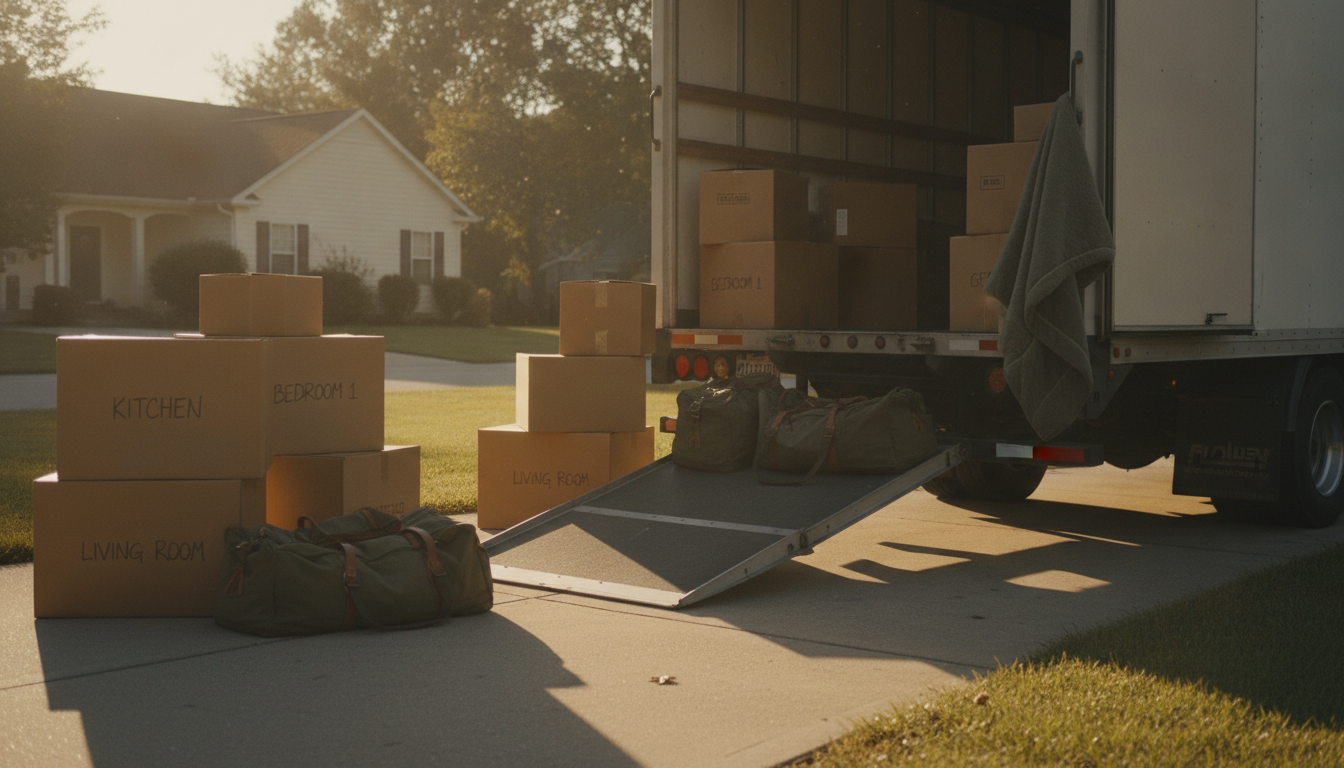
A Permanent Change of Station (PCS) move is one of the most logistically complex relocations an American family will ever face — and the government covers far less of it than most service members expect. The biggest shock isn't the packing or the distance: it's discovering that the government's weight allowance ran short, the PPM reimbursement didn't cover the rental truck, or the movers' damage claim process is slower than the next set of orders. Knowing the rules before your orders arrive is the single best thing you can do.
What Does the Military Actually Pay for in a PCS Move?
The Department of Defense covers household goods (HHG) transportation through its Defense Personal Property System (DPS), the online portal where you submit your move request. The government will arrange and pay for a government-contracted carrier to move your belongings — but the coverage is defined by strict entitlement rules tied to your rank and dependent status.
Weight Allowances by Pay Grade (2025 DoD Figures)
| Pay Grade | With Dependents | Without Dependents |
|---|---|---|
| E-1 to E-3 | 5,000 lbs | 1,500 lbs |
| E-4 | 7,000 lbs | 3,500 lbs |
| E-5 to E-6 | 9,000 lbs | 7,000 lbs |
| E-7 to E-9 | 11,000 lbs | 10,500 lbs |
| O-1 to O-3 (with dependents) | 10,000 lbs | 8,000 lbs |
| O-4 to O-6 | 14,000 lbs | 13,000 lbs |
| O-7 and above | 18,000 lbs | 18,000 lbs |
Overweight charges are your responsibility. Excess pounds are billed at the carrier's tariff rate — often $0.60–$1.00+ per pound — and that bill comes directly to you. We've seen E-5 families get hit with $1,200–$2,500 in overage fees because they didn't weigh their shipment before pickup. Decluttering before a move is not optional when you're working within a weight cap.
Government-Arranged Move vs. PPM: Which Is Better?
You have two main options for moving your household goods on a PCS:
1. Government Bill of Lading (GBL) / Full-Service Government Move The government contracts a carrier, arranges pickup and delivery, and pays directly. You have less control over the carrier, the dates, and — crucially — the claims process if something breaks.
2. Personally Procured Move (PPM), formerly DITY You arrange your own move and the government reimburses you up to 95% of what it would have cost them to move you. The reimbursement is based on your entitlement weight and the DoD's published cost tables for your origin-destination pair.
| Factor | Government Move | PPM |
|---|---|---|
| You choose the carrier | No | Yes |
| Upfront out-of-pocket cost | Minimal | High (paid back later) |
| Profit potential | None | Possible if you move light |
| Claims process | Defense Travel System | You file directly |
| Flexibility on dates | Limited | Higher |
Our honest take: For large families with 10,000+ lbs of goods, the government move is usually easier. For a single service member or small household moving under the weight cap, a PPM can put serious money back in your pocket — but only if you're organized and disciplined about documentation.
What the Government Move Does NOT Cover
This is where most PCS families get blindsided. Even with a full government-arranged move, these costs typically fall on you:
- High-value items over $5,000 per item (jewelry, art, collectibles) — you need separate coverage
- Vehicles — one POV (privately owned vehicle) shipment may be covered to/from OCONUS locations, but CONUS moves typically don't include car shipping; read our guide on how to ship your car when you move if you're facing this
- Storage beyond the allowed free period — typically 90 days CONUS, 180 days OCONUS; after that, you pay
- Tips for movers — the government does not reimburse gratuity; see what's fair in our guide to tipping movers
- Items you pack yourself (PBP&E) — professional gear packed by owner is handled separately and must be declared in advance
- Damage to items movers didn't pack — if you packed a box yourself and something breaks inside, the claim is far harder to win
How Military Moving Liability Works (and Why It's Different)
Government-contracted carriers operate under Full Replacement Value (FRV) protection, which became mandatory for all DoD household goods shipments. Under FRV, the carrier must repair, replace, or pay the current replacement cost of a damaged item — not the depreciated value.
That's genuinely better than the civilian baseline of Released Value Protection at $0.60 per pound — which, on an interstate move, you only receive by signing a written waiver choosing it — but FRV doesn't mean you're fully protected. Here's what to know:
- You must file your claim within 75 days of delivery for it to be covered under FRV. After 75 days, claims are limited to depreciated value.
- Items you packed yourself may be excluded from FRV if the carrier can show the damage was due to your packing.
- Claims go through the Military Claims Office (MCO) or directly to the carrier, depending on your branch. The process can take 30–90 days.
- For a deeper look at how valuation and claims work side by side, our post on what to know about moving valuation before you sign applies even in the military context.
Photograph everything before the movers arrive. We cannot say this loudly enough. Walk every room with your phone and get time-stamped photos of condition, serial numbers, and high-value items.
While you’re reading
Skip the research — let Robert match you with movers.
Free quotes from movers in your area. Pick whichever is easiest.
The PCS Move Timeline: What Happens When
- Receive orders — As soon as you have your PCS orders, log into DPS (move.mil) to submit your shipment request. The earlier you do this, the better the carrier selection and pickup dates.
- Schedule your pre-move survey — A carrier rep (in-person or virtual) surveys your home and estimates weight. Use this to flag high-value items and get an accurate count.
- Confirm pickup window — Peak PCS season runs May through August. Dates book out fast. Request a firm pickup date, not a window, whenever possible.
- Prepare your inventory — Review the carrier's inventory list line by line on pack-out day. Note condition disputes ("scratched prior to move") on every item before signing.
- Request a reweigh if needed — You have the right to request a reweigh of your shipment at origin or destination. If the scale shows you're over your entitlement, you can remove items before the truck leaves.
- Delivery and inspection — Inspect every item as it's brought in. Note damage on the paperwork before the crew leaves. Do not sign a clean delivery receipt if items are damaged.
- File claims promptly — Start your claim within 9 months for depreciated value, but within 75 days for FRV.
Out-of-Pocket Costs Most PCS Families Don't Budget For
Even a "fully covered" government move typically leaves a family spending $1,500–$5,000+ out of pocket depending on circumstances. Here's where the money goes:
- Temporary lodging and per diem — the Basic Allowance for Housing (BAH) gap between locations can leave families in hotels for weeks
- Vehicle transport (CONUS moves) — typically $800–$1,800 depending on distance and method
- Packing your own non-allowable items — ammunition, hazmat, certain plants, and perishables aren't moved by the carrier; you handle those yourself
- Setting up utilities and internet at the new installation — our guide to setting up utilities in a new home walks through what to schedule first
- School enrollment, pet deposits, and lease break fees — these are actual costs that JFTR/JTR reimbursement doesn't reach
How to Find a Mover for a PPM or Supplemental Move
If you're doing a PPM or need to move items that don't fit within your government shipment, you'll need to hire a commercial mover independently. When you do, look for movers with USDOT and FMCSA registration — required for any interstate move — and ask specifically about their experience with military customers and dual-shipment coordination. You can find movers near your installation or browse mover reviews to compare carriers before you commit.
For out-of-state PCS moves, also check that the carrier holds the proper authority in both your origin and destination states — our breakdown of how movers are licensed and insured explains exactly what to verify.
Frequently Asked Questions
What is the difference between a government move and a PPM on a PCS?
A government move (GBL) means the DoD contracts and pays a carrier directly to move your household goods — you hand over the logistics but get less carrier choice. A Personally Procured Move (PPM) means you arrange and pay for your own move, then submit documentation to receive a government reimbursement of up to 95% of the government's cost for that route and weight. PPMs can result in a profit if you move under your weight allowance, but require more paperwork and upfront cash.
What happens if my household goods weigh more than my entitlement?
You are personally responsible for the cost of any weight over your authorized allowance. The carrier will bill you directly at the tariff rate, which can reach $1.00 per pound or more. You can request a reweigh before the truck departs if you suspect you're near the limit — and you should proactively declutter before pack-out day to stay under your cap.
Can I use my own moving boxes on a government PCS move?
Yes, but items in customer-packed boxes are often excluded from Full Replacement Value coverage if damage occurs. If you want FRV protection, let the carrier pack everything they're moving. Items you must pack yourself (firearms, valuables, certain electronics) should be listed separately and photographed before the carrier takes them.
How long does a PCS move take from pack-out to delivery?
For CONUS moves, government carriers typically deliver within 7–14 days of pickup for moves under 1,500 miles, and up to 21 days for longer routes. OCONUS moves — including Hawaii, Alaska, and overseas — can take 30–90 days depending on mode of transport and port availability. You can request non-temporary storage (NTS) if your new housing isn't ready; this is typically covered for the first 90 days.
Does the military cover storage if my new home isn't ready?
Yes. The government covers Non-Temporary Storage (NTS) for up to 90 days CONUS and 180 days OCONUS when housing isn't available at your destination. After those limits, storage costs come out of pocket. If you think you'll need storage beyond the free period, start researching options early — our storage unit cost guide covers what to expect.
What's the deadline to file a damage claim after a PCS move?
You have 9 months from delivery to file a claim at all, but only 75 days from delivery to qualify for Full Replacement Value. After 75 days, the carrier's liability drops to depreciated value, which is almost always far less. Mark your calendar the day the truck leaves.
Planning a PCS or helping a service member in your family navigate the move? Start by browsing movers by state to find carriers experienced with military relocations — or ask Robert, our moving concierge on Majestic Moving Companies, to walk you through your specific situation.
Tagged