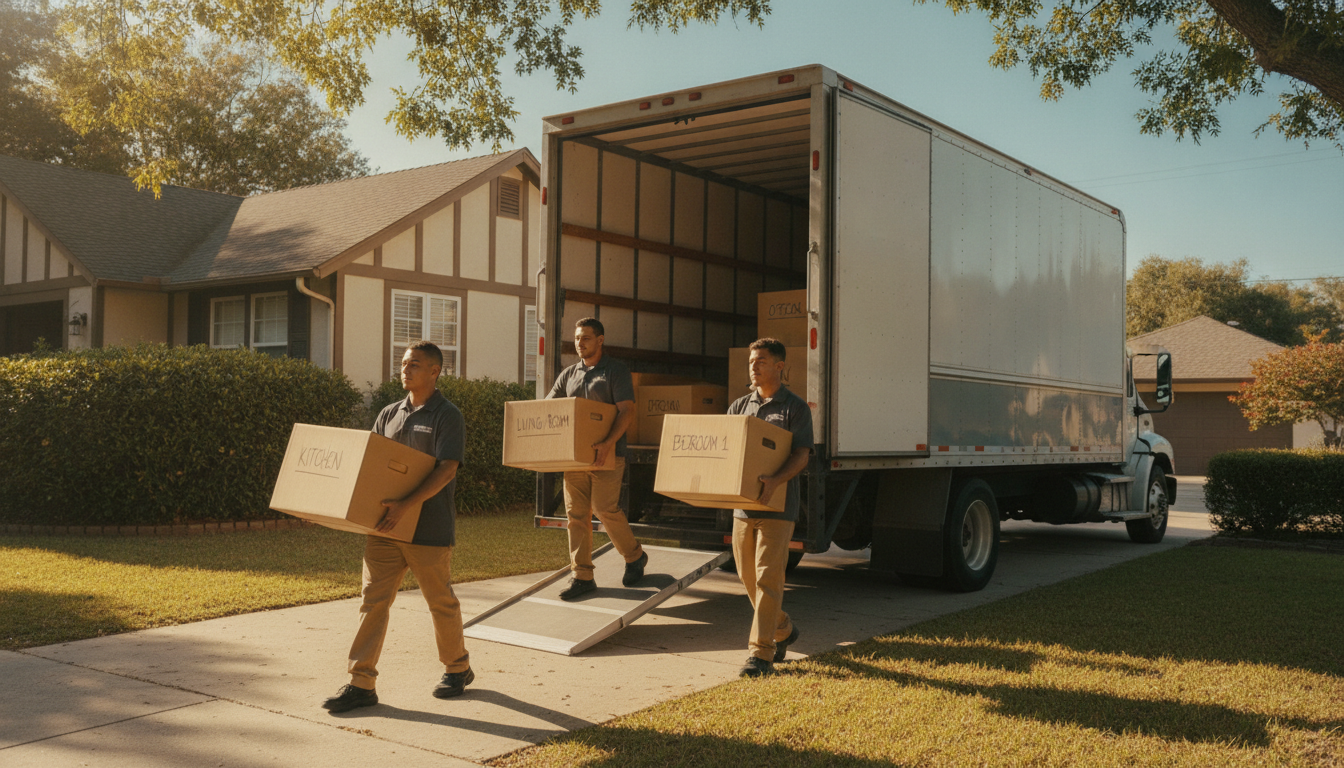
A local move for a one-bedroom apartment typically costs $300–$900, while a full-service cross-country move for a three- or four-bedroom house can run $4,500–$12,000 or more depending on weight, distance, and services. The single biggest driver of cost isn't the mover you choose — it's the size of your home and how far it's going.
We've been in this industry for more than 35 years, and the question we hear more than any other is some version of "so… what's this going to cost me?" This guide gives you honest, specific answers — not ballpark ranges so wide they're useless.
What are the main factors that determine moving cost?
Every moving bill is shaped by four things:
- Volume/weight — How much stuff you have (measured in cubic feet or pounds on long-distance jobs).
- Distance — Local moves are billed hourly; interstate moves shift to weight-and-distance pricing under FMCSA rules.
- Services — Full-service packing, specialty items, crating, and storage all add to the total.
- Timing — Peak season (May–September) and weekend moves cost more. Choosing an off-peak date can save 10–20%; our guide on how to choose a moving date breaks down exactly how much.
How much does a local move cost by home size?
Local moves (under ~50 miles, same state) are almost always billed hourly, usually with a 2- or 3-hour minimum. Labor rates vary significantly by market — $80–$120/hour per crew member is typical in mid-size cities; expect $120–$180/hour per mover in high-cost metros like San Francisco or Boston.
| Home Size | Crew Needed | Estimated Hours | Typical Total Range |
|---|---|---|---|
| Studio / 1-bed | 2 movers | 2–4 hrs | $300–$900 |
| 2-bedroom | 2–3 movers | 3–6 hrs | $600–$1,800 |
| 3-bedroom | 3–4 movers | 5–8 hrs | $1,200–$3,200 |
| 4-bedroom | 4 movers | 7–10 hrs | $2,000–$4,500 |
Important: These totals assume basic labor — loading, transport, unloading. Packing services, flights of stairs, long carries (typically charged when the truck parks more than 75 feet from your door), and specialty items are billed on top of this. See our deep dive on hidden moving fees and surcharges to understand every line item before you sign.
If you want to understand how hourly rates are built — crew size, truck size, drive time — our breakdown of how much movers charge per hour is worth a read before you start getting quotes.
How much does a long-distance move cost?
Once you cross state lines, you're in FMCSA territory. Interstate movers are required by federal regulation (49 CFR Part 375) to charge based on actual weight of your shipment and mileage to your destination. Estimates can be binding or non-binding; knowing the difference protects you from surprise bills. If you're not clear on that yet, start with binding vs. non-binding moving estimates explained.
| Home Size | Approx. Weight | 500 miles | 1,000 miles | 2,000+ miles |
|---|---|---|---|---|
| 1-bedroom | ~2,000–3,500 lbs | $1,200–$2,500 | $1,800–$3,500 | $2,500–$5,000 |
| 2-bedroom | ~4,000–6,000 lbs | $2,000–$4,000 | $3,000–$5,500 | $4,000–$8,000 |
| 3-bedroom | ~7,000–10,000 lbs | $3,500–$6,000 | $4,500–$8,500 | $6,500–$12,000 |
| 4-bedroom | ~12,000–15,000 lbs | $5,500–$9,000 | $7,000–$12,000 | $9,000–$15,000+ |
These ranges assume standard full-service moves. Container shipping — where you pack yourself and a company hauls the container — typically costs 20–40% less than a full-service interstate mover for the same route. For a head-to-head comparison, see our guide on how to move with a container or freight shipping.
What additional services cost — and when they're worth it
Most quotes don't include these by default. Always ask.
| Add-On Service | Typical Cost |
|---|---|
| Full packing (movers pack everything) | $300–$1,500+ depending on home size |
| Partial packing (kitchen, fragile items) | $150–$500 |
| Specialty item — piano | $250–$600 local; $800–$2,000+ long-distance |
| Specialty item — large safe | $200–$600+ |
| Storage-in-transit (per month) | $100–$300/month |
| Long carry surcharge | $75–$200 per job |
| Elevator / stair fee | $50–$150 per flight (varies by company) |
| Fuel surcharge (long-distance) | Often 5–15% of base rate |
Packing services are the biggest variable. We've packed thousands of kitchens over the years, and a full kitchen pack by a pro crew typically takes 2–4 hours and adds $200–$600 to your bill — often worth every cent for glass, ceramics, and cookware. If you'd rather DIY the packing to save money, our room-by-room kitchen packing guide will show you exactly how we'd do it.
While you're reading
Skip the research — let Robert match you with movers.
Get quotes from professional movers in your area, free.
How does move type change the total cost?
Not every move needs a full-service mover. Here's a quick comparison of your main options:
| Move Type | Best For | Typical Cost Range | Trade-Off |
|---|---|---|---|
| Full-service mover | Families, long distance, time-pressed | $800–$15,000+ | Highest cost, least effort |
| Labor-only movers | People renting their own truck | $100–$400 for 2 hrs | You drive and coordinate |
| Truck rental (DIY) | Budget-focused, able-bodied | $200–$1,500 | All physical work on you |
| Portable container | Flexible timeline, storage needed | $900–$5,000 | Slower; you pack it |
| Freight / consolidated | Very long distance, less urgency | $1,000–$6,000 | 1–3 week delivery windows |
If you're weighing full-service against a DIY truck rental, our honest breakdown of truck rental vs. hiring full-service movers lays out both sides without bias.
What actually pushes your bill above the estimate?
In our experience, moves that come in well over estimate almost always have one or more of these factors in common:
- More items than quoted. If your inventory changes after the estimate, the price will too.
- Poor access. Narrow driveways, no freight elevator, or a parking situation requiring shuttle service.
- Last-minute packing. Movers who show up and find unpacked rooms will charge for the time — or may refuse to load.
- Weight overages on interstate moves. If your actual shipment weighs more than the non-binding estimate, you pay the difference (capped at 110% of estimated charges, per FMCSA rules, on the day of delivery).
The best defense is an in-home or video survey before booking — not a quote based on a bedroom count you gave over the phone. Companies that give accurate moving quotes will ask detailed questions about furniture, access, and stairs before they commit to a number.
Ready to compare real quotes?
The ranges in this guide give you a solid baseline — but your actual cost depends on your specific inventory, your origin and destination, and which mover you choose. Find movers in your area to get quotes from vetted companies, or browse movers by state if you're planning a long-distance move and want to see who operates in your corridor. You can also check verified mover reviews to see how companies perform on real jobs before you hand over a deposit.
Have questions about your specific situation? Our AI moving assistant Robert is on the site 24/7 — ask him anything and he'll point you in the right direction.
Frequently asked questions
How much does it cost to hire movers for a 2-bedroom apartment?
A local move for a 2-bedroom apartment typically costs $600–$1,800, depending on your city and how many hours the job takes. A 2–3-person crew usually needs 3–6 hours. Long-distance moves for the same home size run $2,000–$5,500+ depending on mileage.
Is it cheaper to move yourself or hire movers?
Renting a truck yourself is almost always cheaper in raw dollar terms — typically $200–$800 for a local move vs. $600–$2,000 for full-service labor. But factor in your time, physical effort, risk of injury, and the potential for damage to items you move yourself. For long-distance moves over 500 miles, the gap narrows considerably once you add fuel, lodging, and truck rental insurance.
Why are long-distance moving quotes so much higher?
Interstate moves are priced on weight and mileage under federal FMCSA regulations, and they include additional costs like fuel surcharges, potential storage-in-transit, and the logistics of coordinating drivers across state lines. A 2-bedroom household at 1,000 miles can weigh 4,000–6,000 pounds — at typical rates of $0.50–$0.70 per pound per move, that's $2,000–$4,200 in weight-based charges alone before distance multipliers.
What time of year is cheapest to move?
October through April (excluding holiday weeks) is consistently cheaper than the summer peak. Moving mid-week rather than on a Friday or Saturday can also save $100–$300 on a local move. Some companies offer off-peak discounts of 10–20% if you're flexible on dates.
Do movers charge extra for stairs and elevators?
Most do. Stair fees typically run $50–$150 per flight, and elevator usage in buildings can add a flat fee of $50–$100. Some companies build one flight into their base rate and charge for additional flights. Always ask about this before booking — it's one of the most common sources of surprise charges.
What's included in a standard moving quote?
A standard quote covers loading, transportation, and unloading. It does not automatically include packing materials, packing labor, disassembly/reassembly of furniture, specialty item handling (pianos, safes), long carries, or storage. Always request an itemized quote and ask the company to walk you through what's included and what costs extra.
Tagged