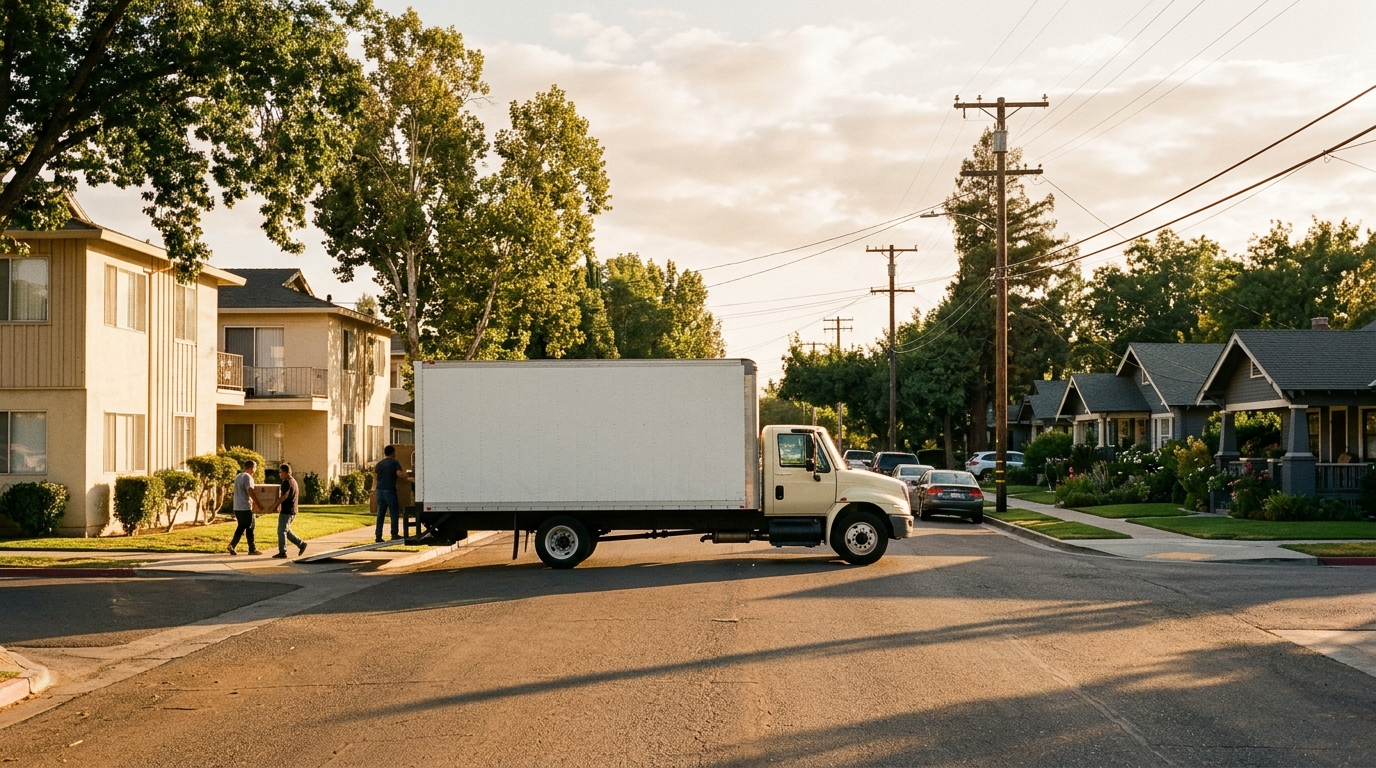
Half of Fresno households rent — ten percentage points more than in Bakersfield. That single figure is worth sitting with before you do anything else. It means the Fresno rental market moves fast, competition for well-priced units is intense, and timing your lease start to your moving date takes more planning than it probably did the last time you moved. Start your housing search earlier than feels necessary, and have a signed lease or a confirmed move-in date in hand before you book a mover.
The Rental Market You're Moving Into
Fresno's median rent — $1,324 a month — runs about three percent below what you're likely paying in Bakersfield right now. That modest savings is worth knowing, but it can obscure what's happening in the most in-demand pockets of the city. With 12% of Fresno residents having moved in the past year (compared to 10% in Bakersfield), there is constant churn in the rental stock, which cuts both ways: units come available regularly, but they also get claimed quickly. If you're relocating on a set date, locking in your lease four to six weeks out is generally safer than trying to time it closer.
If you're weighing whether to buy, the median home values in both cities are so close as to make almost no difference from a pure price standpoint. The key question on the ownership side is what that income gap means for your budget: the median household in Fresno earns roughly $10,000 less per year than in Bakersfield, which affects how far the same purchase price stretches. That's a calculation worth running with a local lender before you commit to a price range.
A Denser City Changes Moving Day
This is the most practical difference you'll feel on the day your truck arrives. In Bakersfield, 71% of homes are detached single-family houses. In Fresno, that drops to 61%, and 23% of housing units are in buildings of five or more units — compared to 14% in Bakersfield. Nearly one in four Fresno homes you might be moving into sits inside a mid-rise or larger apartment building.
That shift changes almost every physical detail of moving day. In a detached house, you're thinking about driveway length, whether the front steps are wide enough for a sofa, and whether there's a curb cut for the truck. In a larger building, you're thinking about elevator reservations, loading dock access windows, whether the building requires a certificate of insurance from your mover, and how long you're permitted to hold the service elevator. These aren't obstacles — they're logistics to confirm in advance.
Before your move date, ask your new building manager or landlord these questions specifically:
- Is there a dedicated loading dock or elevator, and does it require a reservation?
- What hours is the elevator available for moves?
- Does the building require a certificate of insurance from the moving company, and what is the minimum coverage amount?
- Is street parking available for a large truck, or will you need a parking permit from the city?
Pass that information directly to your mover when you book. A crew arriving at a high-rise without a reserved elevator or a required COI can lose hours — and that time costs money on an hourly-rate job.
On the Bakersfield end, if you're leaving a single-family home, your main practical concerns are more straightforward: truck access on your street, protecting floors and door frames, and making sure any bulky furniture is disassembled before the crew arrives.
Summer Heat and Valley Fog at Both Ends
You already know Bakersfield summers. Fresno summers are not meaningfully different — both cities sit in the San Joaquin Valley, both routinely see temperatures above 100°F, and both deal with poor air quality from wildfire smoke and agricultural particulates. If you have any choice in timing, moving in late spring (April through mid-May) or in October gives you the most workable conditions at both ends of the route.
A summer move is completely manageable, but it requires deliberate planning. Schedule your start time as early in the morning as possible. Make sure water is accessible for everyone involved on moving day. If you're moving in or out of a building without shade near the loading area, that heat builds fast. Your mover should be briefed on this — experienced crews who work the Central Valley know the drill, but it's worth confirming how they handle extreme-heat days.
Tule fog is the winter wild card. From roughly December through February, dense ground fog can settle into the valley with little warning, sometimes reducing visibility on Highway 99 to near zero. If your move is scheduled in winter and fog is in the forecast, have a direct conversation with your mover about contingency timing. Moving a truck under those conditions is a safety question, not just a scheduling inconvenience.
What Drives the Price on This Route
Because California regulates in-state moves at the state level, your mover is required to operate under California's own rules — not federal interstate moving regulations. For the specifics of what your mover must provide in writing, how liability is handled, and how to file a complaint if something goes wrong, the California Public Utilities Commission (CPUC) is the right place to look. Ask any mover you're considering whether they hold a valid CPUC license, and verify it directly with the commission before you sign anything.
On price: no dollar figure we could name here would be accurate for your specific move, because the variables on this route are wide. What actually drives the cost is the combination of your home size, how much needs to be moved, and — critically — what kind of building you're arriving at. A ground-floor house with a driveway and a two-hour job is priced very differently from a fourth-floor apartment with a single reserved elevator window and a long carry from the dock. If you're moving into a multi-unit building, tell that to every mover you get a quote from, and make sure they've accounted for it.
Finding the Right Mover for This Route
Movers who work the Bakersfield-to-Fresno corridor regularly will know the building stock at both ends, understand how to handle a high-rise delivery, and have experience adjusting on the fly when Tule fog or a heat wave shifts the schedule. When you're comparing options, ask specifically how they handle elevator-only access, what their process is for getting a COI to a building's management office, and what happens if conditions on moving day require a reschedule.
Our team has 35+ years of hands-on service-provider experience, including an operator who ran a moving company for 18 years — enough time to know that the questions you ask before you sign a contract matter more than the price on the first quote you receive.
You can find movers who serve this route, or look directly at movers in Bakersfield and movers in Fresno to compare options at both ends. You can also browse by state if you're exploring movers across California more broadly.
Get your quotes based on a walkthrough — in person or by live video — not a number pulled from a phone call. On a route with as much housing variety as this one, a sight-unseen quote isn't a quote. It's a guess.