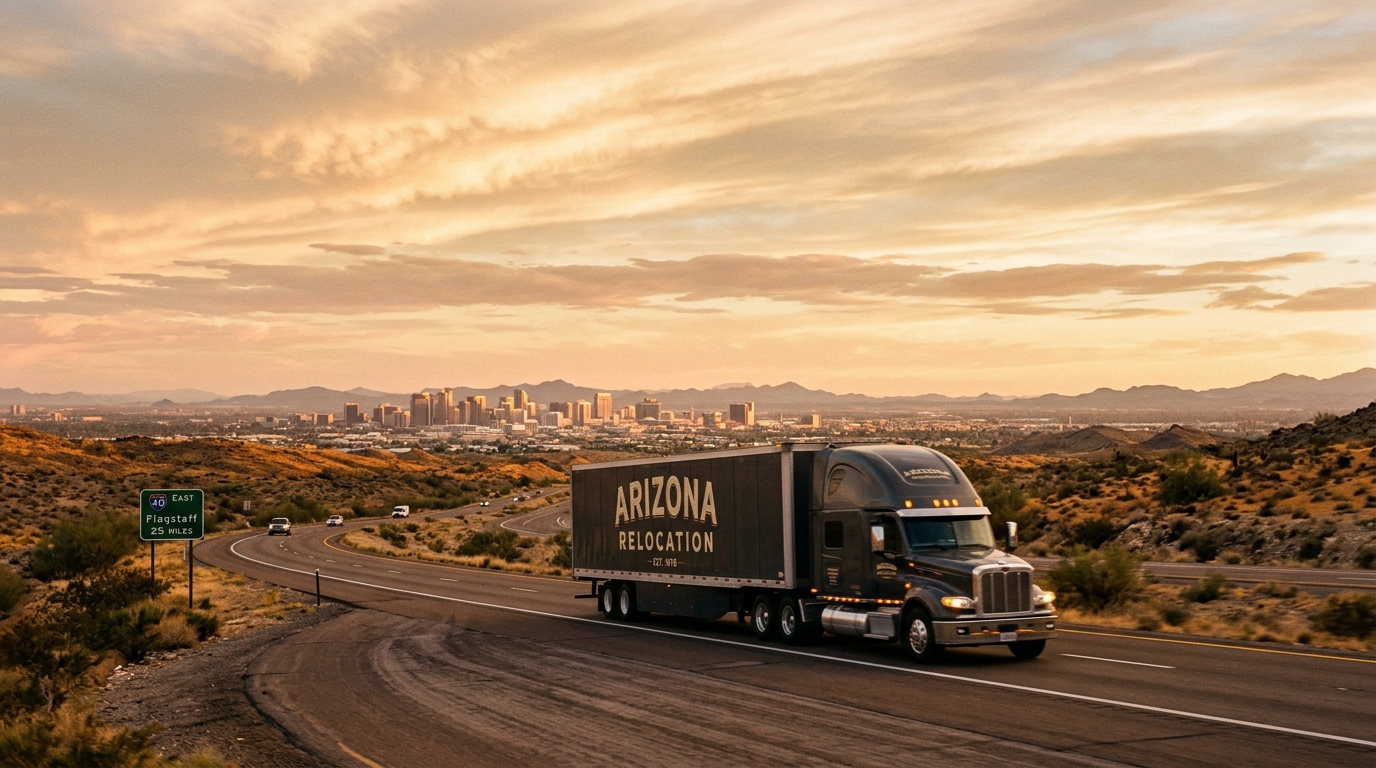
From a City of 400,000 to a City of 1.6 Million
The most important thing to know before you start researching this move: Phoenix is not a bigger version of Bakersfield. It is a fundamentally different kind of place. With more than 1.6 million residents, it is one of the largest cities in the country. That scale shapes everything — the rental market, the pace of lease turnover, the complexity of moving day, and how quickly you will need to commit to a neighborhood or apartment once you find one you like.
If you have been taking your time deciding, Phoenix will push you to decide faster. About 15% of Phoenix residents moved in the past year, compared with 10% in Bakersfield. That is not a small difference: it means desirable units fill and empty quickly, and landlords are accustomed to moving at pace. If you are searching for a place to land before your move, plan to be ready to sign within days of a showing, not weeks.
The movers in Bakersfield you choose will be crossing a state line, which means federal FMCSA rules govern the move. That matters for how your estimate is written, what you owe at delivery, and what protection your belongings have. More on that below.
The Building at Each End Changes Moving Day
This is where the Bakersfield-to-Phoenix move gets practically complicated. In Bakersfield, 71% of homes are detached single-family houses. A driveway, ground-level entry, and a straight shot from door to truck is the norm. Moving day is generally straightforward.
In Phoenix, only 60% of homes are detached, and 26% are in buildings of five or more units — nearly double Bakersfield's 14%. If you are renting in Phoenix, there is a meaningful chance you will be moving into a mid-rise or high-rise apartment. That changes the moving day calculus entirely: elevator reservations, loading dock access windows, parking permits for the truck, and building move-in fees all become variables you need to manage before the truck arrives.
Before you book anything, call the building manager at your Phoenix destination and ask specifically: Is there a freight elevator? How long can I reserve it? Is there a loading dock or designated street parking for a moving truck, and do I need a city permit? Is there a move-in fee and what does it cover? Get those answers in writing and pass them directly to your mover when you request a quote. A mover who asks those questions unprompted is a mover who has done this before.
On the Bakersfield end, if you are leaving a detached house — as most people here are — the main access consideration is whether the truck can park close enough to keep the carry distance short. Long carries increase time and, on a non-binding estimate, actual cost.
Heat at Both Ends — But Not the Same Heat
You are not escaping a hot climate by leaving Bakersfield; you are trading one for a more extreme version. Bakersfield summers frequently push past 100°F, and the San Joaquin Valley traps wildfire smoke and agricultural pollutants in ways that make summer air quality genuinely poor. Phoenix summers are hotter still — temperatures routinely exceed 110°F from June through September — and the city gets intense dust storms, called haboobs, as well as wildfire smoke drifting in from surrounding regions.
For planning your move, this matters in one specific way: summer is the worst time to do this. Loading and unloading in triple-digit heat puts your crew, your belongings, and your electronics at risk. Heat-sensitive items — artwork, instruments, plants, anything with a lithium battery — should not ride in a non-climate-controlled truck for hours on a summer afternoon on this route.
If your timeline allows any flexibility, aim for October through April. Bakersfield winters are mild, if occasionally foggy (the Tule fog that settles in the San Joaquin Valley can create dangerous driving conditions, so watch forecasts if you are moving in December or January). Phoenix winters are genuinely pleasant — mild, sunny, and far easier on both the movers and your furniture. Spring and fall are the sweet spots for this route from a pure logistics standpoint.
If you must move in summer, ask your mover about climate-controlled truck options, schedule the loading for early morning, and plan for longer delivery windows — heat slows everything down.
What the Housing Cost Gap Actually Means
The median home in Phoenix runs about 10% higher than in Bakersfield, and median rent is about 6% higher. Neither gap is dramatic, but combined with Phoenix's faster-moving rental market, it does mean one practical thing: if you are arriving without a place secured, a short-term rental or extended-stay arrangement in Phoenix will cost more than you might expect, and the pressure to sign a lease quickly can push you into a decision before you have learned the city.
Household incomes in the two cities are essentially equal, so you are not arriving with meaningfully more or less earning power — the higher costs are genuine. Spending time before your move researching Phoenix neighborhoods online, even without a formal list to draw from, will help you arrive with enough orientation to slow down and choose well rather than signing the first available lease under time pressure.
How the Move Itself Is Governed
Because you are crossing from California into Arizona, this is an interstate move under federal FMCSA rules. A few things you should know and confirm with any mover you consider:
Your estimate must be written, and it must say whether it is binding or non-binding. A binding estimate means you pay that amount at delivery, plus any services you added after signing, plus up to 15% for impracticable operations if the mover encounters unexpected access or weight issues; anything above that comes in a bill later. A non-binding estimate is based on actual weight — at delivery you owe 110% of the estimate, with any remaining balance billed within 30 days. A not-to-exceed price, sometimes called a guaranteed not-to-exceed, is a common product movers offer that works like a binding estimate with a ceiling; it is worth asking about on a route like this where access variables at the Phoenix end can be unpredictable.
Your estimate should be based on a physical survey — in person or by live or recorded video. A quote given over the phone without seeing your belongings is an FMCSA red flag.
Full Value Protection applies automatically on interstate moves, meaning your mover is responsible for repairing, replacing, or paying the replacement value of anything damaged. Released Value — the free option at 60 cents per pound per article — is available only if you sign a written waiver choosing it. Separate moving insurance is optional and worth considering for high-value items.
Get your bill of lading at least three days before loading, and do not sign a blank document. You have the right to cancel within those three days. A large cash deposit upfront, before your goods are loaded, is a red flag.
File any damage claims in writing within nine months of delivery. A note on the delivery receipt is not a claim.
To confirm a mover's license status, look them up in the FMCSA's online search. "Motor Carrier of Household Goods" means they move you themselves; "Broker of Household Goods" means they hand your job to another company. Both are legal — just know which one you are talking to.
Choosing a Mover for This Route
This is a route that rewards some specificity when you are vetting movers. Ask directly whether the company has moved households from the Bakersfield or greater San Joaquin Valley area into Phoenix metro, and whether they regularly handle multi-unit building deliveries with elevator and loading dock coordination. The Phoenix access question alone — permits, dock windows, elevator reservations — is enough to separate movers who are prepared from those who are not.
Our team has 35+ years of hands-on service-provider experience, including an operator who ran a moving company for 18 years, and that background informs what we look for in the movers in Phoenix listed in our directory. You can find movers for this route directly, or browse by state if you want to compare options across California and Arizona. Either way, gather at least three written estimates based on actual surveys before you decide.