
Find movers near you
Movers across New York.
Compare top-rated local and long-distance movers — and let Robert do the comparison for you.
Get Your Quote→New York · NY
Moving companies in New York.
404 movers across 42 cities in New York — local, long-distance, and specialty handling. Compare listings, get transparent quotes, and use our honest cost guide before you book.
Robert
Online·Call for a quote
Hi — I'm Robert, and I'll help you find the right movers. Where are you moving from, and where are you headed? Prefer a live representative? Just say the word and I'll connect you, or use the call button for a quote anytime.
By chatting with Robert, you agree we may share your move details with movers in your origin city so they can contact you with a quote. We never sell or share your info outside this network. Privacy Policy.
Top movers in New York
New York movers worth a look.
A few of the top movers statewide. Want a tailored recommendation? Chat with Robert above.
All movers
Every mover in New York.
Sorted by best match. Click any card for the full profile and contact details.

Fox Hollow Movers LLC
Syracuse, NY
★ 2.8 (54 reviews)

Dean Moving
Buffalo, NY

Bronx Express Movers
New York, NY
★ 2.0 (8 reviews)
Duke Moving & Storage Inc
Jamestown, NY

Jordan River East Moving
Bronx, NY
★ 2.4 (8 reviews)
A A American Moving & Storage
New York, NY

Mike Cerio & Sons Moving
Syracuse, NY
★ 5.0 (2 reviews)

Fast Movers USA
New York, NY

First Class Delivery Moving, LLC
Buffalo, NY
★ 3.6 (14 reviews)

Drop Deck Trailer Moving
New York, NY
★ 5.0 (1 reviews)

New Moving Vans
New York, NY

Ariel Moving & Storage
New York, NY

B & F Moving and Storage
Buffalo, NY
★ 3.5 (13 reviews)

Seamens Moving
New York, NY
USDOT #948491
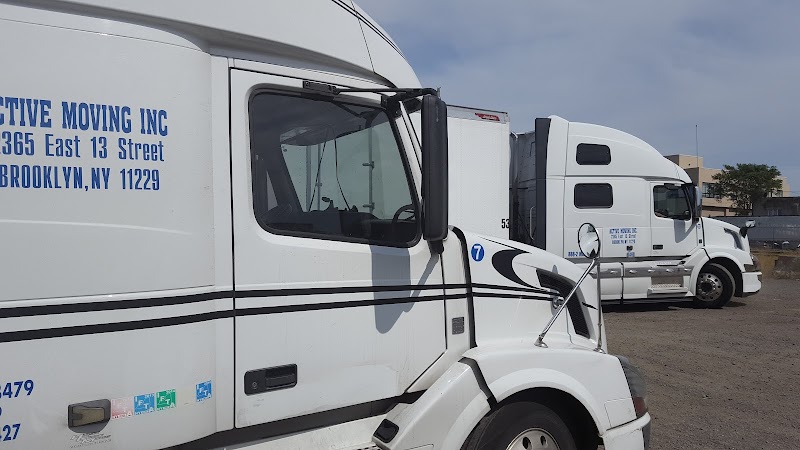
Active Moving, Inc
Brooklyn, NY
★ 3.4 (84 reviews)
Cities in New York
Jump to movers in your city.
42 New York cities have moving companies listed.
New York
276 movers listed
Buffalo
23 movers listed
Syracuse
19 movers listed
Albany
13 movers listed
Rochester
13 movers listed
Long Island
8 movers listed
Brooklyn
7 movers listed
Utica
5 movers listed
Bronx
2 movers listed
Kingston
2 movers listed
Poughkeepsie
2 movers listed
Riverhead
2 movers listed
Staten Island
2 movers listed
White Plains
2 movers listed
Amsterdam
1 mover listed
Ashville
1 mover listed
Astoria
1 mover listed
Bethpage
1 mover listed
Binghamton
1 mover listed
Clymer
1 mover listed
Dunkirk
1 mover listed
Elmira
1 mover listed
Forest Hills
1 mover listed
Fresh Meadows
1 mover listed
Glens Falls
1 mover listed
Jamestown
1 mover listed
Merrick
1 mover listed
Mt Vernon
1 mover listed
Oneonta
1 mover listed
Patchogue
1 mover listed
Plattsburgh
1 mover listed
Salamanca
1 mover listed
Saratoga Springs
1 mover listed
Sinclairville
1 mover listed
Sunnyside
1 mover listed
The Bronx
1 mover listed
Uniondale
1 mover listed
Warwick
1 mover listed
Waterloo
1 mover listed
Woodmere
1 mover listed
Woodside
1 mover listed
Yaphank
1 mover listed
About moving in New York
What shapes a New York move.
New York's moving market is unlike any other state. The New York City metro alone generates enormous demand — people constantly cycling through apartments, relocating for finance, media, and tech jobs, or fleeing high rents for New Jersey, Connecticut, or Florida. Upstate cities like Buffalo, Rochester, Albany, and Syracuse have their own distinct moving ecosystems, often driven by university cycles and healthcare employment. Seasonal demand peaks sharply in late spring and summer, when leases turn over en masse in NYC. The state's density, parking restrictions, elevator reservations, and building COI requirements add layers of complexity that don't exist in most other states.
NYC Logistics Are Uniquely Demanding
Moving in or out of New York City requires navigating narrow streets, limited parking, and strict building rules. Most co-ops and condos require movers to carry a certificate of insurance (COI) naming the building as an additional insured. Many buildings also restrict move-in and move-out times to weekday business hours, and elevator reservations must be booked in advance — sometimes weeks out. Factor these constraints into your scheduling and budget.
Upstate Moves Follow Different Patterns
Buffalo, Rochester, Syracuse, and Albany operate at a much smaller scale than NYC and often have lower moving costs. University calendars — Cornell, University of Rochester, SUNY schools — drive seasonal surges in August and May. Winter weather in western and central New York can complicate moves between November and March, with lake-effect snow around Buffalo creating scheduling risks. Local movers in these markets are typically more available year-round than their NYC counterparts.
Strong Outbound Migration Trend
New York has seen consistent net outbound migration for several years, with residents most commonly relocating to Florida, New Jersey, North Carolina, and Texas. High state and city income taxes, elevated housing costs, and remote-work flexibility are the most frequently cited drivers. This means long-distance movers serving NY-to-Florida and NY-to-Southeast corridors are in high demand, which can affect pricing and availability, especially in spring and summer.
Licensing and Insurance Requirements Are Strict
New York State requires intrastate movers to register with the New York State Department of Transportation (NYSDOT) and carry specific minimum insurance levels. The state also mandates a written estimate and a binding or non-binding contract before the move. NYC adds its own layer — the Department of Consumer and Worker Protection oversees moving companies operating within city limits. Confirm any mover's NYSDOT registration number before signing a contract.
Anywhere in the state
Find a mover anywhere in New York.
Tell Robert where you're headed and get matched with professional local + long-distance movers — free.
Cost of living
Cost of Living Across New York State
New York State has some of the sharpest internal cost-of-living contrasts in the country. Manhattan sits at the extreme high end globally, while cities like Buffalo and Syracuse are affordable by most national standards. This range means the reason and direction of your move within the state matters enormously — someone leaving NYC for Buffalo may cut housing costs by 60% or more, while someone moving from upstate to Manhattan faces a dramatic increase.
| Metro | COL Index | What to expect |
|---|---|---|
| New York City (Manhattan) | 235 | Median 2BR apartment rents typically run $4,500–$6,500+/month; one of the highest costs of living globally |
| New York City (Brooklyn/Queens) | 185 | 2BR rents typically range $2,800–$4,200/month; significantly lower than Manhattan but still well above national averages |
| White Plains / Westchester County | 155 | 2BR rents run approximately $2,400–$3,500/month; suburban costs are elevated by NYC metro proximity and strong school districts |
| Albany | 110 | 2BR apartments typically rent for $1,400–$1,900/month; state government and university employment anchor a stable, moderately priced market |
| Rochester | 95 | 2BR rents generally run $1,100–$1,600/month; one of the more affordable mid-size metros in the Northeast with a strong healthcare and university sector |
| Buffalo | 88 | 2BR apartments typically rent for $950–$1,400/month; among the most affordable mid-size cities in the state, with a revitalized downtown and lower property taxes |
Common routes
Most Common Long-Distance Moving Routes From New York
New York → Florida
~1,280 mi (NYC to Miami)
$3,500–$7,500
The NY-to-FL corridor is one of the busiest in the country, driven by retirees, remote workers, and families leaving NYC for lower taxes and warmer weather — particularly to Miami, Orlando, Tampa, and the Palm Beach area.
New York → New Jersey
~30–120 mi
$800–$2,500
Thousands of New Yorkers cross into northern New Jersey each year for more space and lower housing costs while maintaining access to the NYC job market via commuter rail.
New York → Connecticut
~50–120 mi
$900–$2,800
Fairfield County towns like Stamford, Greenwich, and Westport are popular destinations for NYC families seeking suburban space, good schools, and Metro-North rail access to Manhattan.
New York → North Carolina
~600 mi (NYC to Raleigh)
$2,800–$5,500
The Research Triangle and Charlotte have drawn a steady stream of New Yorkers seeking lower costs, a warmer climate, and a growing job market in tech, finance, and healthcare.
New York → California
~2,800 mi (NYC to Los Angeles)
$5,500–$11,000
NY-to-CA is a major coast-to-coast corridor, commonly used by entertainment, tech, and media professionals relocating between the two largest U.S. media and financial hubs.
New York → Texas
~1,750 mi (NYC to Austin)
$4,000–$8,500
Austin, Houston, and Dallas have attracted New Yorkers pursuing no state income tax, lower housing costs, and expanding job markets in tech and energy sectors.
Licensing + rules
New York Moving Company Rules and Consumer Protections
NYSDOT Intrastate Mover Registration
Movers performing moves entirely within New York State are typically required to register with the New York State Department of Transportation (NYSDOT) and obtain a household goods carrier certificate. You can verify a mover's registration on the NYSDOT website. Moving companies operating without this registration are illegal and offer no consumer protections. Always confirm the NYSDOT number before signing anything.
Intrastate movers must register with NYSDOT; verify registration at the NYSDOT carrier lookup tool before booking.
NYC Department of Consumer and Worker Protection
Movers operating within New York City are also subject to oversight by the NYC Department of Consumer and Worker Protection (DCWP). NYC has historically licensed movers separately from the state. Consumers should verify both state and city credentials for any mover handling a move that starts or ends within the five boroughs. The DCWP has enforcement authority over deceptive moving practices in the city.
NYC adds a local licensing layer via DCWP on top of state NYSDOT registration for moves within the five boroughs.
Written Estimates Required by State Law
New York State law requires movers to provide a written estimate before performing any intrastate move. The estimate must clearly state whether it is binding or non-binding. A binding estimate caps the price; a non-binding estimate can change based on actual weight or hours. If a mover refuses to provide a written estimate or only offers a verbal quote, that is a red flag and potentially a violation of state consumer protection rules.
Written estimates (binding or non-binding) are legally required for intrastate moves in New York State.
Interstate Moves: Federal USDOT/FMCSA Oversight
Any move crossing state lines is regulated federally by the USDOT's Federal Motor Carrier Safety Administration (FMCSA). Movers must have a valid USDOT number and operating authority. Federal rules require a written estimate, a copy of 'Your Rights and Responsibilities When You Move,' and limits on how much over the estimate a mover can charge before you must pay. Verify USDOT numbers at the FMCSA SAFER database.
Interstate movers must hold USDOT operating authority; verify at FMCSA SAFER system before booking.
Building COI Requirements in NYC
Most apartment buildings, co-ops, and condominiums in New York City require movers to carry a certificate of insurance (COI) naming the building as an additional insured, typically with $1 million or more in general liability coverage. This is not a legal mandate but a near-universal building policy requirement. Confirm your mover can produce the appropriate COI before your move date — failure to do so can result in the building refusing the move.
COI requirements are building-level policies in NYC, not state law, but are effectively universal in co-ops and condos.
New York moving FAQ
Common New York Moving Questions.
How far in advance should I book a mover in New York City?
+
For moves during peak season — roughly May through September — you should book at least 4–8 weeks in advance in NYC. The summer lease-turnover cycle (especially around September 1st, a common NYC lease end date) creates intense demand that can make reliable movers fully booked weeks out. For off-peak moves (October through April), 2–3 weeks is often sufficient, and you may find better pricing and more date flexibility.
What is a COI and why does my NYC building require it from my mover?
+
A certificate of insurance (COI) is a document from the mover's insurance company confirming coverage. NYC buildings require the mover's COI to name the building as an 'additional insured,' protecting the building from liability if a mover damages common areas. Most reputable NYC movers issue COIs routinely — just provide them your building's management contact and name as soon as you book. Movers who cannot or will not provide a COI are not suitable for NYC building moves.
Are NYC moving prices higher than upstate New York?
+
Yes, significantly. Moving costs within Manhattan or between boroughs are typically higher than equivalent-distance moves in upstate cities like Buffalo, Rochester, or Albany, due to higher labor costs, parking challenges, elevator logistics, and building requirements. A local 2-bedroom move in Manhattan might run $1,200–$2,500 or more, while a comparable move in Buffalo or Syracuse might cost $600–$1,200. Long-distance moves originating from NYC also tend to carry higher base rates than those starting upstate.
How do I verify a New York moving company is legitimate?
+
For intrastate moves, look up the mover's NYSDOT household goods carrier registration on the NYSDOT website. For moves within NYC, check DCWP licensing as well. For interstate moves, verify the mover's USDOT number and operating authority at the FMCSA SAFER system. Ask for a written estimate before any commitment. Be cautious of movers who refuse to provide a registration number, won't come to do an in-home estimate for large moves, or demand large cash deposits upfront.
What are the most common destination states for people leaving New York?
+
Based on widely reported IRS migration and census data, the most common destinations for New Yorkers leaving the state are Florida, New Jersey, Connecticut, North Carolina, Pennsylvania, and Texas. Florida is by far the top destination, especially for retirees and remote workers from the NYC metro. New Jersey and Connecticut attract people who want to stay in commuting distance of NYC. North Carolina, particularly the Raleigh-Durham Research Triangle and Charlotte, has grown rapidly as a destination for younger New Yorkers.
Is it cheaper to move out of New York in winter?
+
Generally yes, especially for moves out of NYC. Demand drops sharply between November and March, and many movers offer lower rates or more negotiating flexibility. However, winter moves carry risks in upstate New York — lake-effect snow around Buffalo and Syracuse, icy road conditions, and the possibility of delays or rescheduling. If you're moving within or through upstate NY in winter, build weather contingency into your timeline. Long-haul winter moves from NYC to warmer states like Florida or Texas are typically smoother.
What should I know about parking and logistics for a NYC move?
+
Street parking for a moving truck in NYC almost always requires a parking permit or NYPD approval, particularly in Manhattan and parts of Brooklyn and Queens. Your mover should handle this — typically by filing for a temporary no-parking zone with the local police precinct at least 5–7 business days before your move. If your building has a loading dock, coordinate access timing with the building's management. Failure to secure parking can result in fines or the truck being forced to double-park, slowing the entire move.
Do New York movers have to give me a written estimate?
+
Yes. New York State law requires intrastate movers to provide a written estimate before the move. The estimate must specify whether it is binding (a firm price ceiling) or non-binding (subject to adjustment based on actual weight or hours). For interstate moves, federal FMCSA rules also require a written estimate. Never accept a verbal-only quote for any move. If a final bill significantly exceeds the estimate and there was no written change order, you have grounds to dispute it under state and federal consumer protection rules.
How does renting in NYC affect my moving logistics compared to buying?
+
The vast majority of NYC residents rent rather than own, which means most moves are apartment-to-apartment. Key considerations unique to NYC rentals: buildings often only allow moves on weekdays during set hours (e.g., 9am–5pm), elevator reservations must be made in advance with building management, and lease start/end dates cluster heavily around the first of the month — especially September 1st. If your move date is flexible, avoiding the 1st of the month and the September turnover period can reduce both cost and logistical stress.
What is the typical cost of a long-distance move from New York to Florida?
+
A move from the New York City area to South Florida (Miami, Fort Lauderdale, or Tampa) typically costs somewhere in the range of $3,500–$7,500 for a standard 2–3 bedroom household, depending on total weight or volume, the specific origin and destination addresses, time of year, and services like packing. Peak season (spring and summer) and full-service packing add to the total. Get at least three written estimates from FMCSA-licensed movers and compare binding versus non-binding options carefully before committing.
Moving out of state?
Long-distance movers in New York.
What an interstate move costs and how to choose a licensed mover, city by city. Every city we cover.
Moving away from New York?
Relocation guides from New York.
Cost of living, taxes, and what to expect for popular interstate moves out of New York.
New York → California
Read the guide →New York → Connecticut
Read the guide →New York → Florida
Read the guide →New York → New Jersey
Read the guide →New York → Pennsylvania
Read the guide →New York → Texas
Read the guide →New York → Jacksonville
Read the guide →New York → Miami
Read the guide →New York → Newark
Read the guide →New York → North Port
Read the guide →New York → Orlando
Read the guide →New York → Tampa
Read the guide →Get your moving quote
Many ways to get a moving quote.
Chat, text, email, or call — whichever’s easiest. Tell Robert about your move and matching movers in your city reach out, usually within a few minutes.