Moving blankets typically cost $5–$25 each to buy new, depending on weight and quality, or come bundled free (or nearly free) when you rent a moving truck. For a typical 2- to 3-bedroom move you'll need 12–24 blankets to protect furniture properly — so buying a set runs roughly $60–$300, while a full-service mover supplies them at no separate charge. Whether you rent, buy, or borrow, the right blankets can prevent hundreds of dollars in scratched wood and dented appliances.
What Do Moving Blankets Actually Cost?
The price varies mostly by weight (measured in pounds per dozen) and where you buy them.
| Source | Cost per blanket | Notes |
|---|---|---|
| Budget-grade, new (online/retail) | $5–$10 | ~35–45 lb/dozen; light duty |
| Mid-grade, new | $10–$18 | ~65–72 lb/dozen; most popular for DIY moves |
| Professional/heavy-duty, new | $18–$25+ | ~80+ lb/dozen; used by most moving companies |
| Truck rental company (included) | Free with rental | Typically 12–24 blankets bundled |
| Truck rental add-on pack | $10–$40 for a set of 6–12 | Varies by company and location |
| Used/secondhand (resale sites, storage auctions) | $2–$8 | Condition varies widely |
| Full-service mover | Included in the move price | Movers bring their own; nothing to buy |
Bottom line on cost: If you're renting a truck, check whether blankets are already included before spending anything extra. Most major truck rental companies bundle at least a dozen blankets with standard rentals, though availability varies by location.
How Many Moving Blankets Do You Need?
A useful starting point: one blanket per large furniture piece, plus a few extras for oddly shaped items.
| Home size | Furniture pieces to protect | Blankets to have on hand |
|---|---|---|
| Studio / 1-bedroom | 5–10 | 10–15 |
| 2-bedroom | 10–16 | 16–24 |
| 3-bedroom | 16–22 | 24–36 |
| 4-bedroom+ | 22+ | 36–48+ |
Items that always need wrapping: dressers, dining tables, bed frames (especially wood headboards), mirrors, glass-front cabinets, leather sofas, and any appliance with a painted or stainless finish. For room-by-room guidance on protecting your furniture during a move, see our post on how to protect your belongings during a move.
Should You Rent, Buy, or Skip Moving Blankets?
Renting (via a truck rental company)
Best for: One-time DIY or hybrid movers who don't plan to move again soon.
Most truck rentals include a set of blankets with the vehicle — confirm this when booking. If you need more, renting extras is usually the cheapest path. The downside: availability isn't guaranteed, and you return them at drop-off, so you can't use them for anything else.
If you're combining a rental truck with hired labor — a setup sometimes called a hybrid move — check our hybrid move guide for a full cost breakdown before you book.
Buying New
Best for: Anyone moving more than once in the next few years, or who wants consistent protection for heavy furniture.
A dozen mid-grade blankets (65–72 lb/dozen quality) runs about $100–$150 on Amazon or at moving supply retailers, and they'll last through multiple moves if stored properly. After the move, they double as workshop padding, car seat covers, or storage protection for furniture in a garage or storage unit.
Buying Used
Best for: Budget-minded movers who don't mind variability.
Secondhand moving blankets show up regularly on resale platforms, at storage unit auctions, and sometimes at moving supply stores that take returns. At $2–$8 each, used blankets are a solid value — just check for tears, excessive pilling, or odors before buying a big lot.
Skipping Them Altogether
Best for: Very small moves (a few boxes and a bed), or moves where a full-service mover is handling everything.
If you hire full-service movers, they bring their own professional-grade blankets and pads — it's standard practice. You do not need to supply them. (If a mover quotes you extra for padding and blanketing on a standard move, that's worth a question; see our advice on spotting hidden moving fees.)
Moving Blanket Quality: What the Weight Ratings Mean
Moving blanket quality is typically expressed as weight per dozen:
- 35–45 lb/dozen: Light-duty. Fine for soft items (mattresses, upholstered chairs) but won't hold up against sharp table corners or repeated use.
- 65–72 lb/dozen: The sweet spot for most DIY movers. Thick enough to prevent most scratches on wood furniture and appliances.
- 80+ lb/dozen: Professional grade. This is what licensed movers typically carry. Heavier, harder to fold, but noticeably more protective for antiques, glass, and finished wood.
For moves involving furniture that's genuinely irreplaceable — antiques, heirlooms, marble tops — heavy-duty blankets are worth the upgrade. Our guide on moving art, antiques, and collectibles goes deeper on specialty protection for those pieces.
While you’re reading
Skip the research — let Robert match you with movers.
Free quotes from movers in your area. Pick whichever is easiest.
How to Use Moving Blankets Correctly
Buying blankets but using them wrong is a common and avoidable mistake.
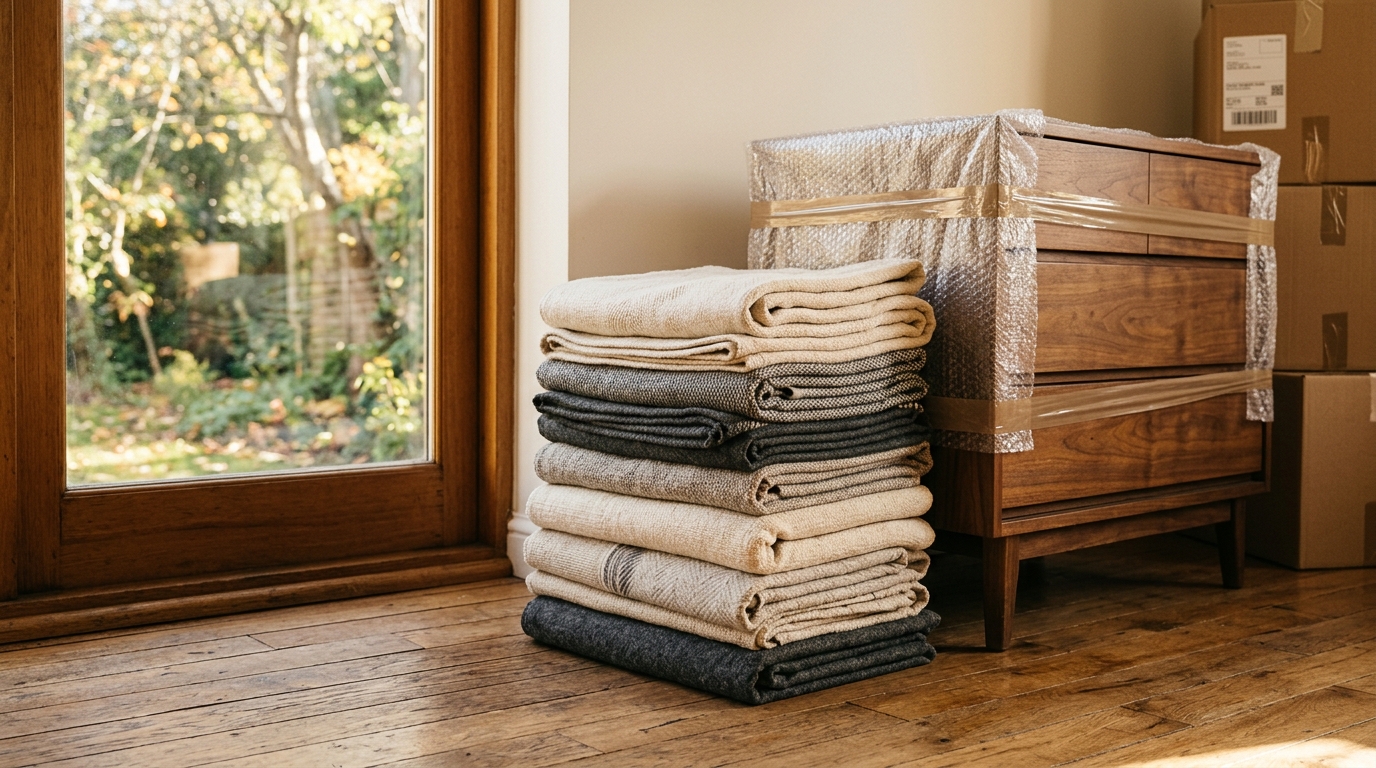
- Wrap corners first. Fold one corner of the blanket over each vulnerable edge of the furniture piece before wrapping the body. Corners are where most damage happens in transit.
- Overlap edges. When using more than one blanket on a large piece, overlap them by at least six inches so no surface is exposed.
- Secure with stretch wrap or moving rubber bands. Packing tape directly on blankets is fine; tape directly on furniture is not — it can pull finish off wood. Always put the blanket between the tape and the surface.
- Don't leave blankets loose in the truck. A blanket that slips in transit can scratch what it was supposed to protect. Tuck excess fabric underneath the item or use rubber bands to snug it.
- Use cardboard corners for mirrors and glass. Moving blankets alone aren't enough for mirrors and framed glass — add cardboard corner guards or a mirror box, then blanket-wrap the whole thing.
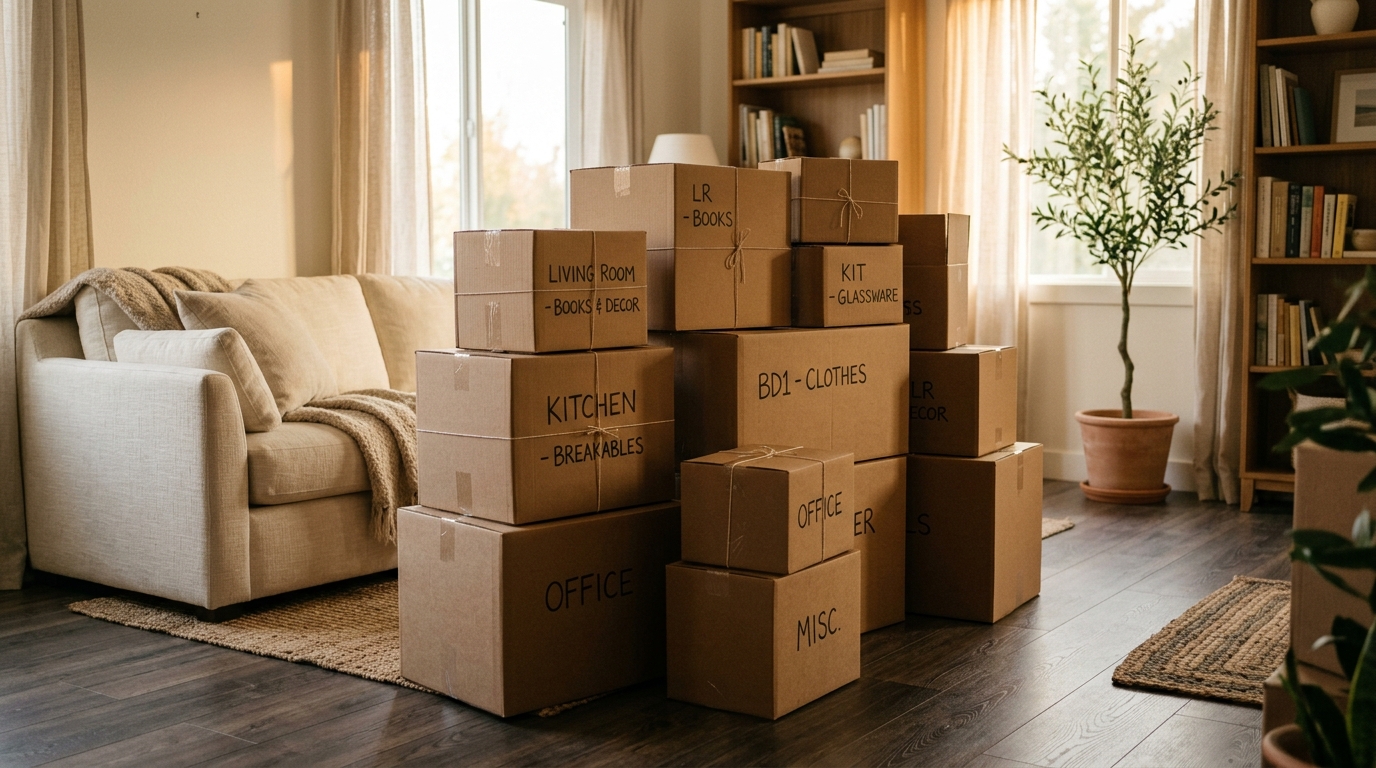
For a broader look at how to organize and label everything you're packing, how to label moving boxes like a pro covers the system that makes unpacking far less chaotic.
Where to Buy Moving Blankets
- Online retailers (Amazon, Uline, Home Depot): Widest selection, best price comparisons. Search by weight per dozen, not just price per blanket.
- Moving supply stores: Often stock mid- and professional-grade blankets; staff can advise on quantity.
- Warehouse clubs: Occasionally carry bundled sets at competitive prices — worth checking if you're buying a full dozen or more.
- Resale platforms: Good for used blankets; filter for local pickup to avoid shipping costs eating into the savings.
When you're ready to find movers who handle everything — blankets, wrapping, and all — our directory makes it easy to compare licensed, movers in your area.
Frequently Asked Questions
How many moving blankets does a professional mover typically bring?
Most licensed movers bring enough blankets to cover every large furniture piece, typically 24–48 blankets for a 2- to 3-bedroom home. Blankets and padding are considered standard equipment for full-service movers, not an add-on.
Can I use regular household blankets instead of moving blankets?
Yes, with limitations. Household blankets — quilts, comforters, thick throws — work fine for lightly padded items like upholstered chairs or lamp bases. They're usually too thin and too small to adequately protect wood furniture corners, large appliances, or glass surfaces. Moving blankets are heavier, larger (typically 72" × 80"), and designed to stay in place under stretch wrap.
Are moving blankets the same as furniture pads?
Yes — the terms are used interchangeably in the industry. "Furniture pads" and "moving pads" are the same product as "moving blankets." The only distinction is quality tier, which is communicated through weight per dozen.
Do I need moving blankets for a local move?
Yes, if you're moving wood furniture, appliances, or anything with a finished surface. Local moves involve the same loading, transport, and unloading risks as long-distance ones. The drive is shorter, but stops, turns, and truck vibration still shift loads. If you're hiring movers by the hour, check our guide on how movers charge by the hour to understand what's typically included in a local rate.
What do I do with moving blankets after the move?
If you bought them: keep them. They're useful for padding stored furniture, protecting items in a garage or storage unit, covering car seats during camping trips, or protecting floors during home projects. If you rented them from a truck rental company, return them folded at drop-off — leaving them dirty or torn may result in a damage fee.
Is it cheaper to buy moving blankets or rent them?
For a single move, renting (through a truck rental company) is almost always cheaper than buying — especially if they're bundled with the truck. If you're moving twice in the next two years, or plan to store furniture between moves, buying a mid-grade set of 12 for $100–$150 will pay for itself quickly. Browse our boxes & packing supplies guides for more on building the right supply kit without overspending.
Need help finding a mover who brings their own equipment and has the reviews to back it up? Browse movers in your area or ask Robert, our moving concierge, any question you have — he's available on every page of the site.
Tagged