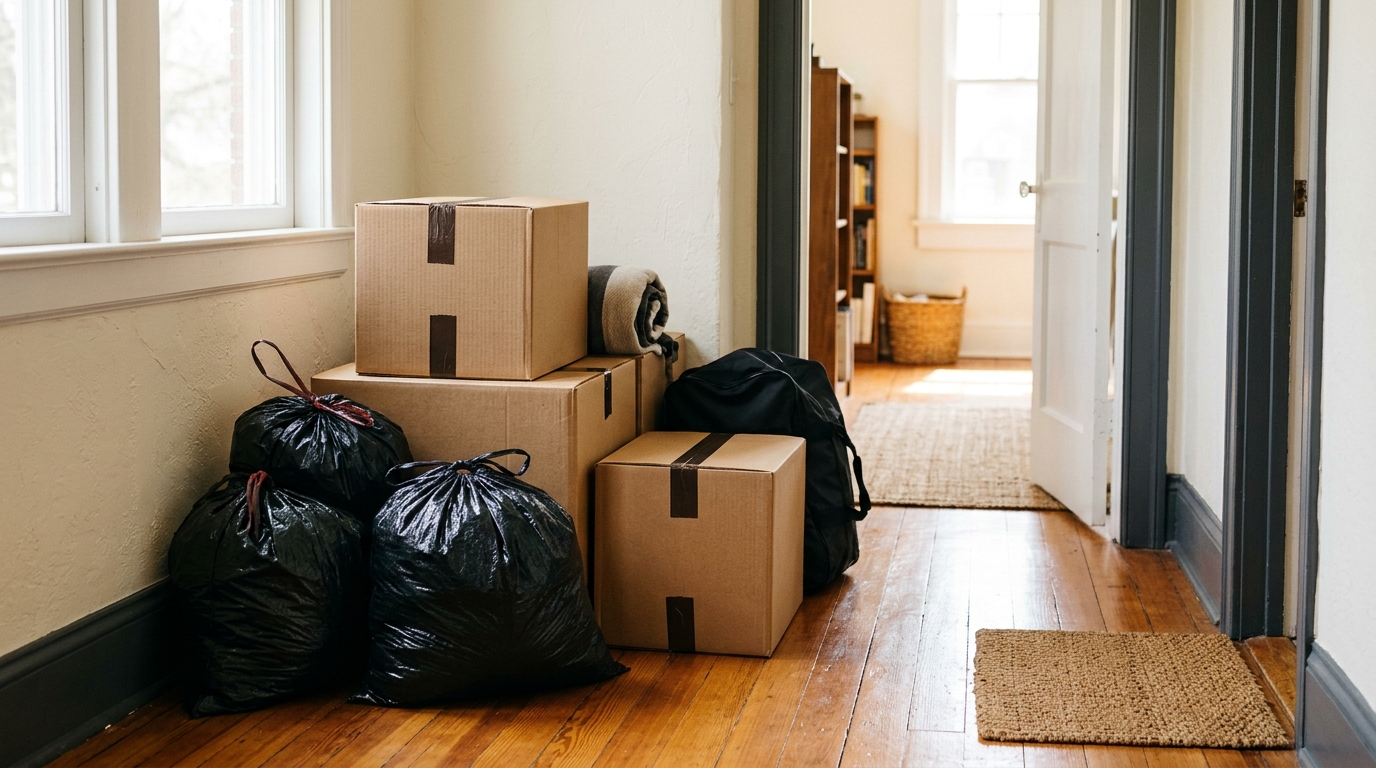
Adjusting to life away from home typically takes two to six months — and that range is completely normal. The first few weeks after a move tend to feel the hardest: the novelty of a new place hasn't caught up with the loss of your routines, your people, and your sense of belonging yet. What helps is not waiting to "feel at home" before you start building one — it works the other way around.
Why does moving away feel so hard, even when you chose to go?
Homesickness is not a sign that you made the wrong decision. It's your brain registering the loss of familiar cues — the coffee shop you walked to automatically, the friend you texted without thinking, the specific way late afternoon light fell through your old window.
Research in psychology consistently describes this as an adjustment period, not a character flaw. Voluntary moves can still trigger intense grief. Moving for a job, a relationship, or a fresh start doesn't make the loss of what you left behind any less present.
What makes it worse:
- An empty or half-unpacked home (visual chaos amplifies stress)
- No anchor routines yet (nowhere to "just go" automatically)
- Social isolation — not knowing anyone in a physical radius
- Comparing your new place's worst days to your old place's best memories
What does the adjustment timeline actually look like?
Most people move through recognizable phases, though the pace varies.
| Phase | Typical timing | What it feels like |
|---|---|---|
| Honeymoon / adrenaline | Days 1–14 | Busy, exciting, exhausting — you're still in move mode |
| The crash | Weeks 2–6 | Quieter, lonelier; the routine gap becomes obvious |
| Slow rooting | Months 2–4 | Small wins: a favorite café, a first local friend |
| Belonging | Months 4–12+ | New place starts to feel like your place |
The crash phase — weeks 2 through 6 — is when most people search "how to adjust to moving away from home." If that's where you are right now, you're exactly on schedule.
How do you get through the first two weeks?
The first two weeks are logistical: your job is to reduce chaos and install at least one anchor routine.
- Unpack your bedroom and kitchen first. Sleeping and eating in a space that feels settled calms your nervous system faster than anything else. Our guide on how to unpack after a move has a room-by-room sequence that works.
- Pick one "third place" and go back. A coffee shop, a park bench, a gym — somewhere that isn't home or work. Go twice in the first week. Familiarity builds faster than you expect.
- Call the people you miss on a schedule, not on impulse. Impulse calls feed the ache. Scheduled calls give you something to look forward to and make it easier to be present in your new city between them.
- Walk the neighborhood without an agenda. No headphones, no podcast. Let your brain start mapping the place. Notice three things you like.
How do you start building a social life from scratch?
This is usually the hardest part. Most adults don't have a ready-made social infrastructure — no dorm hallway, no shared class schedule.
What actually works:
- Recurring group activities beat one-off events every time. A weekly running club, a pottery class, a book group — the repetition is what builds relationships, not the first hello.
- Neighbor contact early. Knock and introduce yourself in the first week. It's awkward for thirty seconds and then it's done. Most people are genuinely glad someone went first.
- Apps and community boards — NextDoor, Meetup, local Facebook or Reddit groups — are legitimately useful for finding recurring activities. Think of them as a discovery layer, not a social life themselves.
- Say yes to things that feel slightly uncomfortable. Adjust your threshold downward temporarily. You can be selective again once you have options.
Our guide on how to make friends and build a social life after moving to a new city goes deeper on specific strategies by personality type and city size.
How do you stay connected to home without it holding you back?
The goal is a tether, not an anchor. Staying connected to people you love is healthy; staying emotionally anchored to your old city keeps you from investing in the new one.
Healthy connection looks like:
- Scheduled video calls or group chats (consistency over frequency)
- Sharing what's new in your life, not just reminiscing
- Planning a return visit with a specific date — uncertainty about when you'll be back amplifies anxiety
Watch for these patterns:
- Spending most of your free time consuming content from your old city (local news, social feeds of people you left)
- Comparing every new experience unfavorably to how things were
- Declining invitations in your new city because you're on a call back home
None of these are permanent problems — they're just habits worth noticing.
While you’re reading
Skip the research — let Robert match you with movers.
Free quotes from movers in your area. Pick whichever is easiest.
How do you deal with practical homesickness triggers?
Some of what feels like emotional homesickness is actually practical friction. Solving the friction helps more than you'd think.
| Trigger | Practical fix |
|---|---|
| Can't find your things | Finish unpacking; use a labeling system from day one so you know where everything is |
| Don't know where anything is in the city | One neighborhood walk per day for two weeks |
| Admin stress (license, registration, utilities) | Check our updating documents checklist to knock it all out in order |
| New home doesn't feel like yours yet | Buy or display three things from your old life that signal "this is my space" |
| Work or school isolation | Identify one person to have a non-work conversation with each week |
If you moved to a new state and still have logistics hanging — utilities, voter registration, your driver's license — that background stress compounds emotional adjustment. Clear the admin backlog and the emotional weight often lightens noticeably.
Does it matter whether you moved locally or across the country?
Yes, in practical terms. A local move — same city, new neighborhood — typically means your social network and routines are mostly intact. What you're adjusting to is physical space, not an entire world.
A long-distance or cross-country move requires rebuilding almost everything simultaneously: your daily geography, your social circle, your professional network, your sense of where you fit. That's a heavier lift, and the adjustment period tends to run longer. Give yourself the full six to twelve months before deciding the move was a mistake.
If you're still in the research phase — figuring out where to move — our guide on how to settle into a new neighborhood after a move covers what to look for in a neighborhood before and after arrival.
When should you worry that it's more than homesickness?
Adjustment difficulty is normal; clinical depression is different. Talk to a doctor or therapist if:
- Low mood has lasted more than two months without any improvement
- You've stopped eating, sleeping, or functioning at work
- You're using alcohol or other substances to manage the feeling
- You're having thoughts of self-harm
Standard homesickness, even intense homesickness, typically shows some improvement by the eight-week mark — even if you're not fully settled. If nothing is improving at all, that's worth a conversation with a professional.
Ready to move — or still planning?
If you're in the middle of the move itself, find movers in your area to handle the logistics so you have more mental bandwidth for the adjustment. You can also browse movers by state if you're moving across state lines and want to compare licensed carriers.
For a sense of what other movers experienced with specific companies, mover reviews are a useful starting point — read them critically, and look for patterns across multiple reviewers rather than reacting to any single account.
Have questions about your specific situation? Reach out to Robert, our moving concierge, for a personalized conversation about your move.
Frequently asked questions
How long does it take to feel at home after moving?
Most people begin to feel genuinely at home between four and twelve months after a move. The first two to six weeks are typically the hardest. If you're actively building routines and social connections — rather than waiting to feel ready — the timeline tends to shorten.
Is it normal to regret moving right after you do it?
Yes, and it's common even when the move was the right choice. The brain registers loss faster than it registers gain. What feels like regret in the first few weeks is often adjustment grief rather than a signal that you made a mistake. Give yourself at least three months before drawing any conclusions.
What helps with homesickness the fastest?
The fastest relief typically comes from reducing environmental chaos (unpacking, establishing a sleep routine), installing one anchor location outside the home (a café, a gym), and scheduling — rather than impulse-dialing — calls with people back home. None of these are dramatic, but they work faster than waiting for the feeling to pass on its own.
How do you make friends in a new city as an adult?
Recurring structured activities work best: a class, a club, a volunteer shift, a sports league — anything where you see the same people week after week. One-off events rarely build relationships. Lowering your threshold for saying yes, especially in the first three months, significantly increases your odds.
Should you move back if you're really struggling?
Give it at least three to six months before making that call. Most people who return within the first month do so during the hardest phase of adjustment, before the benefits of the move have had time to develop. If you're still genuinely miserable at the six-month mark — not just still adjusting, but not improving at all — then a reassessment makes sense.
Does it get easier the second time you move?
Generally, yes. People who have moved before tend to recognize the adjustment phases more quickly and trust that the discomfort is temporary. They're also more likely to take deliberate steps early — joining groups, introducing themselves to neighbors — because they've seen what works.
Tagged