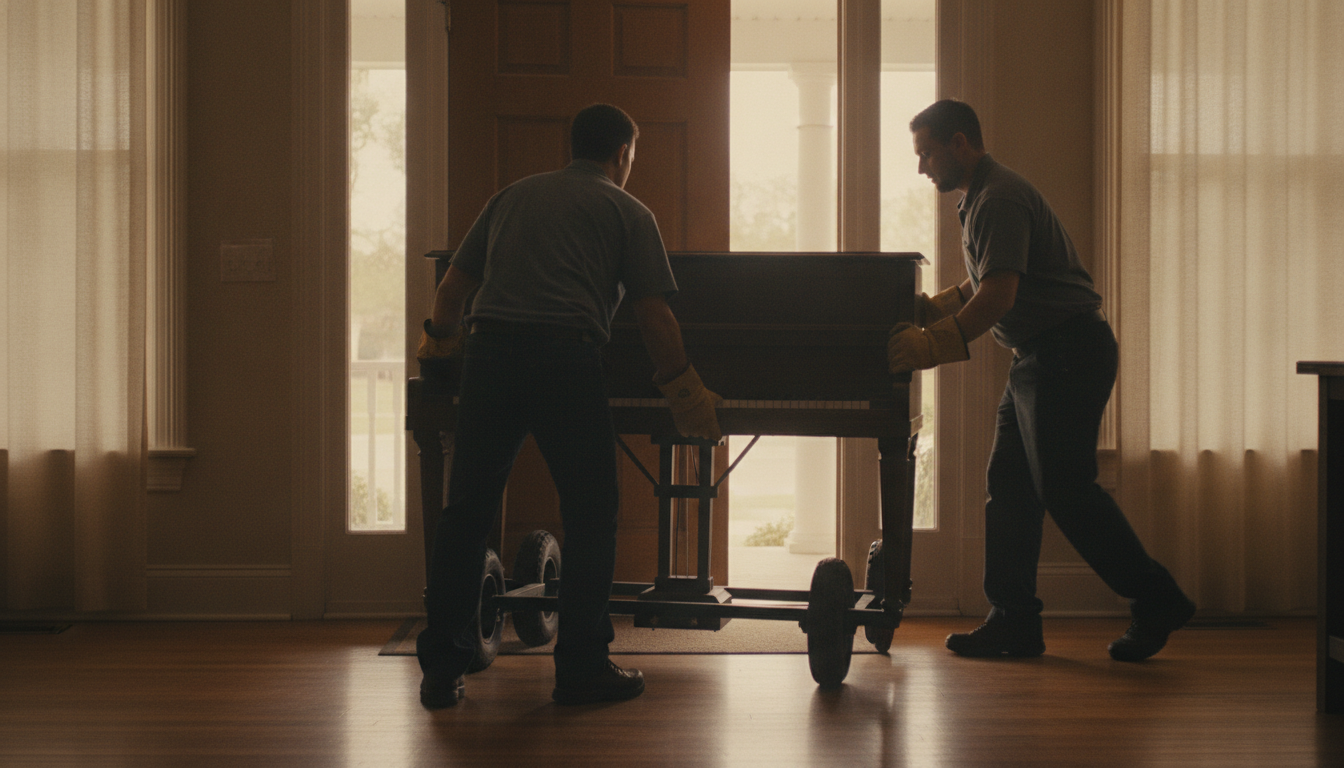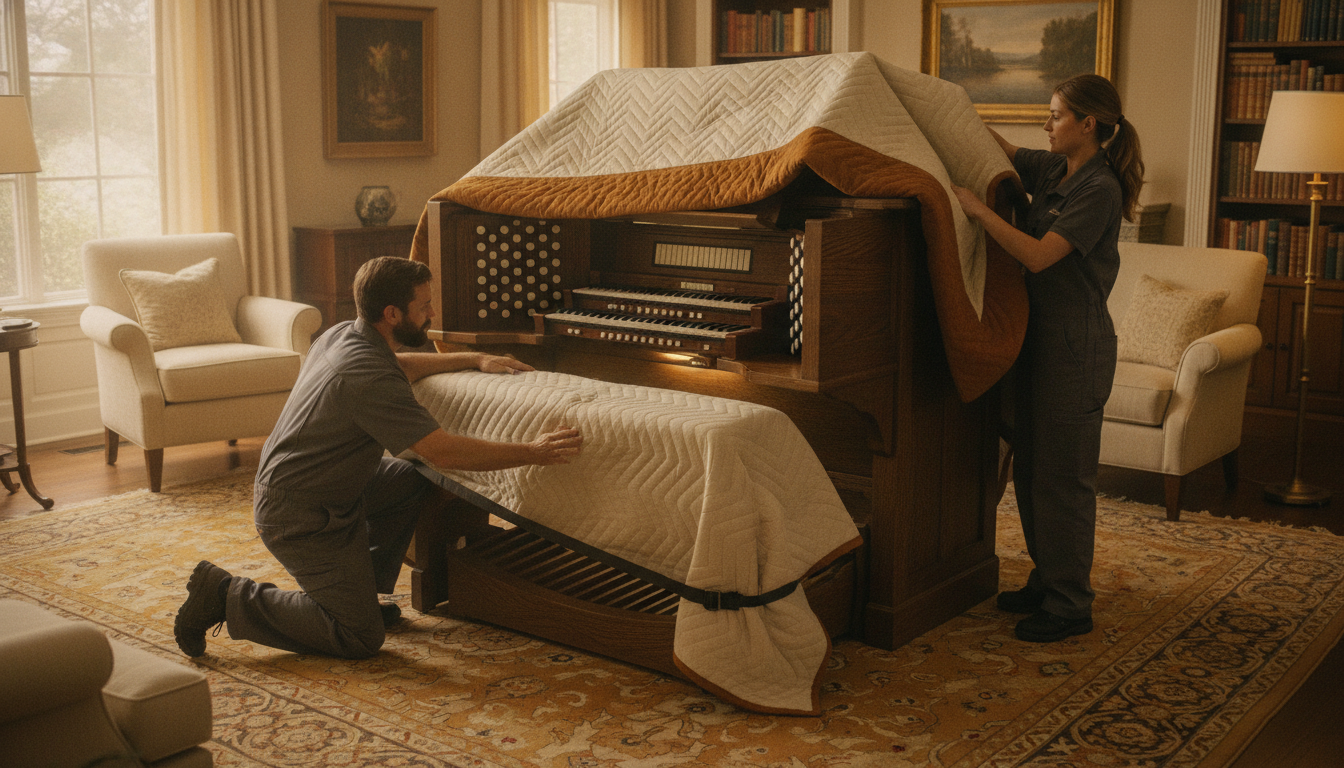
Moving a grandfather clock safely requires disassembling the pendulum, weights, and movement before transport, then keeping the case upright the entire time. Skip any of those steps and you risk a broken suspension spring, bent leader, or cracked dial — repairs that can easily run $300–$1,000 or more. Whether you're doing this yourself or handing it to a specialist mover, this guide covers exactly what needs to happen.
Why grandfather clocks are so fragile during a move
A grandfather clock's movement is engineered to run in one position: perfectly plumb, perfectly still. The pendulum suspension spring is paper-thin — it can snap under its own weight if the clock tips even slightly while moving. The weights (usually 10–20 lbs each) swing freely inside the case during transit and will smash the movement, chimes, or glass if not removed. Most clock damage happens not from dropping, but from moving a "complete" clock that looks ready to go.
What you'll need before you start
- White cotton gloves (oils from your hands etch brass movements)
- Bubble wrap, acid-free tissue paper, or felt
- Small cardboard boxes or zip-lock bags (labeled) for hardware
- Moving blankets — multiple layers; see what moving blankets cost to rent or buy before you shop
- Furniture dolly rated for the weight (most grandfather clock cases weigh 100–250 lbs)
- Two or three helpers — never attempt this solo
- The clock's owner's manual if you have it; manufacturer disassembly diagrams are often available online by model
Step-by-step: disassembling a grandfather clock for a move
1. Stop the pendulum and let the clock wind down
Open the front door and gently stop the pendulum by hand. If the clock is wound, do not force it down — let it run out naturally or consult a clockmaker. Moving a fully wound clock puts enormous stress on the movement.
2. Remove the pendulum
The pendulum hangs from a thin suspension spring at the top of the movement. Gently lift it up and angle it slightly to unhook it from the leader (the small slot or hook at the bottom of the suspension spring). Wrap it in bubble wrap and lay it flat in a padded box — never stand it on end. Label the box "PENDULUM — FRAGILE / THIS SIDE UP."
3. Remove the weights
Most grandfather clocks have three weights (left, center, right) that drive the timekeeping, hour strike, and chime separately. They are not interchangeable — mixing them up will cause the clock to run incorrectly. Before removing each one:
- Photograph its position (left, center, right)
- Label each weight with masking tape: "LEFT," "CENTER," "RIGHT"
- Unscrew or unhook the weight from the chain or cable; let the chain wind up slowly — don't let it snap back
Wrap each weight individually in moving blankets or thick bubble wrap. They're heavy and will dent floors or damage the case if dropped.
4. Secure the chains or cables
Loose chains left to dangle will tangle around the movement during transport — a nightmare to undo without a clockmaker. Use twist ties, rubber bands, or tape to loosely bundle each chain. Some movers slip a small piece of cardboard under each chain to hold it in place.
5. Remove the seat board and movement (for longer moves, optional but recommended)
For a local move across town, leaving the movement in the case — with weights and pendulum removed — is often fine if the case stays upright. For a long-distance move, a clockmaker can pull the entire movement and pack it separately. Cost: typically $75–$200 at a clock shop. Worth it for valuable or antique clocks.
6. Protect the clock face and glass
Cut a piece of cardboard to fit inside the door and tape it gently over the dial so nothing contacts it. If there is a glass door, consider taping a second piece of cardboard on the outside and securing it with painter's tape (never masking or packing tape directly on finished wood).
7. Wrap and pad the case
Wrap the entire case in at least two layers of moving blankets, securing with stretch wrap or moving bands — not packing tape, which can strip the finish. Pay extra attention to corners, the bonnet (top hood), and any decorative finials, which snap off easily. Finials should be removed and packed separately if they unscrew.
8. Move the case upright — always
A grandfather clock case must be transported upright. Laying it on its side, even briefly, allows the movement components to stress in ways they were never designed to handle. Use a furniture dolly, tilt the clock back no more than a few degrees to roll it, and keep at least two people stabilizing it at all times.
In the truck, strap the case to the wall at two points (top and middle) so it cannot tip. Place it away from heavy items that could shift.
What does it cost to hire a specialist mover for a grandfather clock?
Most specialty movers charge $150–$500 to move a grandfather clock locally, depending on:
| Factor | Typical impact |
|---|---|
| Stair carries (per flight) | +$50–$150 |
| Long carry (no truck access) | +$50–$100 |
| Disassembly service included | Often included in the quote |
| Reassembly and regulating | Sometimes separate; $75–$200 |
| Long-distance transport | $300–$800+ depending on distance |
A standard moving crew familiar with furniture can handle the case, but the disassembly and reassembly of the movement is clockmaker territory. Many specialty movers subcontract a clockmaker or include a disclaimer that they won't touch the movement. Clarify this before you book — and get it in writing on your estimate.
For more on what specialty item movers charge for heavy, fragile pieces, the Piano & organ moving guides cover similar terrain, since the handling principles overlap closely.
While you’re reading
Skip the research — let Robert match you with movers.
Free quotes from movers in your area. Pick whichever is easiest.
Should you hire a specialist or a general mover?
For most grandfather clocks — especially antique, heirloom, or high-value pieces — a specialist is worth the extra cost. General movers can transport the case competently, but they're rarely trained on movement disassembly. A $2,000 grandfather clock isn't worth a $150 savings if the movement is bent on arrival.
That said, if you follow the disassembly steps above yourself (or have a clockmaker do it), a general mover can handle the padded, empty case without issue. When comparing movers for specialty items, ask specifically: "Have your crews moved grandfather clocks before? Do you remove and re-hang the pendulum and weights, or is that the owner's responsibility?"
Check any mover's USDOT number on FMCSA's search tool yourself before booking — the directory lists companies across the country, but verifying their license is your call. You can also browse mover reviews to see what other customers reported about specialty-item handling.
Reassembling the clock after the move
Reassembly is the reverse of disassembly, with one critical addition: leveling. A grandfather clock must be perfectly level side to side and slightly inclined front to back (leaning back slightly helps the pendulum swing freely). Most clocks have adjustable leveling feet on the base. Use a small bubble level placed on the seat board inside the case.
Once leveled:
- Re-hang the chains or cables in the correct positions
- Re-hang each weight in its labeled position (left, center, right)
- Re-hang the pendulum on the suspension spring leader
- Give the pendulum a gentle push to start
- Listen for an even tick-tock — if it sounds uneven ("galloping"), the clock isn't quite level; adjust until the beat evens out
Most clocks need 24–48 hours of running to regulate to the correct time after a move. If the movement was jarred or the beat sounds wrong after careful leveling, call a clockmaker before forcing anything — the filing a damage claim guide covers what to do if you discover movement damage after a mover handled the clock.
Valuation: what happens if a mover damages your grandfather clock?
If you hired an interstate mover and something goes wrong, federal rules under FMCSA (49 CFR 375) apply. Under Full Value Protection, the mover must repair, replace, or pay the replacement value of the clock. Under Released Value (60 cents per pound per article), a 200-lb clock would yield just $120 — a fraction of what most grandfather clocks are worth. Make sure you understand which option you've chosen before signing; see what "Released Value" vs. Full Value Protection actually means for a plain-language breakdown.
For in-state moves, state rules apply. Liability terms vary by mover and state — confirm in writing before moving day.
Document the clock's condition with photos and video before the mover touches it. Note any existing scratches or chips on the delivery paperwork so they can't be attributed to the move. If you discover damage after delivery, file your claim in writing — a note on the delivery receipt is not a claim.
Frequently asked questions
Can a grandfather clock be transported lying on its side?
No. The movement is designed to operate and rest in a vertical position. Laying a grandfather clock on its side — even for a short trip — can stress the suspension spring, tangle the chains, and shift internal components. Always transport it upright, secured so it cannot tip.
Do I need to hire a clockmaker, or can the movers do everything?
Movers can wrap and transport the case. Disassembling and reassembling the movement, weights, and pendulum is something any careful adult can do with this guide, but if your clock is antique, high-value, or you're unsure, a clockmaker's involvement ($75–$200) is cheap insurance. Clockmakers can also regulate the movement after the move.
How long does it take to disassemble a grandfather clock before a move?
Typically 30–60 minutes for someone doing it for the first time, following a guide. A clockmaker can do it in 15–20 minutes. Give yourself extra time on moving day — rushing this step is how movements get damaged.
Will my mover automatically cover the clock's full value if it's damaged?
Not automatically. On an interstate move, Full Value Protection is available but you must confirm it — if you sign a written waiver choosing Released Value (60 cents per pound per article), that is what applies. On an in-state move, coverage depends on your mover's contract and your state's rules. Always confirm in writing what protection applies to high-value specialty items before loading begins.
Should I remove the finials before moving?
Yes, if they unscrew or detach. Finials — the decorative spires on top of the bonnet — are the first thing to snap off when a clock is wrapped or doorways are tight. Remove them, wrap them individually, and pack them in a labeled box.
What if I can't find a specialist mover in my area?
Start by searching movers by state and filtering for specialty or antique-item experience. You can also contact a local clock repair shop — many have relationships with movers they trust for exactly this situation, or will do the disassembly themselves so any general mover can handle transport safely.
Ready to find a mover who has handled grandfather clocks before? Browse movers in your area and ask directly about specialty-item experience. If you'd like help narrowing it down, reach out to Robert, our moving concierge, who can point you in the right direction.
Tagged