Moving a piano safely requires specialized equipment, a trained crew, and a completely different approach depending on whether you have an upright or a grand. An upright stays vertical and moves on a piano board; a grand must be disassembled — lid, legs, and lyre removed — laid on its side on a padded skid board, and reassembled at the destination. Confusing the two approaches is how pianos get damaged and people get hurt.
Why Piano Type Matters More Than Piano Size
Most people think weight is the main concern. It isn't — it's geometry. A 500-pound upright is a manageable rectangle. A 600-pound baby grand is a three-legged, lid-hinged, lid-propped piece of furniture with a cast-iron plate inside. They require different tools, different crew sizes, and different preparation. Damaged-instrument calls almost always come from crews that treated a grand like an upright.
The Three Piano Categories You'll Encounter
| Type | Typical Weight | Typical Move Cost (local) | Key Challenge |
|---|---|---|---|
| Spinet / Console upright | 200–400 lbs | $150–$300 | Tight stairwells, low clearance |
| Studio / Full upright | 400–700 lbs | $250–$500 | Weight on stairs, door width |
| Baby grand (under 5'8") | 500–700 lbs | $350–$600 | Disassembly, leg removal |
| Grand / Concert grand (5'8"+) | 700–1,200+ lbs | $500–$1,200+ | Full disassembly, large skid board, climate risk |
Costs above reflect two- to three-person local crews within the same metro area. Long-distance adds mileage fees — typically $1.00–$2.50 per mile on top of the base rate, depending on the carrier.
How Crews Actually Move an Upright Piano
An upright is moved vertically from start to finish. Here's the standard process a professional crew follows:
- Clear the path first. Measure every doorway (standard interior doors are 32–36 inches; most upright piano widths run 54–60 inches, so the piano must turn through doorways at an angle). Remove the piano's music rack if it's removable to reduce snagging risk.
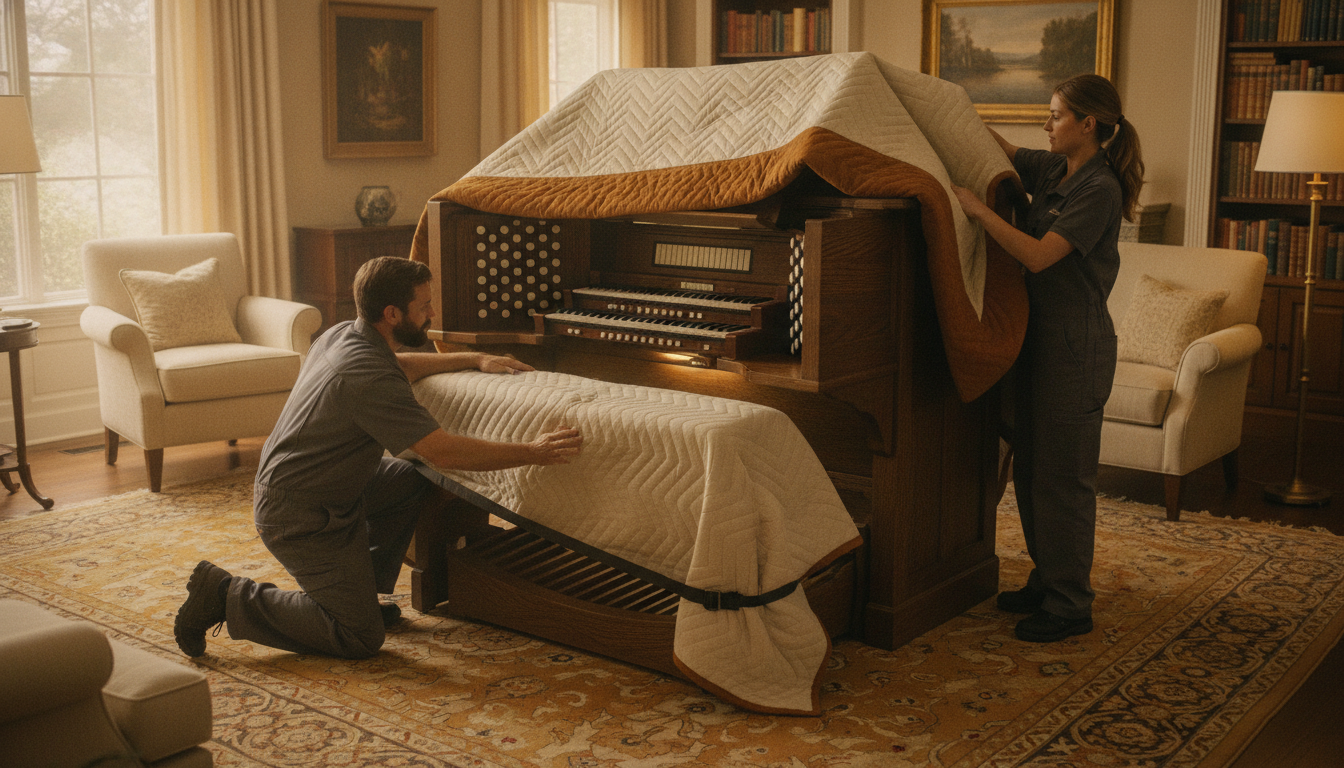
- Wrap the piano. The entire exterior — keys, fallboard, pedal lyre — gets wrapped in moving blankets secured with stretch wrap or shrink wrap. This protects the finish and prevents the key lid from falling open mid-move.
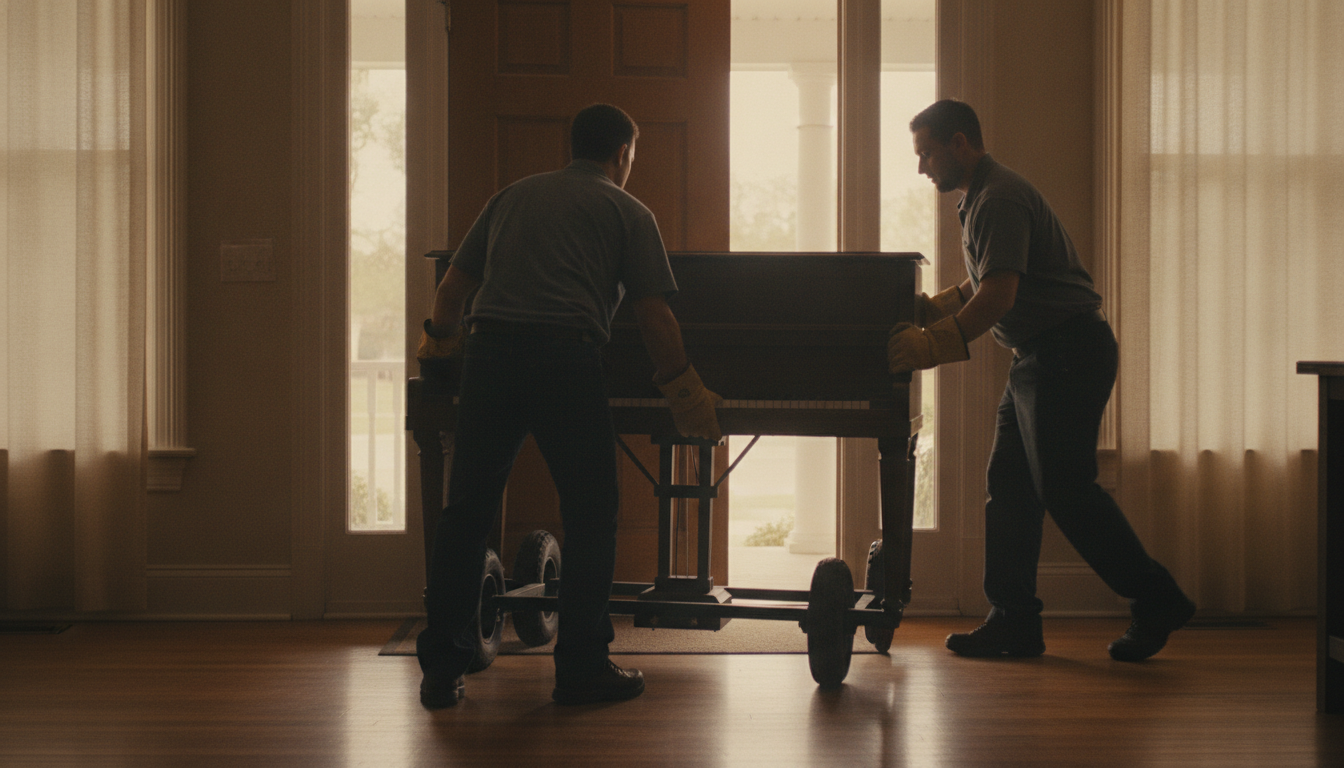
- Place on a piano board (skid board). A piano board is a heavy padded platform on 4-wheel swivel casters rated for the instrument's weight. The crew tips the piano back slightly — never forward — and slides the board underneath.
- Navigate stairs with a stair-climbing dolly or by hand. Stairs are the highest-risk moment. A proper stair hand truck has rubber-treaded stair-climber wheels; for heavy uprights, two people on the bottom, one steadying from the top is the minimum safe configuration.
- Load and secure in the truck. The piano rides against the cab wall, strapped at two points. It does not share a wall with heavy furniture that could shift.
What can go wrong: Crews that skip the piano board and try to slide an upright across hardwood floors routinely crack the pedal lyre or shatter the leg extensions. We've seen it dozens of times.
How Crews Actually Move a Grand or Baby Grand Piano
A grand cannot stay assembled during a move. The legs are not load-bearing in transit — they're designed for static support only. Here's the correct sequence:
- Remove the music desk and lid. The lid (usually 4–6 feet long) is wrapped separately in moving blankets.
- Remove the legs and lyre (pedal assembly). A standard grand has three legs, each attached by bolts. Legs are individually wrapped and transported separately. Never leave a leg on and try to tip the piano — the leg joint will split.
- Tip the piano onto its side onto a padded skid board. Two people hold the piano body while a third slides the board under the treble side (the straight side). The piano rests on its rim — that's what the padding protects.
- Strap and roll. With legs and lid removed, the body becomes a manageable rectangle on wheels. It still weighs 400–900 pounds, so ramps with a lip guard are essential for truck loading.
- Reassemble at the destination. Legs go on first on the floor (flip the body back upright together), then the lyre, then the music desk and lid. The crew checks that all bolts are fully torqued.
One rule we never break: Once a grand is on its side on the skid board, nobody lifts from the keyboard end. The action (the mechanical interior) shifts under gravity and can crack the bridges if you lift that end while it's horizontal.
What Stairs, Elevators, and Tight Hallways Add to the Cost
Stairs are the single biggest cost driver in piano moves. Most companies charge a stair fee of $50–$100 per flight (typically defined as more than 3 steps). A piano requiring three flights of stairs can add $150–$300 to your base quote.
Narrow hallways (under 36 inches clear width) sometimes require partial disassembly of uprights — removing the top lid and music rack — which adds 15–30 minutes of labor.
Elevator buildings are usually easier than stairs, but check the elevator's rated capacity. A 700-pound upright plus two crew members plus the piano board easily exceeds a 1,000-pound elevator rating. Some older apartment buildings require a freight elevator reservation — a step our apartment and condo moving guides cover in detail.
While you’re reading
Skip the research — let Robert match you with movers.
Free quotes from movers in your area. Pick whichever is easiest.
Local vs. Long-Distance Piano Moves: What Changes
For local piano moves (same city or metro area), you'll typically pay a fixed price that includes travel time, equipment, and a two- to three-person crew. For long-distance piano moves, the pricing model shifts:
| Factor | Local Move | Long-Distance Move |
|---|---|---|
| Pricing model | Fixed price or hourly | Weight-based + mileage |
| Carrier type | Specialty piano mover or full-service mover | Dedicated van line or piano carrier |
| Disassembly included? | Usually yes | Yes, required |
| Climate control available? | Rarely | Often, for extra fee |
| Insurance / valuation | Released value standard; full-value available | Same FMCSA rules apply |
For interstate moves, the mover must hold a USDOT number and FMCSA operating authority. You can verify both free at the FMCSA's SAFER database (safer.fmcsa.dot.gov). If a mover can't give you a USDOT number, don't book them — this applies to piano specialists as much as full-service movers. Our guide to how movers are licensed and insured walks through exactly what to check.
What to Ask a Piano Mover Before You Book
Before you commit to any piano moving company, get clear answers to these five questions:
- Do you use a piano board (skid board) for uprights and grands, or do you carry by hand? — Hand-carrying a piano is a red flag for any instrument heavier than a small spinet.
- How many crew members will you send, and what's the stair policy? — Two people is the minimum for a small upright; three is standard for anything over 400 pounds or involving stairs.
- Is the quote binding or non-binding? — A non-binding estimate can rise if the crew encounters unexpected obstacles. Get a binding quote if you can. Our post on binding vs. non-binding moving estimates explains the difference clearly.
- What valuation coverage do you carry? — Federal law requires movers to offer at minimum released value coverage (currently $0.60 per pound per article for interstate moves), which means a 600-pound piano is covered for $360 — far below replacement value. Ask about full-value protection or purchase a standalone instrument policy.
- Have you moved this specific type of piano before? — Concert grands and antique uprights (especially ornate Victorian cases) require different handling than modern instruments. Ask for references.
You can find piano and specialty movers in our directory, with reviews from customers to help you compare.
How to Prepare Your Piano for Moving Day
You don't need to tune the piano before the move — wait until it has acclimated at the new location (typically 2–4 weeks). But there are things you should do:
- Lock the keyboard lid if your piano has a lock, to prevent the fallboard from swinging open and damaging the keys.
- Remove any items stored inside — music books inside the bench, decorative items on top, items stored in the grand's key slip area.
- Photograph the piano before the movers arrive — top, sides, legs, pedal lyre, and any existing scratches or finish damage. This documentation protects you if you need to file a damage claim later.
- Measure the route — from the piano's current room, through every doorway and hallway, to the truck. Share these measurements with your mover when you get the quote. Surprises on moving day cost money.
For more general preparation tips on protecting valuables during a move, our guide to protecting your belongings during a move covers wrapping, padding, and what most movers miss.
Frequently Asked Questions
How much does it cost to move an upright piano locally?
Most local upright piano moves cost between $150 and $500 depending on crew size, stair fees, and distance traveled. A standard two-person move of a 500-pound studio upright within the same city, with no stairs, typically runs $200–$350. Stairs add $50–$100 per flight in most markets.
Can any full-service moving company move a grand piano?
Not safely. Moving a grand piano requires a padded skid board, experience with leg and lyre disassembly, and a crew trained specifically in grand piano handling. Ask your mover explicitly whether they have this experience — not all full-service companies do. If they don't, hire a dedicated piano moving specialist.
Does homeowner's insurance cover a piano damaged during a move?
In most cases, standard homeowner's insurance does not cover damage that occurs while the item is in the care of a third-party mover. You'd typically need to rely on the mover's valuation coverage or purchase a separate inland marine or musical instrument policy. Confirm with your insurer before moving day.
How long does a piano move take?
A local upright piano move with no stairs typically takes 1–2 hours from arrival to completion. A grand piano move — including disassembly, transit, and reassembly — usually takes 2–4 hours locally. Long-distance moves add transit time and a separate reassembly appointment at the destination.
Should I tune my piano right after it arrives at the new home?
No. Pianos need time to acclimate to the humidity and temperature of the new space, which affects string tension. Most piano technicians recommend waiting at least 2–4 weeks before tuning. If the piano was already significantly out of tune before the move, it may need a pitch raise before a standard tuning.
What's the biggest mistake people make when moving a piano themselves?
Trying to muscle a grand piano across the room or down stairs without removing the legs first. The legs will fail under lateral stress, the piano will fall, and you'll face a several-thousand-dollar repair or total loss — plus the injury risk to anyone nearby. Piano moving is one of the few specialty tasks where DIY rarely makes sense. Browse specialty movers by state to find crews with the right equipment in your area.
Ready to find a piano mover you can trust? Search our directory of movers or ask Robert, our moving concierge, to help match you with the right crew for your instrument and your move.
Tagged