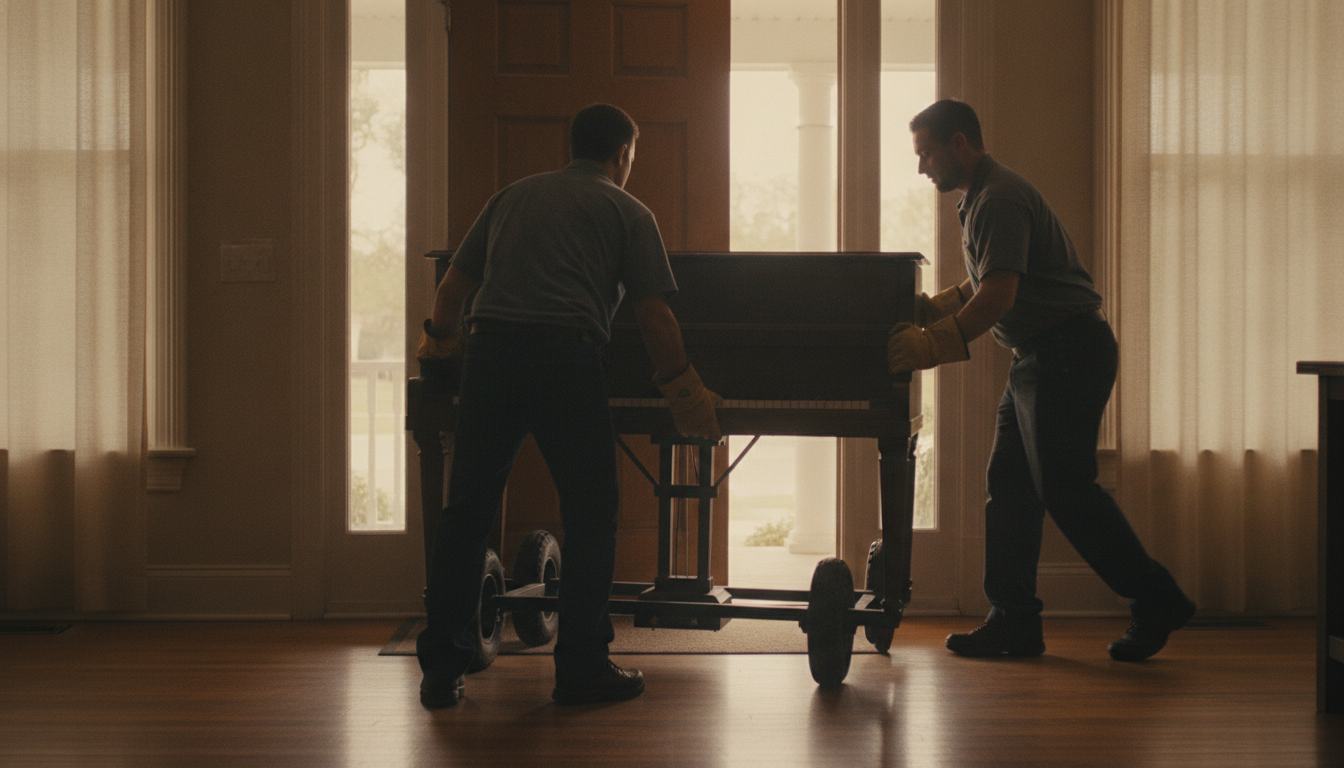
Moving an organ — whether it's a classic pipe organ, a vintage Hammond B-3, or a large digital console — typically costs between $300 and $2,000 for a local move, depending on the instrument's size, weight, and access conditions. Long-distance organ moves add freight or mileage charges and can run $1,500–$5,000 or more. This is specialty work: not every mover can or should handle it, and getting it wrong means a broken instrument worth thousands or tens of thousands of dollars.
Why Moving an Organ Is Different From Moving a Piano
Most people know a piano is hard to move. An organ is a different kind of challenge entirely.
A Hammond B-3 weighs roughly 425 lbs — the console alone, before you add the Leslie speaker cabinet (another 65–90 lbs) and the bass pedal unit. A full pipe organ installed in a home or church may weigh several tons and be physically attached to walls or floors. Even a modern digital organ console can weigh 200–600 lbs and have fragile drawbars, expression pedals, and sensitive electronics.
Here's what makes organ moves uniquely difficult:
- Multiple components: Console, pedalboard, expression pedals, amplifier/Leslie cabinet, and (for pipe organs) the pipe chests and wind supply system.
- Irregular shapes: Consoles don't fit neatly on dollies without custom padding.
- Delicate internals: Drawbars, tonewheel generators (in vintage electromechanical organs), and pipe voicing are easily damaged by vibration or moisture changes.
- Access challenges: Many home organs are installed in basements, on elevated stages, or in rooms where they were assembled in-place and can't leave as a unit.
We've seen movers treat a Hammond like a standard piece of furniture and crack the bench, strip the drawbars, and lose the expression pedal rod — all before they got it on the truck. Organ moves require a plan, not just muscle.
What Type of Organ Do You Have? (This Changes Everything)
| Organ Type | Typical Weight | Complexity | Avg. Local Move Cost |
|---|---|---|---|
| Digital console (home use) | 150–400 lbs | Low–Medium | $300–$700 |
| Hammond B-3 + Leslie cabinet | 425–520 lbs total | Medium–High | $500–$1,200 |
| Theatre organ (partial) | 500–2,000 lbs | High | $1,000–$3,000 |
| Residential pipe organ | 1–5+ tons | Very High | $2,000–$10,000+ |
| Church/institutional pipe organ | 5–50+ tons | Specialist only | Custom bid |
If you have a church pipe organ, stop here: you need an organ builder or specialized organ-rigging company, not a general moving crew. These instruments are typically disassembled, inventoried, and reinstalled by trained technicians — it's closer to a construction project than a moving job.
How to Find a Mover Who Can Actually Handle an Organ
This is where most people go wrong. They call a general mover, mention "it's kind of like a piano," and hope for the best.
Here's how to vet movers properly:
- Ask specifically about organ experience. Request references for organ moves — not just piano moves. A mover who has moved Steinways may still have no idea how to disassemble a Hammond.
- Confirm they carry adequate cargo insurance. On interstate moves, Full Value Protection applies automatically — but many customers sign a written waiver to choose Released Value Protection at $0.60/lb (the free basic option), which would mean just $255 on a 425-lb instrument worth $10,000. Ask about full-value replacement coverage. You can read more about your coverage options in our guide to moving valuation vs. insurance.
- Check USDOT licensing. Interstate movers must be registered with the FMCSA. Verify a mover's USDOT number at safer.fmcsa.dot.gov. For local moves, check your state's DOT or PUC for licensing. Our guide on how movers are licensed and insured walks through every step.
- Get a written, itemized quote. Organ moves often have add-on fees: stair carries, long carries from house to truck, disassembly labor, and specialty crating. Understand every line before you sign — see our post on moving hidden fees and surcharges for what to watch for.
- Browse specialty movers in our directory — find movers near you and filter by specialty item experience.
Step-by-Step: How a Professional Organ Move Works
Step 1: Assessment and disassembly planning
A good mover or organ technician visits in person (or via detailed video walkthrough) to assess:
- Weight and dimensions of each component
- Door clearances, stairwells, and elevator access
- Whether any parts must be disassembled to exit the room
- Flooring conditions (carpet vs. hardwood affects equipment)
Step 2: Component disassembly
For a Hammond B-3, this typically means:
- Detaching the bass pedalboard (usually 4–6 bolts)
- Removing the bench and expression pedal assembly
- Separating the Leslie 122 or 147 cabinet from its stand and cable
For digital organs, the pedalboard and side cheeks often detach. Manufacturer service manuals are your guide here — a mover who doesn't reference them is improvising.
For pipe organs, disassembly is extensive: pipes are removed and wrapped individually, wind chests are labeled and crated, and the wind supply and blower are carefully disconnected. This work is almost always done by the organ's builder or a certified organ technician.
Step 3: Padding, wrapping, and securing
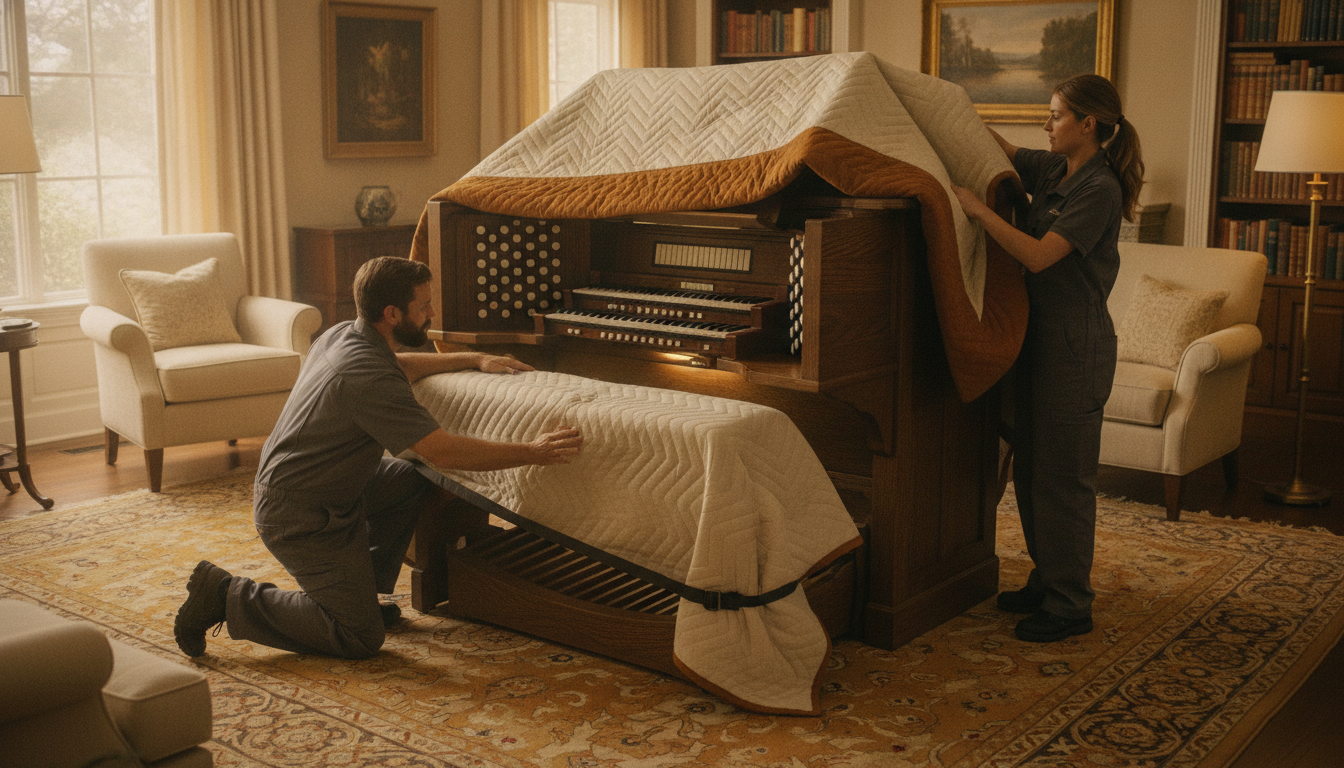
- Console surfaces: wrapped in moving blankets, then stretch-wrapped
- Drawbars and stop tabs: taped lightly or protected with foam inserts
- Pipes (if applicable): individually sleeved in foam or bubble wrap, crated by rank
- Leslie cabinet: wrapped and loaded upright — never on its side (the internal baffles can shift)
Step 4: Loading and transport
Organs should be loaded last on the truck (so they're unloaded first), secured with furniture straps, and never stacked under other items. Temperature and humidity fluctuations matter: pipe metal and wooden windchests are sensitive to extremes. For long-distance moves, climate-controlled transport is worth asking about.
Step 5: Placement and reassembly
Budget time and labor for reassembly at the destination. For a Hammond, plan 1–2 hours. For a pipe organ, reassembly and revoicing by a technician can take days or weeks depending on size.
While you’re reading
Skip the research — let Robert match you with movers.
Free quotes from movers in your area. Pick whichever is easiest.
What Does Moving an Organ Actually Cost?
Organ moving costs vary by instrument type, distance, and access. Here's a realistic breakdown:
| Cost Factor | Typical Range |
|---|---|
| Base labor (local, 2-person crew) | $150–$350/hr (2–4 hrs minimum) |
| Stair carry surcharge | $50–$150 per flight |
| Long carry (>75 ft from truck) | $50–$100 |
| Disassembly/reassembly labor | $100–$500 |
| Specialty crating (pipe organs) | $200–$2,000+ |
| Long-distance freight (per mile) | $1.50–$4.00/mile typically |
| Full-value valuation upgrade | $50–$300+ depending on declared value |
For a local Hammond B-3 move with two movers, a Leslie cabinet, and one flight of stairs, expect to pay $600–$1,000 all-in. A coast-to-coast move of the same instrument typically runs $1,500–$3,000, depending on the carrier and route.
If you're moving across the country and bringing an organ, get it quoted as a separate line item — it should never be folded into a general household weight estimate.
Before Move Day: What You Should Do
- Photograph everything — all four sides of each component, close-ups of any existing scratches or damage. This is your baseline for any insurance claim.
- Locate your service manual — hand it to the mover so they know how components attach.
- Tune budget for after the move — most organs, especially pipe organs and electromechanical instruments like the Hammond, benefit from a technician check after transport. Budget $100–$300 for a tuning or voicing touch-up.
- Tell your mover about the floor — hardwood and tile can be scratched by dollies. Ask them to bring floor runners or felt pads.
- Check your homeowner's or renter's insurance — some policies cover instruments in transit. Confirm with your insurer before move day.
You can find mover reviews from customers who've moved specialty instruments to help you choose the right crew.
Frequently Asked Questions
Can any moving company move an organ?
No. General movers can handle simple digital console organs with some experience, but Hammond B-3s, theatre organs, and any pipe organ require movers with specific experience — or in the case of pipe organs, a certified organ technician or builder. Always ask for organ-specific references before booking.
How much does it cost to move a Hammond B-3?
A local Hammond B-3 move (console + Leslie cabinet + pedalboard) typically costs $500–$1,200, depending on access conditions and how many stairs are involved. Long-distance moves run $1,500–$3,000+. Get an itemized quote that covers disassembly, stair carries, and reassembly separately.
Does a mover's standard insurance cover an organ?
Not at full value. Under FMCSA rules, Full Value Protection applies automatically on interstate moves — but if you sign a written waiver choosing Released Value Protection, your payout is capped at $0.60 per pound of the item's weight. For a 425-lb Hammond worth $8,000, that's a maximum payout of $255. You'll need Full-Value Protection or a separate instrument insurance rider for meaningful coverage.
Should I disassemble the organ myself before the movers arrive?
Only if you're confident and have the service manual. Improper disassembly — particularly on pipe organs or electromechanical instruments — can cause damage that's expensive to reverse. In most cases, it's worth paying the mover's disassembly fee to have it done correctly.
How do I move a pipe organ?
A residential or church pipe organ should be disassembled, inventoried, and moved by an organ builder or certified organ technician — not a general moving crew. The process involves removing, wrapping, and crating individual pipes, disconnecting wind supply systems, and crating wooden components. Reinstallation typically requires the same level of expertise. Get bids from organ builders, not just movers.
Can I move an organ in a rental truck myself?
For a small digital console organ, a DIY truck rental is possible if you have enough helpers and proper strapping equipment. For anything larger — especially a Hammond with a Leslie cabinet — we'd strongly advise against it. The liability, the weight distribution challenges, and the risk of damage to a valuable instrument make this one of the cases where hiring professional movers is worth every dollar.
Have an organ or other specialty instrument to move? Browse our directory to find movers by state with the right experience — or ask Robert, our moving concierge, to help you match with a crew that's done this before.
Tagged