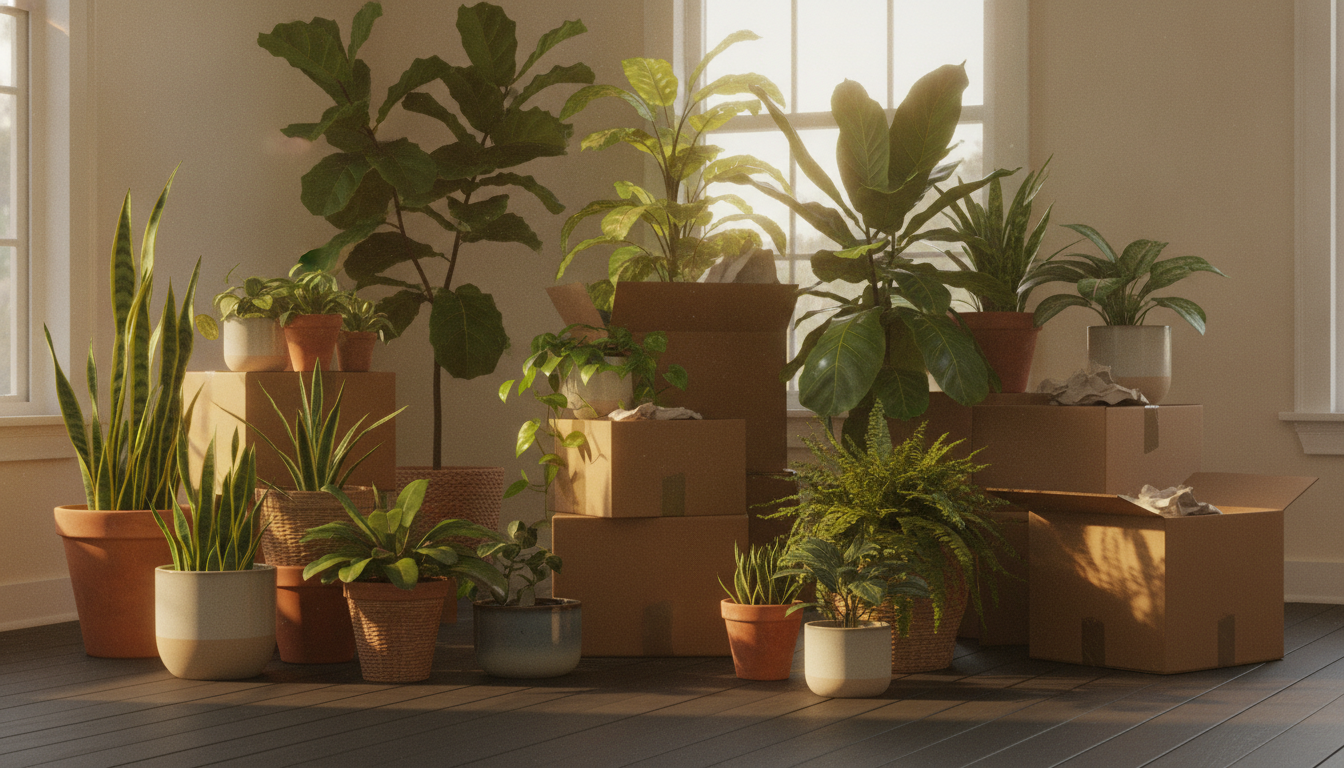
Moving plants across state lines isn't just a logistics challenge — it's a regulatory one. The USDA and individual state departments of agriculture restrict or outright prohibit certain plants, soils, and pots to prevent invasive pests and diseases from spreading. Before you load a single pot onto the truck, you need to know what your destination state allows — because what's sitting peacefully on your windowsill in Oregon may be confiscated at a California inspection station.
Plant confusion is one of the most avoidable last-minute disasters families face when moving across the country. This guide gives you the actual rules, a practical transport system, and what to do when a plant simply can't make the trip.
Do states actually enforce plant rules at the border?
Yes — and more often than most people expect. California, Arizona, Florida, Hawaii, and Texas all operate agricultural inspection stations at state entry points. Officers can and do inspect vehicles, and they're empowered to confiscate prohibited plants, soil, and plant material on the spot with no compensation to you.
The USDA's Animal and Plant Health Inspection Service (APHIS) sets federal baseline rules, but states layer their own restrictions on top. The result is a patchwork of regulations that varies by species, soil type, and even the county you're moving to.
The single most important rule: Never move plants in outdoor soil. Every state that restricts plants focuses primarily on soil-borne pests — nematodes, fire ants, and invasive beetles travel in dirt, not in the plant itself. Repotting into sterile, packaged potting mix before your move is the first step, but it isn't always enough: California allows house plants that were grown indoors only, in sterile, packaged potting mix, and free of pests.
Which states have the strictest plant import rules?
| State | Key Restrictions | Inspection Stations? |
|---|---|---|
| California | Prohibits many citrus, stone fruit, and outdoor soil; strict on succulents from certain regions | Yes — I-5, I-8, I-10, I-15, I-40 entry points |
| Hawaii | Some of the strictest rules in the US; many plants require inspection or permits; some banned outright | Yes — all air and sea ports of entry |
| Florida | Restricts citrus, certain palms, and plants with soil from fire-ant-quarantine zones | Spot checks on I-10, I-75, I-95 |
| Arizona | Restricts citrus and certain agricultural plants; enforces USDA quarantine zones | Yes — multiple highway stations |
| Texas | Restricts citrus from Florida and California; some plants from Mexico | Spot checks on major interstates |
| All 50 states | Generally restrict outdoor soil, plants with visible pests, and USDA-quarantined species | Varies |
To look up your specific destination state's rules: Visit the USDA APHIS website (aphis.usda.gov) and your destination state's Department of Agriculture website directly. Rules change — always check within 30 days of your move, not months in advance.
If you're heading to a state like California or Hawaii, call the state Department of Agriculture's plant quarantine division. They'll tell you exactly what's allowed for your specific plant species. That five-minute phone call can save hundreds of dollars in confiscated plants.
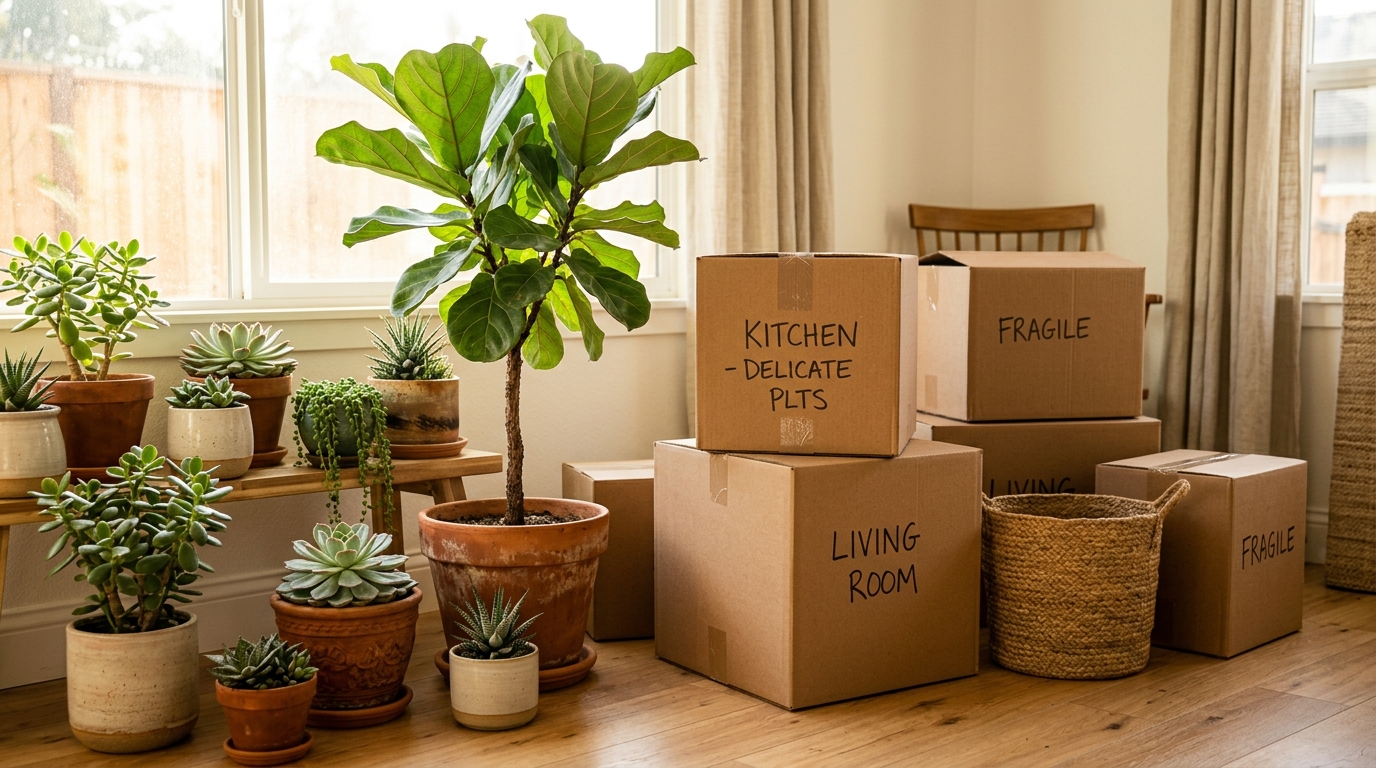
How to prepare your plants for a legal, safe move
Step 1: Audit your collection 6–8 weeks out
Go through every plant you own and identify the species. Anything with soil from outdoors — garden plants, trees dug from the yard, herbs in garden-bed dirt — is your highest regulatory risk. Make a list and cross-reference it with your destination state's prohibited species list.
Step 2: Repot into sterile potting mix 3–4 weeks before moving
- Remove all existing soil from roots (a bucket of lukewarm water helps rinse roots clean)
- Repot using fresh, sealed commercial potting mix (bagged and unused)
- Keep the plant indoors and away from outdoor soil until moving day
- Save the sealed potting mix bag — it's proof the soil is commercial-grade if you're inspected
Step 3: Treat for pests 2 weeks before moving
Inspect every plant for insects, larvae, and visible disease. Apply appropriate insecticidal soap or neem oil treatment per label instructions. Inspectors look for visible pests — a clean plant moves through faster.
Step 4: Know which plants movers won't transport
Most professional moving companies won't transport plants in the moving truck for interstate moves — it's an industry-wide policy, not a quirk of one company. The reasons are practical: climate-controlled conditions, liability, and USDA regulations. You'll need to transport plants in your personal vehicle.
If you're moving across the country and driving isn't an option, some specialty plant-shipping services exist, but they're expensive (typically $50–$200+ per plant for shipping) and not appropriate for large collections.
How to transport plants safely in your car
Temperature is the biggest killer. Plants should never be left in a parked car in summer heat — interior temperatures can exceed 120°F within minutes, which will kill most houseplants. If you're stopping overnight, bring plants inside with you.
Practical transport tips:
- Use cardboard boxes with holes cut in the sides to hold pots upright and allow airflow
- Wrap trailing or delicate leaves loosely in tissue paper or newspaper to prevent breakage
- Place heavier, more stable plants on the floor of the back seat; smaller pots in a flat box in the trunk
- Keep the car at 60–80°F — most tropical houseplants suffer below 50°F
- Water plants lightly the day before moving (not the morning of — wet soil is heavier and more likely to spill)
- Don't fertilize for two weeks before moving; stressed plants don't need the extra demand
Long-distance drives (more than one day):
- Plan stops of no more than 8 hours in the car per day for most plants
- Succulents and cacti are the most resilient; tropical plants (monsteras, fiddle-leaf figs, orchids) are the most sensitive to temperature swings
- Avoid putting plants directly against a window in full sun for hours — the glass intensifies heat
While you’re reading
Skip the research — let Robert match you with movers.
Free quotes from movers in your area. Pick whichever is easiest.
What to do with plants you can't take
This is the conversation we have more often than you'd think. Some plants simply can't make the trip — they're prohibited in the destination state, too large to transport safely, or too delicate to survive a long drive.
Your options:
- Give them to friends, neighbors, or family — the most common and emotionally satisfying outcome
- Donate to local plant swaps, community gardens, or schools — many areas have active plant-trading communities
- Sell on local classifieds — large, established plants (mature fiddle-leaf figs, olive trees, large succulents) can sell for $50–$300+
- Leave them for the new owners — add it to your sale or lease handover as a goodwill gesture
If you're unsure how to decide what to keep versus leave, our guide on how to declutter before a move walks through a practical framework for making those calls without regret.
What happens at a state agricultural inspection station?
If you're stopped at a California, Arizona, or Florida checkpoint, the process is typically quick if your plants are compliant:
- The officer asks if you're carrying plants, fruits, vegetables, or soil
- You disclose your plants honestly (lying is a federal offense under USDA APHIS rules)
- The officer may visually inspect; California, for one, allows house plants that were grown indoors only, in sterile, packaged potting mix, and free of pests
- Prohibited species or plants in outdoor soil may be confiscated and destroyed
There's no fine for accidentally carrying a prohibited plant in most cases — but the plant is gone. The fine risk comes from deliberately concealing plant material after being asked.
Moving plants when hiring movers: what to tell them
When you're getting quotes and reading your moving estimate line by line, ask explicitly whether the company will transport plants. The answer for interstate moves is almost always no. For local moves, some companies will transport a limited number of potted plants as a courtesy — but it's never guaranteed and often excluded from their liability coverage.
Build your plant transport plan into your moving-day logistics early. If you're driving a separate vehicle from the moving truck, that's your plant vehicle. If you're flying to your destination and the movers are handling everything, you'll need to rehome your plants or ship them through a specialty service — or say goodbye before you go.
You can find licensed, movers in your area who can advise on what they will and won't carry, so there are no surprises on moving day.
Frequently asked questions
Can movers legally transport my houseplants across state lines?
Most professional moving companies decline to transport plants on interstate moves, citing USDA regulations, liability, and climate concerns inside moving trucks. This is standard industry practice, not a legal prohibition on you personally carrying plants — it's a company policy. For interstate moves, plan to transport plants in your own vehicle.
Which states are the hardest to move plants into?
California, Hawaii, Florida, Arizona, and Texas have the most active enforcement of plant import rules. California and Hawaii are consistently the strictest. Hawaii requires inspection of nearly all plant material entering the state and prohibits many species outright. Always check your destination state's Department of Agriculture website directly before your move.
Do I need a permit to bring houseplants to another state?
For most common houseplants (pothos, snake plants, peace lilies, most succulents) transported in sterile commercial potting mix, no permit is required, but your new state may want other paperwork: Florida wants a certificate of inspection with plants that arrive in household goods. Permits are typically needed for certain agricultural plants, plants from USDA-quarantined zones, or species on state-specific restricted lists. Citrus trees almost always require documentation regardless of state.
What's the safest potting mix to use when repotting before a move?
Any commercially bagged, sealed sterile potting mix from a hardware or garden store is appropriate. The key is that it's never been used outdoors and is free of native soil. Keep the original sealed bag as documentation if you're stopped at an inspection station.
Will my plants survive a 2–3 day drive?
Most hardy houseplants — pothos, snake plants, ZZ plants, cacti, succulents — handle a 2–3 day drive well if temperatures are kept between 60–80°F and they're watered lightly the day before. Tropical plants like monsteras, fiddle-leaf figs, and orchids are more sensitive and need stable temperatures above 55°F. Avoid leaving any plant in a parked car in warm weather, even briefly.
Can I ship plants through the mail or a courier to my new home?
Yes, with caveats. USDA APHIS allows most houseplants to be shipped domestically if they're free of soil and pests. Some carriers have their own restrictions. Specialty plant-shipping services typically cost $30–$150+ per box depending on size and distance, and plants can be stressed or damaged in transit. This is a reasonable option for a few prized specimens but not practical for a large collection.
Ready to plan the rest of your move? Browse movers by state to find licensed, companies near you, or chat with Robert, our moving concierge on Majestic Moving Companies, who can help you think through every detail of your move — plants included.
Tagged