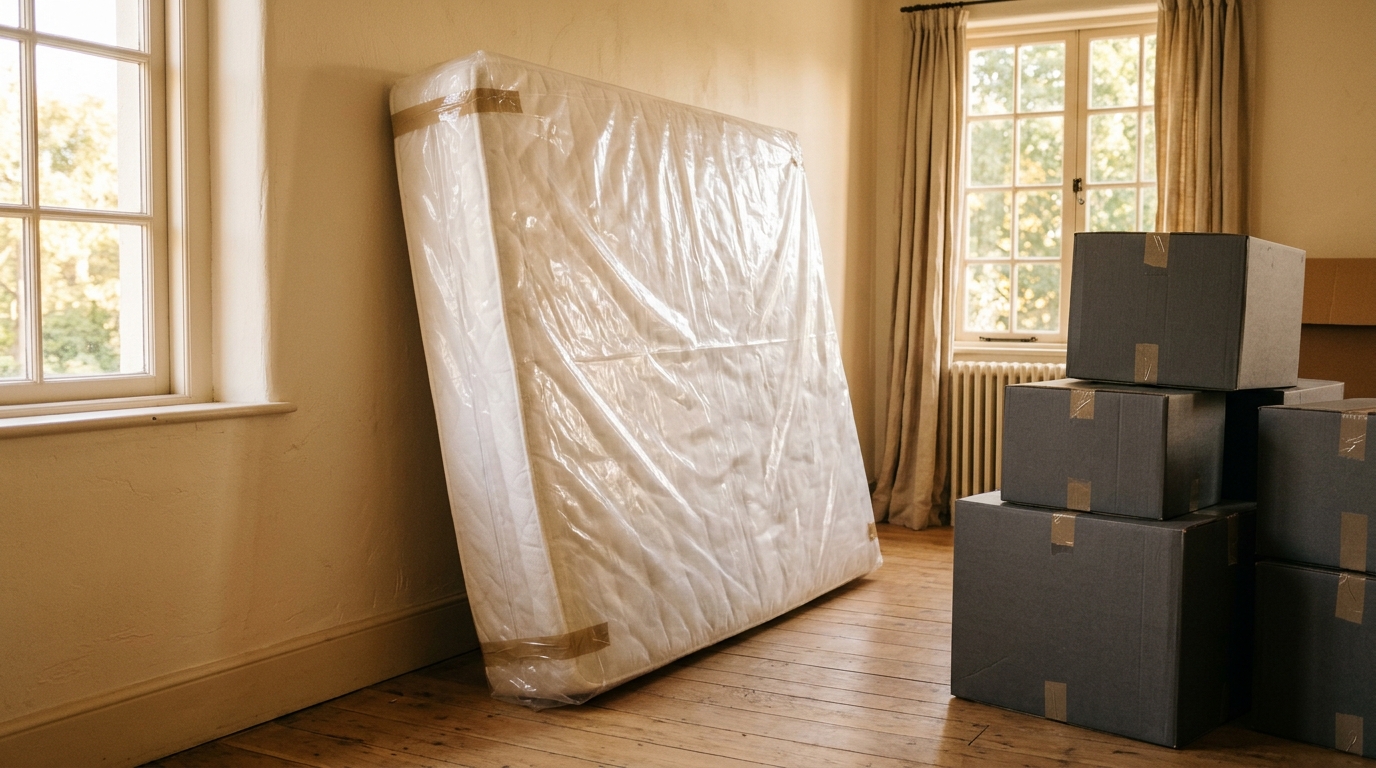
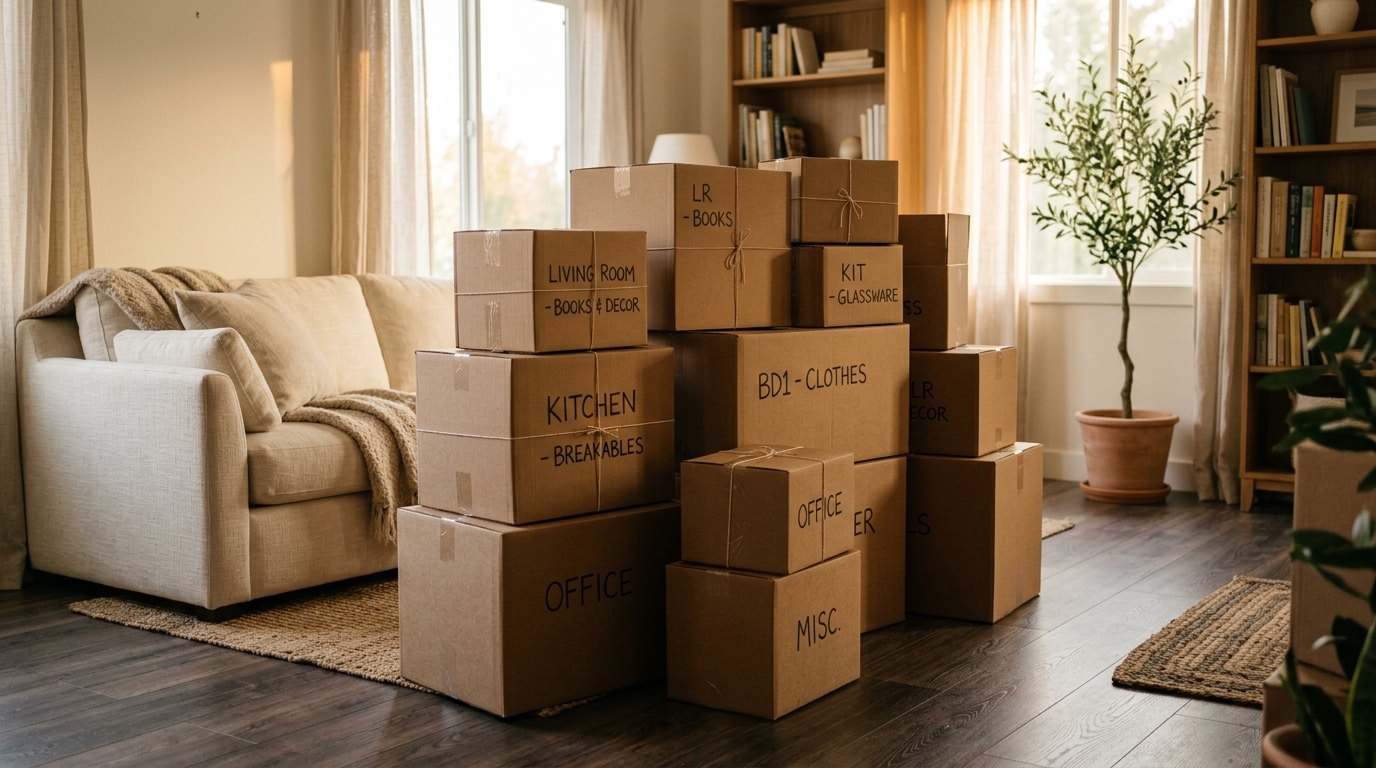
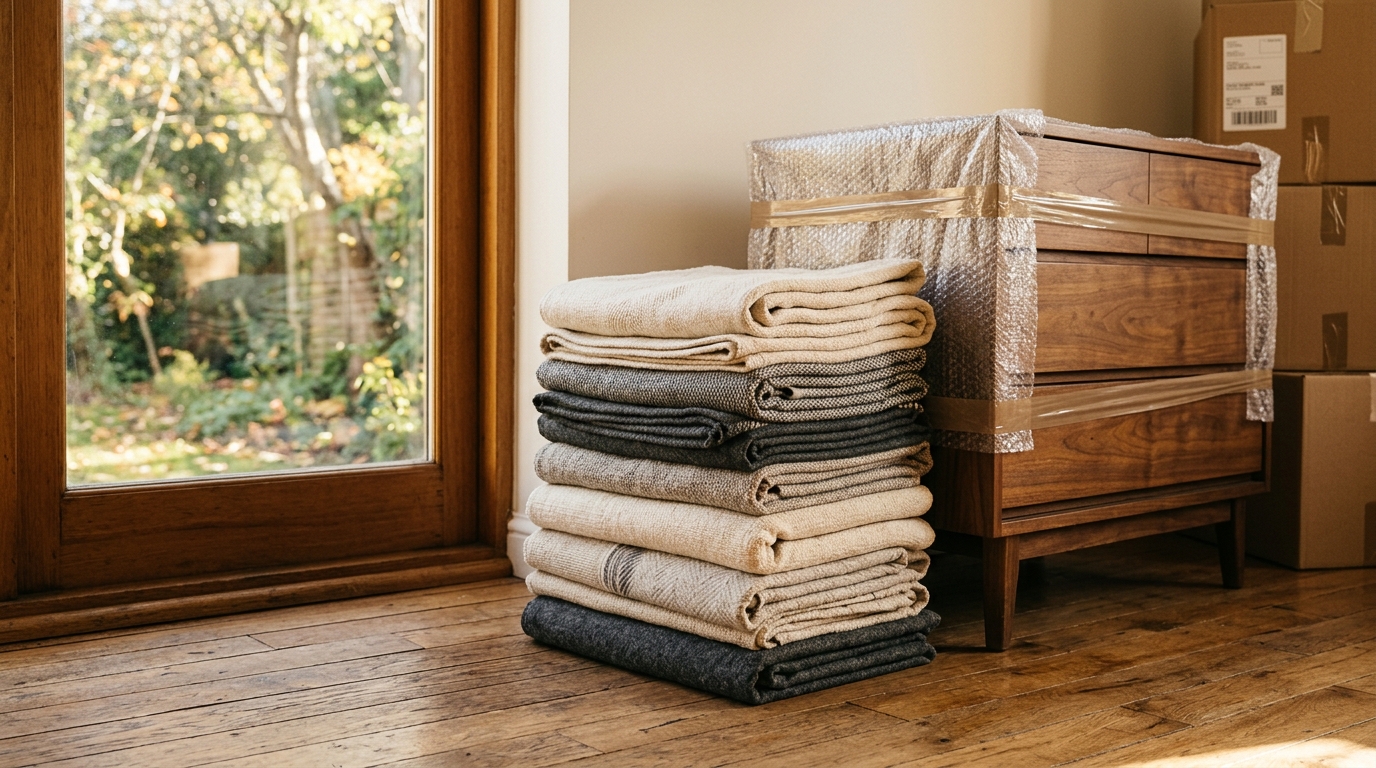
The single most common cause of moving damage isn't the truck, the stairs, or the crew — it's a badly packed box. You can often tell within seconds of lifting a box whether something inside is going to break. The good news: packing correctly isn't complicated once you know the rules. Here's exactly how we do it.
What packing materials do you actually need?
You don't need every product at the moving-supply store. You need the right materials for what you're packing — and enough of them. Running out mid-pack is how corners get cut and things get broken.
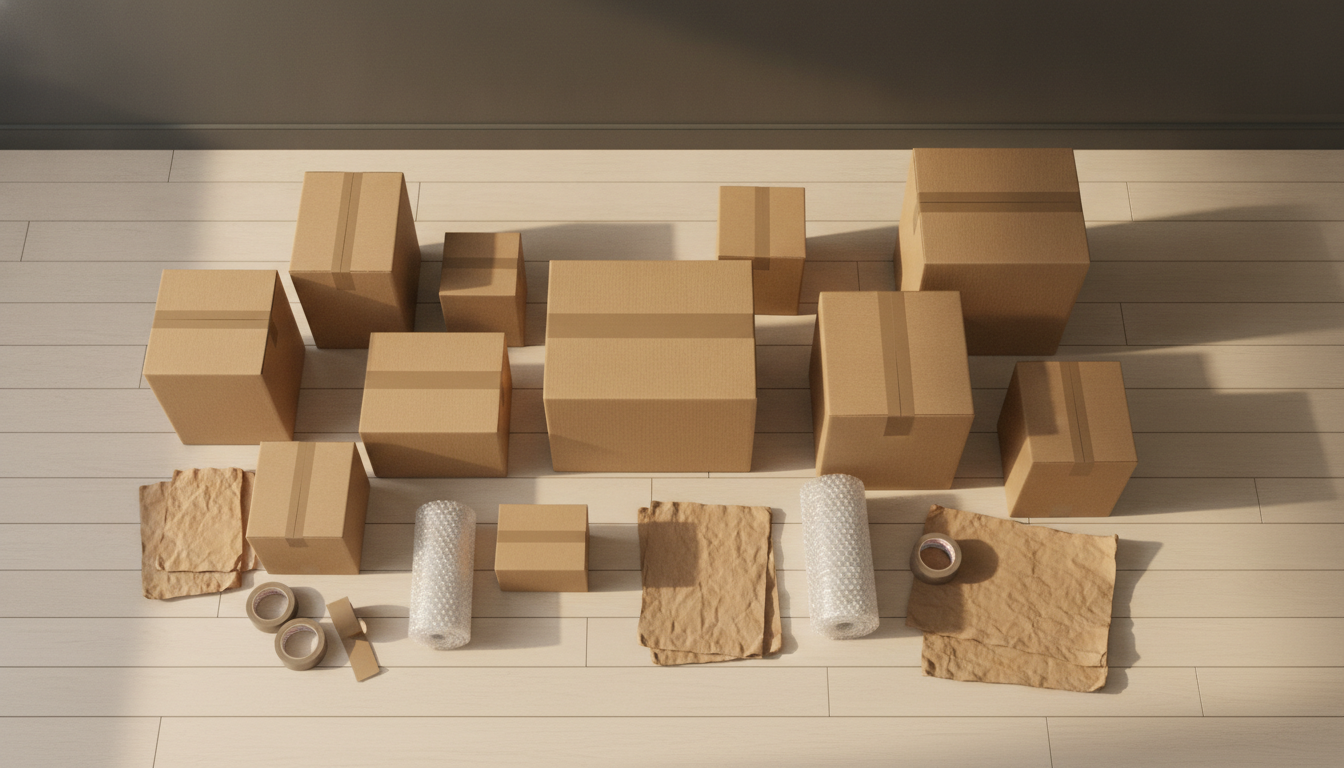
The essential list
| Material | What it's for | Cheap substitute (and limits) |
|---|---|---|
| Double-wall corrugated boxes | Heavy items: books, tools, dishes | Single-wall works for light items only |
| Unprinted newsprint / packing paper | Wrapping dishes, filling voids | None for dishes: skip printed newspaper, which can stain ceramics and glass |
| Bubble wrap | Fragile/high-value items, screens | Extra packing paper layers for low-value items |
| Foam pouches | Stemware, figurines | None — foam pouches are worth it |
| Stretch wrap / plastic wrap | Bundling drawers, protecting upholstery | N/A |
| 2" packing tape with dispenser | Sealing all boxes | Masking tape or painter's tape fail under weight |
| Mattress bags | All mattresses | Nothing — a bare mattress picks up stains and tears |
| Wardrobe boxes | Hanging clothes | Only if you have 10+ hanging items |
We tell everyone the same thing: buy more packing paper than you think you need. Paper is cheap; a broken antique isn't. A standard 3-bedroom house typically uses 10–15 lbs of packing paper (two or three newsprint packs from a moving-supply retailer, roughly $25–$40 total).
What box sizes should you use — and when?
Using the wrong box size is as damaging as using no padding. A huge box packed with books will blow the bottom out. A tiny box used for light items wastes truck space.
Box size guide
| Box size | Dimensions (approx.) | Best for | Max weight |
|---|---|---|---|
| Small (1.5 cu ft) | 16×12×12 | Books, tools, canned food, records | 50 lbs |
| Medium (3 cu ft) | 18×18×16 | Pots, toys, small appliances, shoes | 65 lbs |
| Large (4.5 cu ft) | 18×18×24 | Pillows, linens, lampshades, light decor | 65 lbs on a common single-wall box (read the stamp) |
| Extra-large (6 cu ft) | 24×20×18 | Comforters, stuffed animals, foam items | Never heavy — always light! |
| Dish pack / China box | 18×18×28 (double-wall) | All dishes, glassware, ceramics | 60 lbs |
Hard rule: if a box feels too heavy to carry with one arm, it's too heavy. The movers will carry it safely, but overloaded boxes crush the items stacked below them on the truck.
How do you pack a box correctly, step by step?
Every well-packed box follows the same sequence. It takes 90 seconds to do it right, and it prevents 90% of breakage.
- Reinforce the bottom. Run tape down the center seam and two strips across the width, making a "H" pattern. Don't skip this on anything heavier than 20 lbs.
- Lay a 2-inch cushion layer. Crumpled packing paper or a folded towel on the bottom of every box, no exceptions.
- Pack heaviest items first, at the bottom. Books go in spine-down (reduces stress on bindings). Dense kitchen items go next.
- Wrap each fragile item individually. Two sheets of packing paper minimum per dish; three for anything you care about. Wrap glasses in a spiral from the rim down, tucking the end inside.
- Fill every void. Shake the box. If anything moves, it will break. Crumple paper into every gap until nothing shifts.
- Fill every box right to the top. A full box resists the weight stacked on it.
- Seal with three strips of tape. Center seam plus both edges. Don't rely on tucked flaps.
- Label before you move on. Room + contents + fragile status. Do it now, not later. (If you want a deeper system, our guide to labeling moving boxes covers color-coding, priority tiers, and room maps.)
What are the most common packing mistakes that cause damage?
We've seen the same mistakes thousands of times. Every one of them is avoidable.
- Using liquor-store or grocery boxes. These are not designed for moving. They're weakened from prior use, and they rarely have uniform dimensions — which means they don't stack safely on a truck.
- Leaving boxes too light at the top. A half-empty box collapses under weight. Fill it or pack smaller items in.
- Mixing heavy and fragile items. A cast-iron skillet doesn't belong in the same box as your grandmother's china, even if you run out of dish packs at 11 p.m.
- Skipping the bottom cushion layer. The floor of the truck vibrates. Without cushioning, your bottom layer rattles against cardboard — and chips.
- Packing open liquids. Shampoo, olive oil, detergent — remove lids, seal openings with plastic wrap, then replace lids. Better yet, pack liquids in a tote you ride with.
- Overloading wardrobe boxes. A full wardrobe box can weigh 80–120 lbs and tip. Never hang more clothes than the rod can hold flat without the box bowing.
Before you even start boxing, check our guide to choosing moving boxes and packing supplies — it'll help you figure out exactly how many of each box size you need based on your home size, so you're not making a second supply run at midnight.
While you’re reading
Skip the research — let Robert match you with movers.
Free quotes from movers in your area. Pick whichever is easiest.
How do you pack specific difficult rooms?
Kitchen
Dish packs are mandatory for anything ceramic, glass, or enamel-coated. Plates stand on edge — never flat — in a dish pack with crumpled paper between each one. Nest bowls with paper between every layer. Wrap each glass individually; stems and rims are where breaks happen. For a full kitchen packing walkthrough, see our guide to packing a kitchen in 48 hours.
Books and media
- Books: small boxes only, spine down, tightly packed so pages can't riffle and bend
- Vinyl records: always upright, never flat — flat stacking warps records over any distance
- CDs/DVDs: original cases or padded envelopes, packed upright
Electronics
- Original boxes are best; if you don't have them, use similarly sized moving boxes with 3 inches of padding on all sides
- Wrap screens in foam wrap or a clean moving blanket, then box them — never leave a screen loose against hard items
- Photograph cable setups before disconnecting; put cables in labeled zip-lock bags inside the same box as the device
Clothing
- Wardrobe boxes for anything on hangers worth keeping wrinkle-free
- Flat-fold everything else into medium boxes — packing paper between layers of delicates
- Shoes: stuff with paper to hold shape, wrap pairs together, stand upright in a medium box
How much do packing supplies cost for a whole house?
These ranges are based on actual supply costs in 2025–2026 from moving-supply retailers and big-box stores. Your actual cost depends on home size and how many specialty items you're packing.
| Home size | Estimated supply cost (DIY) | What drives the high end |
|---|---|---|
| Studio / 1-BR | $60–$120 | Lots of fragile items, dish packs |
| 2-BR apartment | $100–$200 | Extra bubble wrap, wardrobe boxes |
| 3-BR house | $175–$350 | Full kitchen, more dish packs, picture boxes |
| 4-BR+ house | $300–$600 | Large appliances wrap, multiple wardrobes |
One area where you can genuinely cut costs without risk: source free boxes from liquor stores for your linens and light items — they're double-walled and very sturdy for non-fragile loads. Just don't use them for anything breakable. For more ways to reduce what the whole move costs, our budget moving guide has specific tactics we use with our own crews.
Should you buy or rent packing supplies?
Most movers sell packing supplies at a markup. If your mover is packing for you, that's fine — it's baked into the labor cost and saves you time. If you're DIY packing, buy your own supplies. You'll typically pay 20–40% less buying directly from a moving-supply retailer or big-box store versus purchasing through a moving company.
Return programs: Several national box retailers and container companies offer buy-back programs where they'll take unused boxes back after your move. Ask before you buy — it can reduce your net supply cost significantly.
If you're comparing full-service packing (where the crew does everything) versus DIY, see our full-service vs. DIY moving comparison for a cost and time breakdown.
Where can I find movers who pack carefully?
Packing quality varies enormously between crews. Browse movers on our directory to find companies with strong packing track records, and read mover reviews to see specifically how customers describe how their fragile items arrived. You can also browse movers by state if you want to compare local options across different metro areas.
Frequently asked questions
How many boxes do I need to move a 3-bedroom house?
There's no official number, and the estimates don't agree: one national box seller says 75–90 boxes for a three-bedroom house. If you'd rather have a margin, a rough breakdown is: 20–25 small boxes (books, tools), 30–40 medium boxes (kitchen, toys, decor), 20–25 large boxes (linens, lamps), 10–15 dish packs, and 5–10 specialty boxes (wardrobe, picture, mirror). Overestimate — unused boxes are easy to return or store; running short at midnight is miserable.
Is bubble wrap or packing paper better for dishes?
Packing paper is better for most dishes because it wraps tightly, fills gaps, and doesn't trap air that can shift during transit. Bubble wrap is better for high-value, irregularly shaped, or very fragile items like crystal stemware, figurines, and electronics screens. Most professional packers use paper as the primary wrap and bubble wrap as a secondary layer on the most delicate items.
Can I leave clothes in dresser drawers during a move?
Often yes — for a local move, lightweight clothing in drawers is generally fine if the drawer doesn't hold anything breakable and the dresser won't be tipped. For a long-distance move, most movers prefer drawers emptied because dressers shift and rack during a multi-day transit. Always confirm with your crew before move day.
What tape should I use to seal moving boxes?
Use 2-inch pressure-sensitive packaging tape (often labeled "packing tape" or "shipping tape") with a tensile strength of at least 40 lbs. Masking tape, painter's tape, and duct tape all fail under the weight and friction of a loaded truck. A tape dispenser isn't optional — it's what lets you apply consistent pressure and prevents wasted tape.
Should I label boxes on the top or the side?
Label on at least two sides and the top. When boxes are stacked, the top label is invisible — side labels let movers read the room destination and fragile status without unpiling the stack. A large black permanent marker is all you need. Color-coded tape by room is even faster on move day.
What should I pack last (i.e., what goes in the "open first" box)?
Pack an "essentials box" or bag last that rides with you — not on the truck. Include: toilet paper, hand soap, a phone charger, one change of clothes per person, any medications, coffee or a kettle, paper towels, box cutter, and a basic toolkit (screwdriver, hex key for furniture reassembly). This is the one box you'll be genuinely grateful for at 9 p.m. on move day when the truck still isn't fully unloaded.
Ready to find movers who take packing as seriously as you do? Browse movers in your area or chat with Robert, our moving concierge, on the Majestic Moving Companies homepage — he can help you narrow down the right crew for your home size, timeline, and packing needs.
Tagged