Yes, professional movers use stretch plastic wrap — but it is one tool among several, and it is not used on everything. Most full-service movers rely primarily on moving blankets (also called furniture pads) to protect hard surfaces and finished wood, reserving plastic wrap for upholstery, drawers, and bundling jobs. Applying plastic directly to bare wood or leather can trap moisture and cause actual damage. Knowing the difference helps you ask the right questions before moving day.
What protection methods do movers actually use?
Most professional movers carry three main materials on every job:
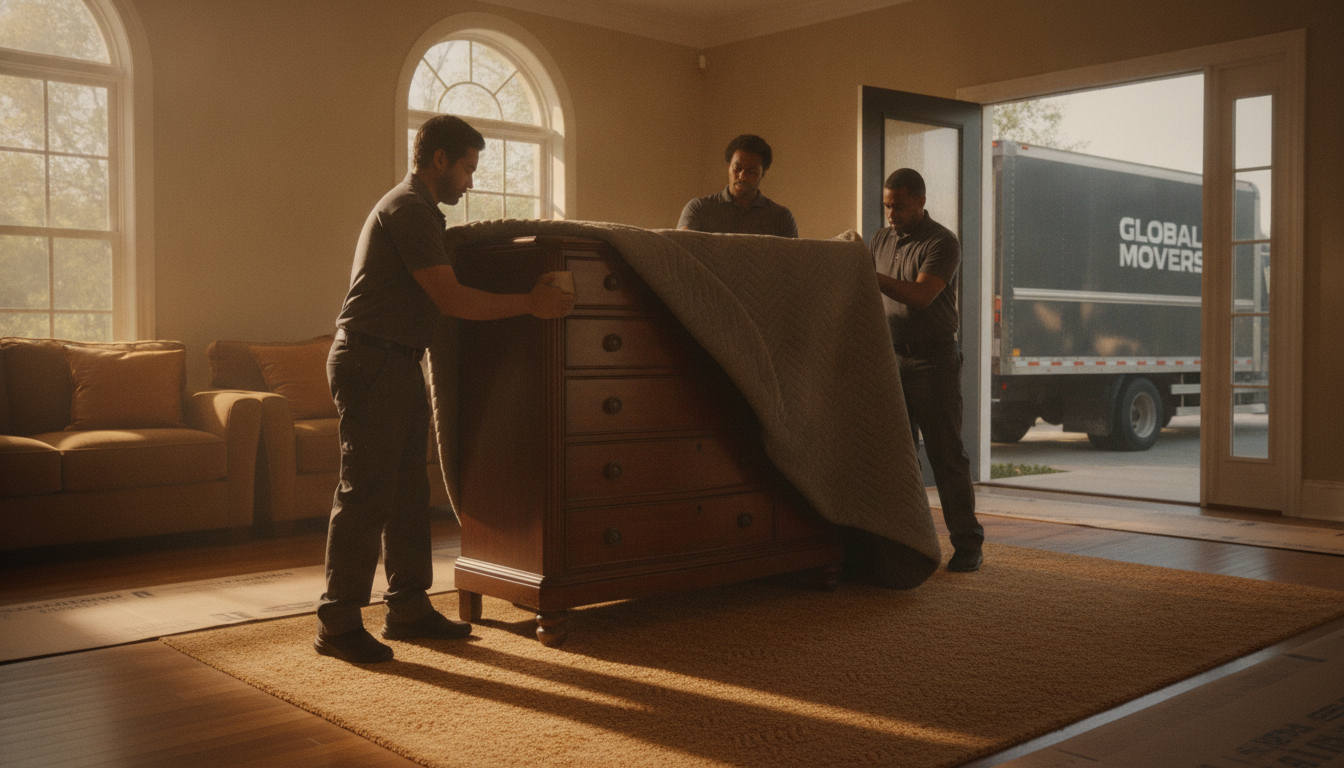
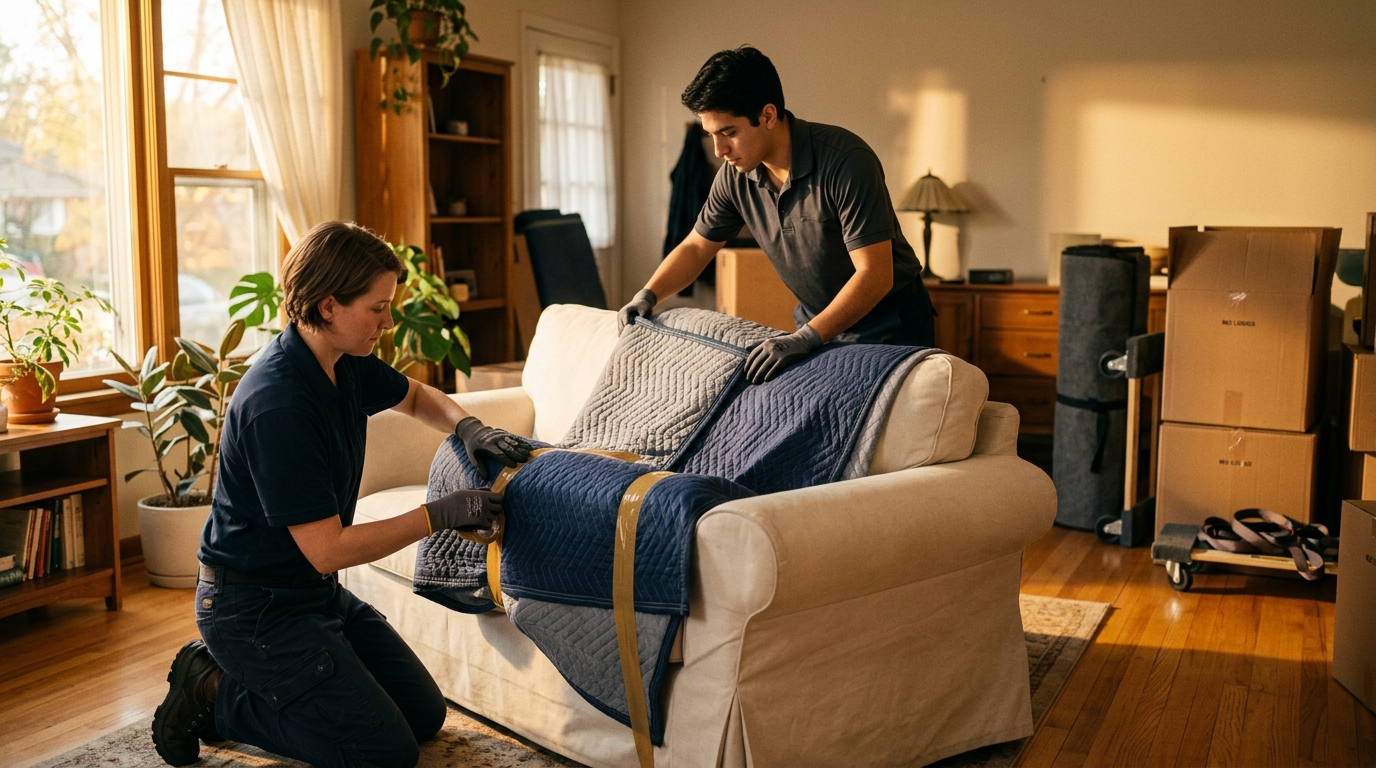
- Moving blankets / furniture pads — thick quilted pads that wrap around hard furniture surfaces: dressers, tables, bed frames, bookshelves, and wood chairs. They absorb impact and prevent scratches without trapping moisture.
- Stretch plastic wrap (shrink wrap) — a thin, clingy film rolled around items to keep blankets in place, secure drawers and doors shut, and protect upholstered surfaces from dirt and scuffs.
- Cardboard corner guards and custom cartons — used for glass tabletops, mirrors, and framed art. (See our guide to packing mirrors for a move for the full method.)
A well-run move uses all three in combination, not one instead of another.
What does plastic wrap actually protect?
Stretch wrap does a specific set of jobs well:
| Item | Why plastic wrap helps |
|---|---|
| Upholstered sofas and chairs | Keeps fabric clean and repels dirt during transit |
| Mattresses (with a mattress bag) | Seals out moisture, bed bugs, and scuffs |
| Dresser drawers and cabinet doors | Keeps them from swinging open mid-move |
| Bundled chair legs or mirror frames | Holds blankets tightly in place |
| Desk and shelf hardware (bagged and taped to the piece) | Prevents screws from getting lost |
When does plastic wrap cause damage?
Plastic wrap is airtight — that's the problem when it's applied to the wrong surfaces.
- Bare or finished wood: Moisture from temperature changes gets trapped under the film, causing warping, discoloration, and finish lifting. Blankets should always go on wood first; plastic goes over the blanket, not the wood directly.
- Leather and faux-leather furniture: Prolonged contact with plastic can cause the surface to sweat, stick, and eventually crack. If a mover is wrapping a leather piece, ask whether a blanket is going on first.
- Antiques with original finishes: Any synthetic film risks chemically interacting with old shellac or oil-based finishes. Professional movers who specialize in antiques typically use acid-free materials instead. Our full guide to moving art, antiques, and collectibles covers the right approach.
- Electronics and anything with vents: Wrapping a TV or audio component tightly in plastic can trap heat if the item is left in a warm truck for extended periods.
What do movers do with different furniture types?
Sofas and upholstered chairs
The standard approach is to wrap the piece directly in stretch wrap — sometimes two or three layers — because fabric needs dirt protection more than impact protection in transit. For a long-distance move or a light-colored piece, a moving blanket underneath is worth requesting.
Wooden tables, dressers, and bed frames
Blankets go on first, secured with stretch wrap or rubber bands. Moving blankets are the primary protection; plastic is a fastener. Ask your mover about this sequence if you have heirloom or finished-wood pieces.
Mattresses
A dedicated mattress bag (a large plastic sleeve) is the correct method — not stretch wrap spooled around a bare mattress. Mattress bags are designed to breathe slightly while still repelling moisture and preventing tears.
Glass tabletops and mirrors
These typically get cardboard corner guards plus a specialized mirror box or custom flat pack, not blankets or plastic alone.
Appliances
Refrigerators and washers are often wrapped in moving blankets and sometimes stretch-wrapped over that. The coils and door seals are left unobstructed.
The gear movers use to move furniture — including how dollies, straps, and sliders interact with all this padding — is worth understanding before moving day.
Does plastic wrapping cost extra?
For full-service moves, blanket padding and stretch wrap are typically included in the base service — you're paying for labor, and wrapping is part of that labor. However, specialty wrapping for delicate antiques, custom crating for art, or packing services beyond standard furniture protection may be quoted separately.
For local moves billed by the hour, wrapping time counts toward your hourly total. A mover who over-wraps everything adds time; a mover who skips wrapping exposes your belongings. If you want to understand how that time adds up, how movers charge by the hour breaks it down.
While you’re reading
Skip the research — let Robert match you with movers.
Free quotes from movers in your area. Pick whichever is easiest.
What should you ask your mover before moving day?
Before the crew arrives, confirm these three things:
- Do you carry moving blankets and stretch wrap on every job? Any professional mover should say yes without hesitation.
- How do you protect finished wood and leather? The answer should mention blankets going on before plastic.
- Is there anything you need me to disassemble or protect before you arrive? Some movers prefer you remove glass shelves from cabinets or detach table legs in advance.
You can also check mover reviews to see how previous customers describe a company's wrapping and handling practices — look for comments about scratches or surface damage, which often signal that padding was skipped.
How does wrapping differ for local vs. long-distance moves?
| Factor | Local move (same state) | Long-distance move (interstate) |
|---|---|---|
| Transit time | Usually hours | Days to weeks |
| Vibration and road exposure | Lower | Higher |
| Padding expectations | Standard blankets + wrap | More thorough wrapping; some movers add extra layers |
| Climate risk | Minimal | Higher (temperature swings in the truck) |
| Cost of wrapping | Included in hourly rate | Typically included in full-service price |
On interstate moves, furniture often rides in a truck with other customers' items (consolidated load), meaning pieces are in transit longer and experience more handling. Thorough wrapping matters more, not less, over distance.
To find movers who handle both local and long-distance jobs, you can browse by service type and check each company's USDOT number on the FMCSA's search tool to confirm they're licensed for the type of move you need.
What if you're doing a hybrid or DIY move?
If you're renting a truck and hiring labor help, you're responsible for sourcing your own moving blankets and wrap. Moving blanket rentals typically run $5–$10 per blanket per day from truck-rental companies; buying a 12-pack of medium-weight pads runs roughly $40–$80 depending on quality. Stretch wrap costs about $10–$15 for a standard roll, which covers most of a one-bedroom apartment's furniture.
Plan on one blanket per major piece of hard furniture. Thicker, heavier blankets (72 lbs. per dozen) offer noticeably better protection than the lighter economy versions.
Frequently asked questions
Do movers always wrap furniture, or do I have to ask?
Most full-service movers wrap furniture as a standard part of the job. It's worth confirming before you book, particularly for pieces with delicate finishes or upholstery. If a mover tells you wrapping costs extra for every single item, ask them to clarify what's included in the base price.
Can plastic wrap ruin wood furniture?
Yes, if applied directly to bare or finished wood without a blanket underneath. Plastic traps moisture against the surface, which can lift finishes, cause cloudiness, or warp veneers over time. Professional movers should always pad wood before wrapping.
Do movers wrap leather couches in plastic?
Some do, and it's usually fine for short local moves. For longer transit or warmer climates, a moving blanket underneath the plastic is better practice. Ask your mover directly if you have a high-value leather piece.
What is a mattress bag and is it worth it?
A mattress bag is a purpose-made plastic sleeve sized to your mattress. Unlike stretch wrap, it's designed for the job: it protects against moisture, dirt, and tears without the risk of airtight trapping. Most movers either include mattress bags or charge a few dollars each — it's worth it for any mattress you're keeping.
Will movers wrap furniture for a short local move, or only long-distance?
Professional movers should pad and wrap furniture regardless of distance. Even a 20-minute local move involves loading, stacking, and unloading — plenty of opportunity for a scratch. The wrapping may be less elaborate than on a multi-day interstate haul, but blankets and stretch wrap should still appear on every job.
How do I know if a mover's wrapping is adequate before I sign a contract?
Read mover reviews specifically for mentions of surface damage, scratches, or "they didn't wrap anything." Then, during your in-home or live-video estimate, ask the estimator to walk you through their standard wrapping process for your specific furniture types. Any hesitation or vagueness is worth noting.
Ready to find a mover who handles your furniture with care? Browse movers by state to compare companies in your area, and reach out to Robert, our moving concierge, if you'd like a hand narrowing down your options.
Tagged