The right way to unload a moving truck is back-to-front, heaviest items first, with each piece going directly to its destination room — never staged in a hallway or left on a porch for later. Getting the sequence wrong means you'll spend your first hour in a new home shuffling furniture you already moved once, blocking doorways, and risking floor scratches that weren't there when you arrived. The system below is the one experienced crews use every single time.
Why does unloading order matter so much?
Most people think of unloading as the easy half — the heavy lifting is packing and loading, right? Not quite. A disorganized unload creates bottlenecks at the truck ramp, forces you to move pieces twice (sometimes three times), and turns a four-hour job into a seven-hour one. It also increases the chance of damage: furniture dropped in a hallway gets bumped, corners get nicked, and floors get scratched by pieces dragged rather than carried.
The goal is simple: every item touches the floor exactly once in your new home, in the room where it belongs.
What should you do before the truck ramp comes down?
Before a single box leaves the truck, spend 10 minutes on setup. This is the step most DIY movers skip — and the one that costs them hours later.
- Walk every room of the new home and confirm which room is which. If you have helpers, give them a quick tour so nobody is standing at the truck asking "where does this go?"
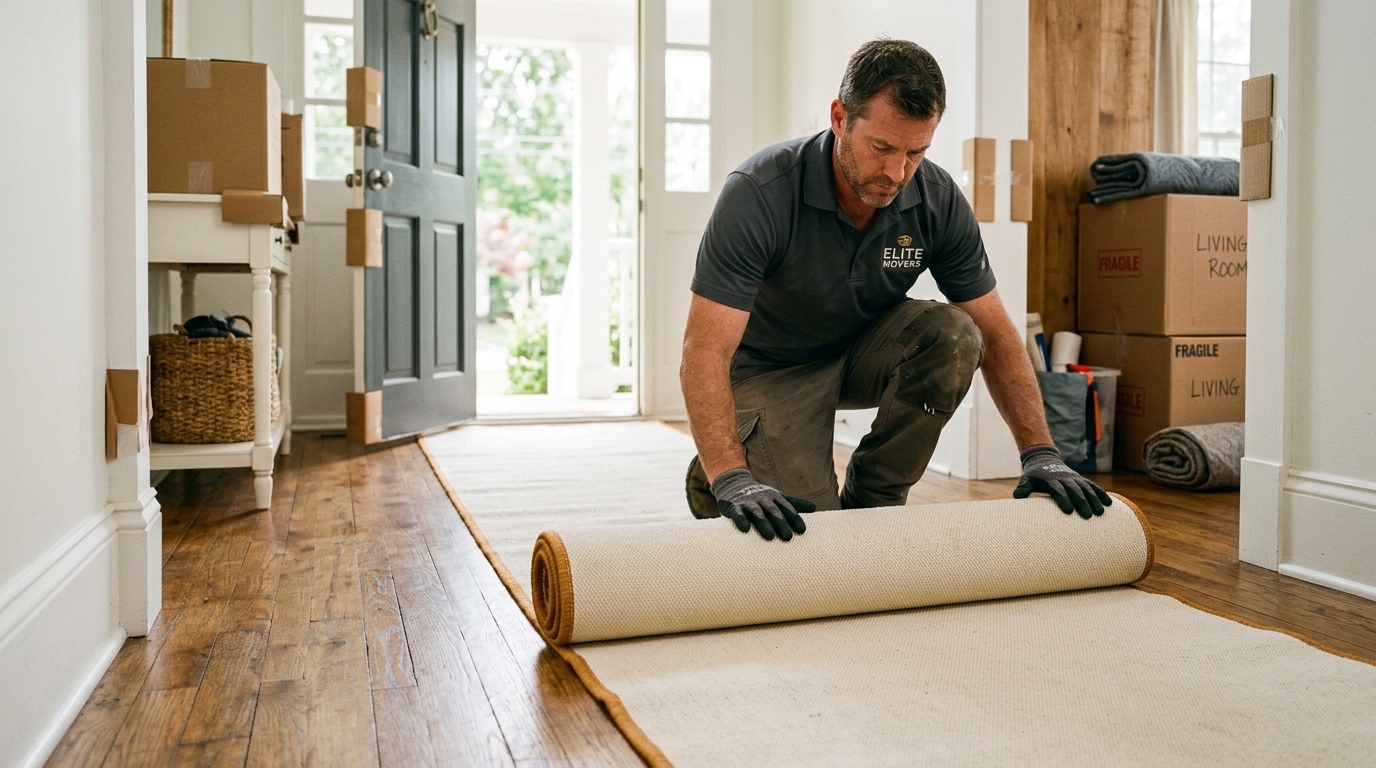
- Lay down floor protection — ram board or cardboard runners — on hardwood and tile in high-traffic paths from the front door to the main rooms. Replacing a scratched hardwood floor typically costs $3–$8 per square foot to refinish; a $30 roll of ram board is worth it.
- Reserve elevator time if you're in an apartment building. Many buildings require a specific window (typically 2–4 hours, booked 24–72 hours in advance). See our full guide to moving into an apartment or condo for what to confirm with building management before moving day.
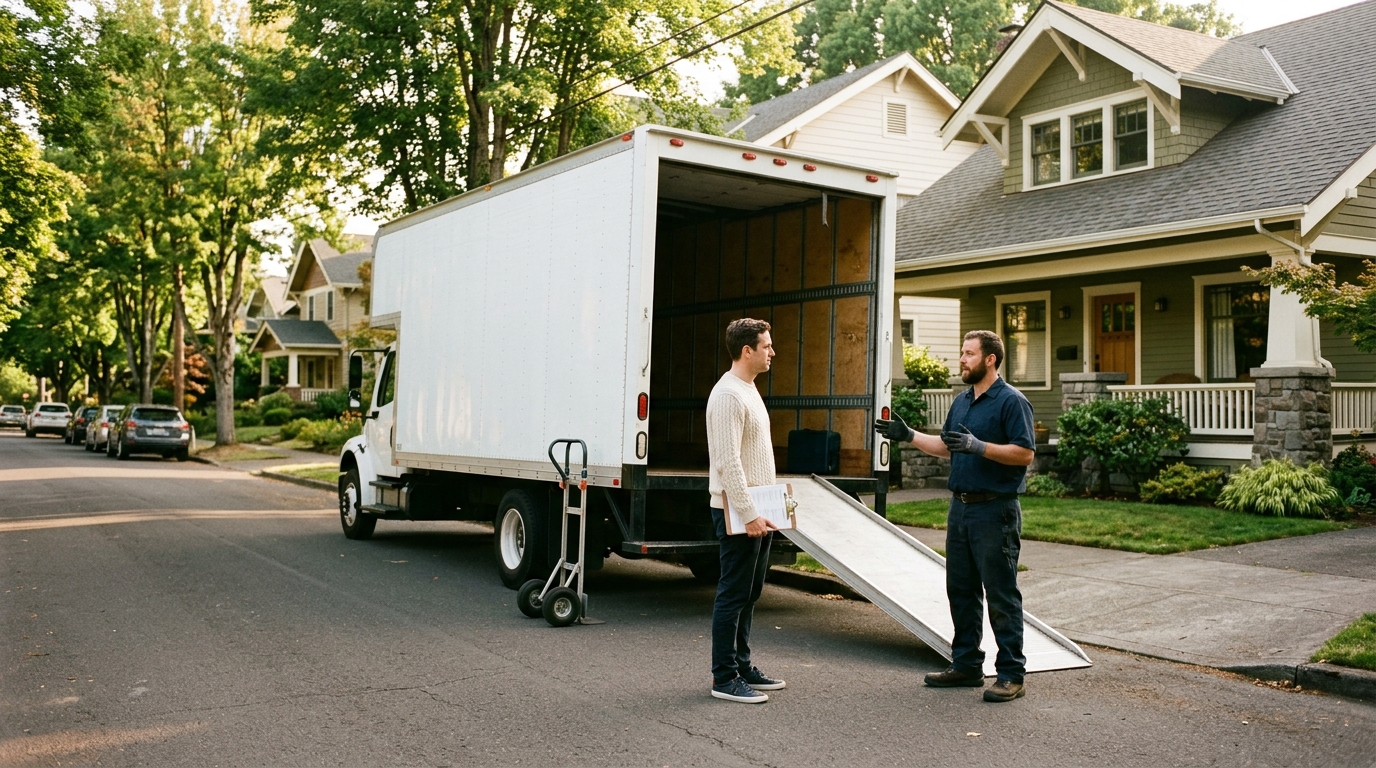
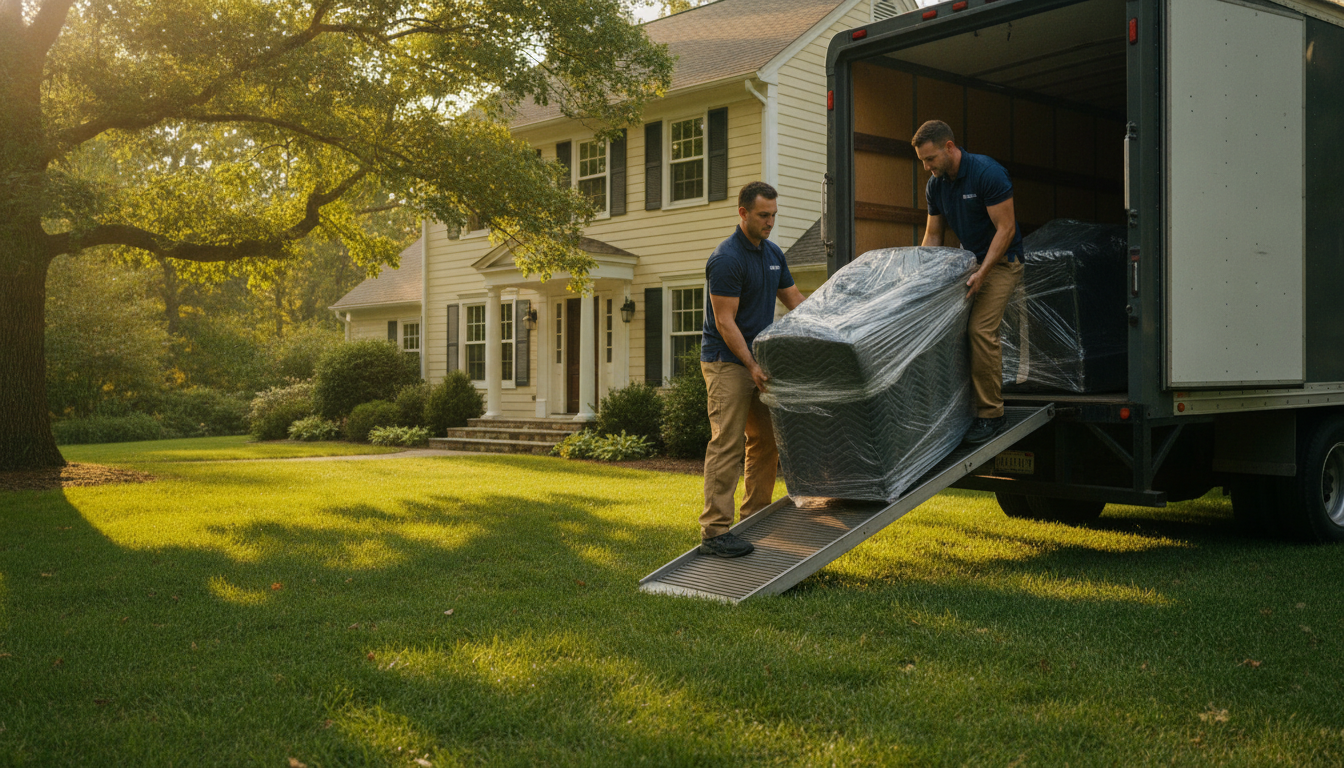
- Clear the landing zone at the truck. You need at least 6 feet of clear space at the bottom of the ramp.
- Label the truck zones mentally (or with tape): what's at the back of the truck (last in, first out) vs. what's deep inside (beds, sofas).
What is the correct order to unload a moving truck?
If you packed the truck properly — heaviest items deepest, lighter boxes near the door — you'll unload in roughly this sequence. If the truck was packed by someone else, adapt as needed, but always move heavy furniture before boxes.
Step 1 — Large furniture for the main rooms (sofas, dining tables, dressers)
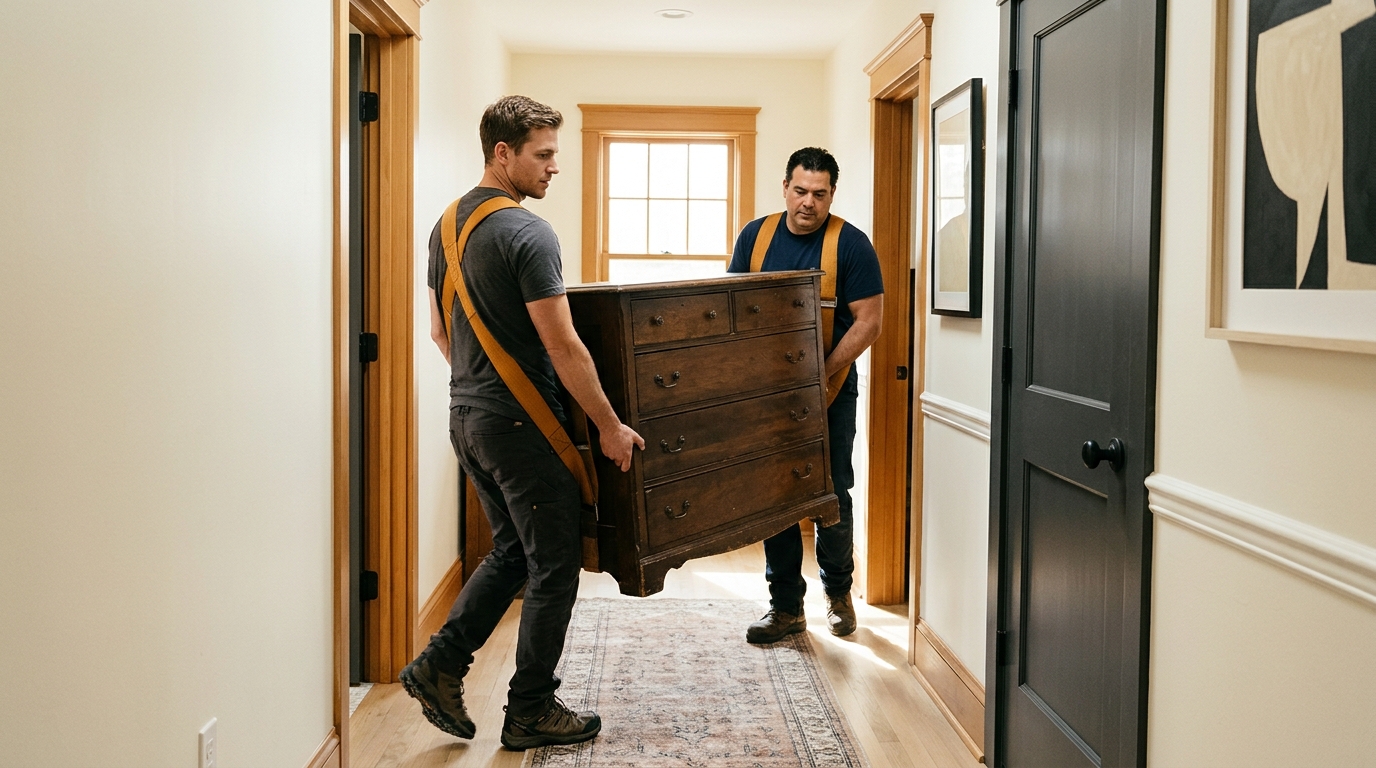
These go first because they set the room layout. Once the sofa is placed, everything else navigates around it. Don't second-guess placement at the ramp — get it in the room, set it down, adjust later.
Step 2 — Bed frames and mattresses
Bedrooms need to be functional on night one. Prioritize getting at least the master bedroom bed inside and assembled early. A mattress left leaning against a wall will eventually need to move past the boxes you're about to bring in — do it now.
Step 3 — Large appliances (if applicable)
Refrigerators, washers, and dryers are heavy, awkward, and need a clear path. Moving them after boxes are inside means navigating around obstacles. Get them in and into position before the house fills up. Our guide to moving large appliances covers how to prep each one before the truck even arrives.
Step 4 — Wardrobe boxes and tall, unwieldy items
These are tall and top-heavy. They tip easily and knock things over. Move them while paths are clear.
Step 5 — Room-by-room boxes, heaviest first
Now bring in boxes, sorted by room. Carry each box to its destination room immediately — not to the living room, not to the garage "for now." This is the single most important rule. A box staged in the wrong room gets unpacked in the wrong room or moved again later.
Step 6 — Fragile and high-value items last
Lamps, mirrors, artwork, and anything you packed separately as fragile comes off the truck last, when foot traffic has died down and you can carry each piece to its spot without navigating an obstacle course. If you're moving anything truly irreplaceable, our room-by-room guide to packing and moving fragile items applies equally to the unload.
How many people do you actually need to unload a truck?
| Move size | Minimum crew | Recommended | Typical unload time |
|---|---|---|---|
| Studio / 1-bedroom | 1 helper + you | 2 helpers + you | 1–2 hours |
| 2-bedroom | 2 helpers + you | 3 helpers + you | 2–3.5 hours |
| 3-bedroom | 2 helpers + you | 3–4 helpers + you | 3–5 hours |
| 4-bedroom+ | 3 helpers + you | 4–5 helpers + you | 5–8 hours |
These are typical ranges for a ground-floor or elevator-accessible home. Add 30–60 minutes per flight of stairs. A crew of two can technically move anything, but they'll move it slowly and with more risk of injury. If you're hiring professionals, browse movers who offer hourly unloading-only or labor-only services — you don't have to pay for a full-service move to get help on the unload end.
While you’re reading
Skip the research — let Robert match you with movers.
Free quotes from movers in your area. Pick whichever is easiest.
What are the most common unloading mistakes?
- Staging in hallways. Every piece that gets set in a hall will need to move again. The hall is a highway, not a parking lot.
- Bringing boxes in before furniture. Boxes fill rooms and create obstacles for large pieces. Furniture first, always.
- Letting helpers self-direct. Without a room tour up front, helpers guess — and they often guess wrong. Spend 5 minutes briefing them before the ramp drops.
- Skipping floor protection. One heavy dresser dragged two feet can leave a gouge that costs hundreds to repair. Not worth it.
- Unpacking as you go. Opening boxes while others are still unloading the truck splits your attention and slows everything down. Fully unload first; unpack after. Our room-by-room unpacking guide walks you through that next phase.
Should you tip movers who help you unload?
Yes — if they did good work. The standard tip for a local move is $20–$50 per mover for a half-day, or $50–$100 per mover for a full day. For a long-distance delivery crew (often a different team than the ones who loaded), the same range applies. Tip in cash, per person, directly to each mover — not as a lump sum to the lead. For a full breakdown of what's expected, see our guide to how to tip movers.
What should you do the moment the truck is empty?
- Walk the truck with a flashlight before it leaves. Check under furniture pads, in the cab storage area, and at the very front of the cargo area. We find forgotten items — often mattress rails, floor lamps, or the box someone shoved to the back — on nearly every job.
- Sign off on inventory if movers are present. Any damage you see should be noted on the delivery receipt before the crew leaves. Under FMCSA regulations (49 CFR Part 375), interstate movers are required to provide you with a bill of lading and an inventory sheet — check items off as they come in and note any condition issues in writing.
- Photograph any damage immediately, before the truck drives away. Time-stamped photos are your strongest evidence if you need to file a claim later.
- Return or check in the truck if you rented it. Most rental agreements require the truck back by a specific time; late fees typically run $20–$50 per hour beyond the window.
Once the truck is gone, you're ready to unpack. Start with the kitchen and the master bedroom — those two rooms make the first night livable regardless of what else remains in boxes. And when you're ready to find movers for your next move, mover reviews are the fastest way to see who actually shows up on time and handles things carefully.
Frequently asked questions
What comes off the moving truck first?
Large, heavy furniture — sofas, bed frames, dressers, dining tables — should come off the truck first and go directly to their destination rooms. This sets the layout before boxes crowd the space and ensures the heaviest, hardest-to-move pieces have a clear path. Boxes come after furniture; fragile items come last.
How long does it take to unload a moving truck?
Unloading a 1–2 bedroom home with two or three helpers typically takes 1.5–3 hours. A 3–4 bedroom home with a crew of three to four usually takes 3–6 hours. Stairs, long carry distances, and narrow doorways can add significant time — budget 30–60 extra minutes per flight of stairs.
Can I hire movers just to unload a truck I rented myself?
Yes. Many moving companies offer labor-only or unloading-only services. You rent the truck, drive it to your new home, and a local crew meets you to handle the heavy lifting. This is one of the most cost-effective hybrid approaches for budget-conscious movers. You can find movers by state who offer this service near your destination.
Do I need to be present when movers unload?
Yes — or designate a trusted person to be there in your place. Someone needs to direct each piece to the right room, sign the delivery receipt, and note any damage before the crew leaves. Under FMCSA rules, you have the right to be present for the entire delivery and to note exceptions on the inventory before signing.
What if something is damaged when they unload?
Note it immediately on the delivery receipt in writing — "dresser top has new scratch" or "box 14 arrived crushed" — before signing anything. Photograph the damage with a timestamp. For interstate moves, FMCSA regulations give you nine months from the delivery date to file a damage claim with the carrier. For intrastate moves, state rules vary, but filing quickly is always better. See our guide to filing a moving damage claim for the full process.
What's the biggest mistake people make when unloading a moving truck themselves?
Staging items in hallways or the living room instead of carrying each piece directly to its destination room. It feels efficient in the moment — just get it off the truck fast — but it creates a second round of moving inside your own home. Every piece should touch the floor once, in the room where it lives.
Need help finding a reliable crew for your unload? Use our directory to find movers near your new home, or chat with Robert, our moving concierge, to get matched with local labor-only or full-service options.
Tagged