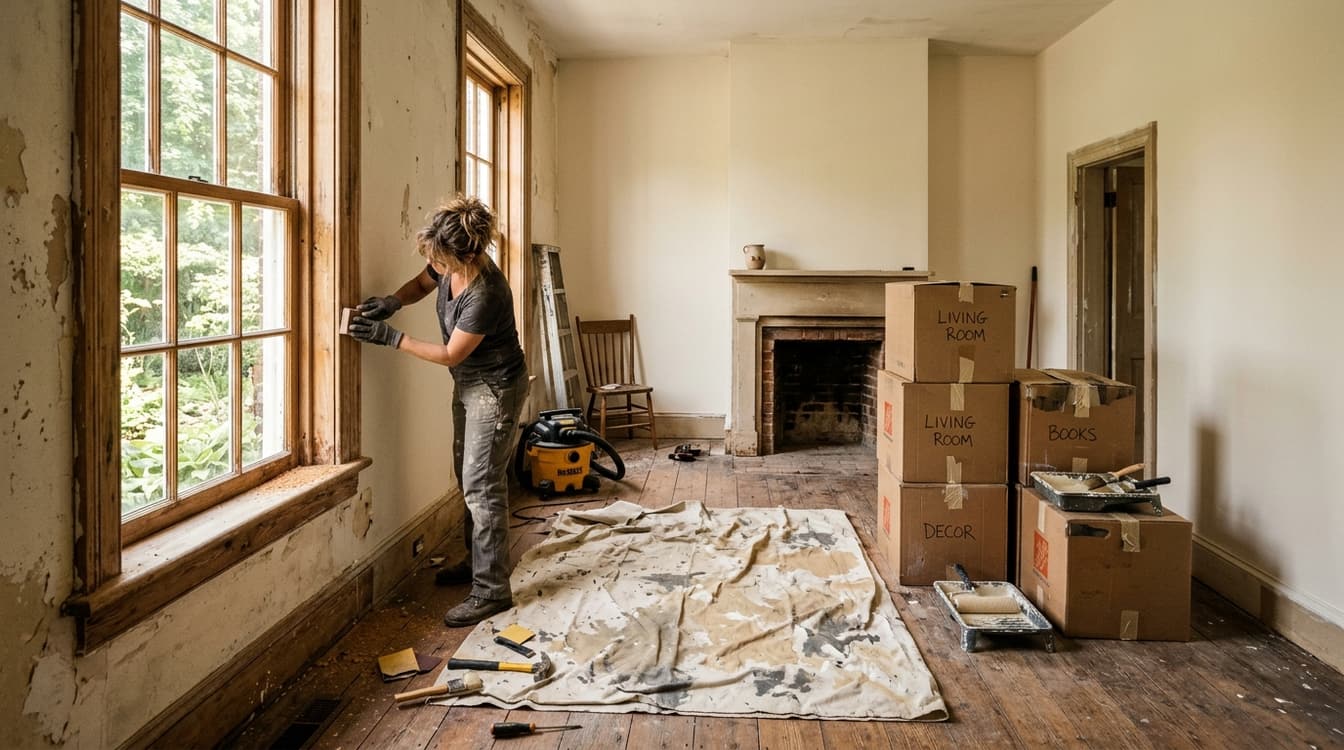
Moving into a fixer-upper means managing two overlapping projects at once: a renovation and a relocation. The single most important decision you'll make is the order of operations — which repairs happen before the moving truck pulls up, and which ones can wait. Get the sequence wrong and you'll be moving furniture twice, breathing drywall dust around boxes you just unpacked, or watching a floor refinisher ruin items you just moved in.
Here's how to sequence it so neither project wrecks the other.
Why the sequence matters more than the timeline
Every hour a contractor spends in a room your furniture already occupies is an hour of risk — to your belongings, to the work itself, and to your sanity. Paint overspray, adhesive fumes, floor sanders, and plumbers all leave collateral damage. A good rule of thumb: don't bring anything into a room until every trade that touches that room is finished.
That sounds obvious, but under the pressure of a closing date and a lease ending, most people skip it. Plan for a gap — even two or three weeks — between closing and move-in if your budget allows it. If it doesn't, the priority list below tells you what absolutely must be done first.
Which repairs must happen before you move in
1. Structural and safety items — no exceptions
Before a single box crosses the threshold, confirm that the following are either already sound or have been professionally addressed:
- Electrical panel and wiring. Knob-and-tube or aluminum wiring, overloaded panels, and uncovered junction boxes are fire hazards. An electrician should clear the panel before you run appliances.
- Plumbing leaks and water shut-offs. Know where the main shut-off is and confirm it works. Active leaks under sinks or behind walls will ruin boxes and flooring the moment you're living around them.
- HVAC function. Not cosmetic — just operational. You need heat in winter, cooling in summer, and working ventilation to clear paint fumes after you're in.
- Roof and water intrusion. If there's a known leak, it needs to be addressed before furniture moves under it.
- Carbon monoxide and smoke detectors. Install them before your first night, full stop.
2. Floors — the most important cosmetic sequence item
Hardwood refinishing, tile installation, and carpet laying all require an empty room. If your floors need work, do it before you move in. Refinishing around furniture is nearly impossible, and the fumes from polyurethane require the room to be unoccupied for 24–72 hours anyway, depending on the product and ventilation.
If you're only refinishing some rooms, plan your move-in room by room: furniture can live temporarily in finished areas while other floors are being done. Our guide on should you paint before moving in covers a similar sequencing question for walls — the same logic applies to floors.
3. Paint — finish it before the furniture arrives
Painting is far faster when rooms are empty, and there's no risk of overspray or roller spatter on your belongings. If you can paint before you move in, do it. If you're doing it yourself, give oil-based paints 24 hours minimum to dry to the touch and several days to cure before you push furniture against walls.
4. Major appliance hookups
Confirm the washer/dryer connections, gas line, and refrigerator water line are in place before moving day. Having a plumber or gas technician on-site the same day as the moving crew creates scheduling chaos and safety concerns. Sort it in advance.
What can wait until after you move in
Not everything needs to be finished before the truck arrives. These repairs are safer to do around furniture — or can be scheduled room by room:
- Cabinet hardware and interior trim — cosmetic, low-dust, easy to work around
- Bathroom tile (cosmetic only) — if the bathroom is functional, a cracked tile can wait
- Painting accent walls or touch-ups — small areas you can protect with drop cloths
- Landscaping and exterior work — doesn't affect interior livability
- Kitchen backsplash — tile work is dusty but contained; cover nearby surfaces
How to schedule your move around active renovation
If you're closing and moving in with work still underway, use this sequence:
- Close on the home and assess every room before booking movers. Walk through with your contractor, identify which rooms will be finished by your target move-in date, and which won't.
- Book your mover as soon as you have a firm renovation completion date — not before. Fixer-uppers have a way of running long. Build in a buffer of at least a week between "contractor done" and "truck arrives." If you need to find movers who can accommodate a flexible date, start that search early — good movers book weeks out.
- Stage your move in phases if needed. Bring in bedroom and kitchen essentials first if those rooms are ready. Leave living room furniture in storage or at the rental until the floors in that room are cured. Our post on moving everything at once vs. a little at a time lays out when a phased approach actually saves money versus costs more.
- Confirm the access situation with your mover in advance. Fixer-uppers often have dumpsters in the driveway, unfinished stairs, or removed railings. Your moving crew needs to know what they're walking into — literally. A good mover will ask; make sure you tell them.
While you’re reading
Skip the research — let Robert match you with movers.
Free quotes from movers in your area. Pick whichever is easiest.
Protecting your belongings in an active work zone
If renovation is continuing after you've moved in, treat the work zone as a separate space from your living space. Practically, that means:
- Keep boxes sealed and stacked in finished rooms until you're ready to unpack into a room that's fully done.
- Use plastic sheeting or moving blankets to protect furniture near active work. Drywall dust travels far; paint fumes cling to fabric.
- Don't unpack art, electronics, or anything fragile near active construction. Vibration from demolition, dust, and humidity swings from open walls all pose risk.
- Document your belongings before the work crew starts each phase. A photo record of condition protects you if a contractor damages something. Your moving inventory checklist works just as well for this as it does for the move itself.
Coordinating movers and contractors on the same day
Avoid it whenever possible. When you can't, follow these ground rules:
- Give each crew a designated entrance. Movers need clear paths from the truck to the rooms they're filling; contractors need their own access that doesn't create a collision point.
- Confirm insurance with both parties. Your mover should carry cargo liability and workers' comp. Your contractor should carry general liability. If a contractor's worker damages items the movers just placed, you need to know whose insurance responds.
- Don't let either crew rush the other. Movers working around a contractor's pace or vice versa leads to shortcuts — and that's when things get dropped or damaged.
A note on moving valuation in a fixer-upper context
When you're moving into a home with active work, the risk of damage to your belongings during and after the move is higher than in a finished home. Understand what your mover's valuation covers before moving day.
For interstate moves (crossing a state line), federal FMCSA rules govern valuation. Full Value Protection means the mover must repair, replace, or pay current replacement value for lost or damaged items. The free alternative — Released Value at 60 cents per pound per article — applies only if you sign a written waiver choosing it. Valuation is the mover's liability level, not an insurance policy; separate moving insurance is optional and state-regulated. If you want a fuller breakdown, our guide on moving valuation vs. insurance covers what each option actually means for your stuff.
For in-state moves, state rules apply — not federal ones. Check with your mover and your state's regulator for the specifics that govern your situation.
Fixer-upper move-in: a quick-reference table
| Task | Before move-in? | Notes |
|---|---|---|
| Electrical panel check | ✅ Must | Safety — do not skip |
| Plumbing leaks addressed | ✅ Must | Active leaks will damage boxes and floors |
| HVAC operational | ✅ Must | Needed for fume ventilation, comfort |
| Hardwood floor refinishing | ✅ Must | Requires empty room; fumes need clearance time |
| Full interior paint | ✅ Strongly recommended | Far easier in empty rooms |
| Appliance hookups | ✅ Must | Gas lines especially — before the crew arrives |
| Cabinet hardware | ⏳ Can wait | Low-dust, easy to work around furniture |
| Backsplash tile | ⏳ Can wait | Dusty but contained |
| Exterior/landscaping | ⏳ Can wait | Doesn't affect interior |
| Bathroom cosmetic tile | ⏳ Can wait | If bath is functional |
Frequently asked questions
Can I move into a fixer-upper while renovations are still happening?
Yes — many people do. The key is finishing the rooms you'll actually live in first (bedroom, bathroom, kitchen), then tackling remaining rooms in phases. Avoid moving into any room where active construction, sanding, or painting is still underway; the dust, fumes, and vibration all pose risk to your belongings and to your health.
How much of a gap should I leave between closing and moving in?
If renovations are involved, two to four weeks is a practical buffer for most projects. It gives contractors time to finish and correct punch-list items, lets paint and floor finishes fully cure, and gives you time to do a thorough deep clean before the furniture arrives. If your budget requires you to move in sooner, prioritize safety and floor work above everything else.
Should I book movers before or after I know the renovation finish date?
After — or at least after you have a firm estimate from your contractor. Book your mover as soon as that date is confirmed, because quality moving crews fill their calendars quickly. Use the directory at Majestic Moving Companies to compare options and read mover reviews while you're still in the planning phase, so you're not scrambling at the last minute.
What if the contractor runs over and my moving date is locked in?
Talk to your mover immediately. Most can shift a date with enough notice — typically several days to a week — and may charge a rescheduling fee, but that's almost always cheaper than moving into a room that isn't ready. If your estimate is binding or not-to-exceed, confirm with your mover what happens to the price if the date changes.
Who is liable if a contractor damages items I've already moved in?
That depends on the contractor's general liability policy and your homeowner's or renter's insurance. Get any damage documented in writing — photos, a written note to the contractor — immediately. The same applies to mover damage: file any claim with the mover in writing within 9 months of delivery for interstate moves. A note on the delivery receipt is not a formal claim.
Is there a moving concierge who can help me think through the timing?
Yes — reach out to Robert, our moving concierge, through the site. Robert can help you think through the sequencing, connect you with movers in your area, and answer questions about what to expect. You can also browse movers by state to start comparing options on your own timeline.
Tagged