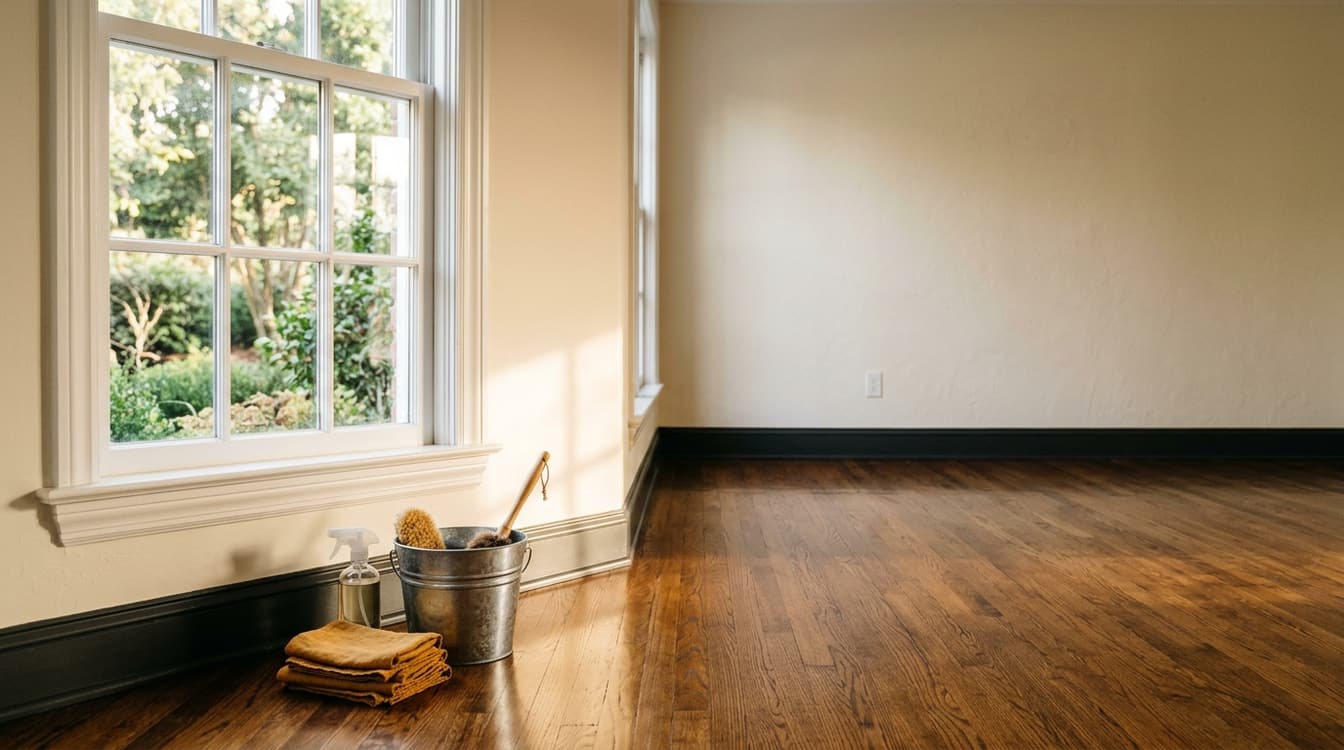
The best time to deep clean a new home is before a single piece of furniture crosses the threshold. Every surface is accessible, every corner is visible, and you will never get this window again. Plan for two to four hours in a small home and a full day — or a hired crew — in anything larger.
This guide walks every room in the right order, flags the spots most people miss, and tells you what supplies to have on hand before you start.
Why Clean Before You Move In, Not After?
Once furniture fills a room, cleaning shrinks to surface-level maintenance. Baseboards disappear behind sofas. Cabinet interiors fill with your dishes. The refrigerator coils vanish behind the fridge you just wrestled into place.
Cleaning an empty house also gives you information: you will notice a slow drain, a stained grout line that needs sealing, or a window that does not latch — all things worth flagging before you are living inside the problem.
If you are still coordinating the move itself, see our complete new-home checklist for your first week so cleaning fits into the broader timeline.
What to Buy Before You Start
Having everything in one caddy saves round-trips to the store mid-job.
| Supply | Use |
|---|---|
| All-purpose spray cleaner | Countertops, cabinets, doors |
| Disinfecting cleaner or diluted bleach solution | Bathrooms, kitchen sink |
| Glass cleaner | Windows, mirrors, appliance doors |
| Degreaser | Inside oven, range hood, cabinet above stove |
| Baking soda + white vinegar | Drain freshen, light scrubbing |
| Microfiber cloths (12+) | Everything — reusable, streak-free |
| Scrub brush and old toothbrush | Grout, faucet bases, tight corners |
| Vacuum with hose attachment | Vents, crevices, inside drawers |
| Mop with washable head | Hard floors |
| Rubber gloves + N95 mask | Dusty vents, musty cabinets |
The Right Cleaning Order (Top to Bottom, Back to Front)
Always clean from the ceiling down and from the rooms farthest from the exit toward the front door. This keeps dirt and dust falling onto surfaces you have not yet cleaned, and you never mop yourself into a corner.
- Ceiling fans, light fixtures, and vents
- Walls and upper cabinets
- Countertops, appliances, and lower cabinets
- Floors last — vacuum, then mop
Room-by-Room Checklist
Kitchen
The kitchen usually takes the longest because of grease build-up and the number of appliance interiors to address.
- Refrigerator: Remove all shelves and drawers, wash in warm soapy water, dry completely, and wipe the interior walls. Check the door gaskets for mold. If the fridge has been sitting empty, the ice maker line may need a flush.
- Oven and range: Use a degreaser on the oven interior (or the self-clean cycle if available — run it before you move food in, since the smell is strong). Degrease the burner grates, drip pans, and the underside of the range hood. The filter inside the hood is often forgotten and can be soaked in hot water with dish soap.
- Dishwasher: Run an empty cycle with a cup of white vinegar on the top rack, then sprinkle baking soda on the bottom and run a short hot cycle. Wipe the door gasket — this is a common mold spot.
- Cabinets and drawers: Wipe all interior surfaces before you line them. Use a vacuum crevice tool first to pull out crumbs and debris. If you smell anything musty, place an open box of baking soda inside for 24 hours.
- Sink and garbage disposal: Scrub the basin, disinfect the drain area, and run ice cubes mixed with salt through the disposal followed by half a lemon.
Bathrooms
Bathrooms are the highest-contact surfaces in any home and deserve a full disinfecting pass, not just a wipe-down.
- Scrub the toilet bowl, rim, exterior base, and behind the seat hinges (a toothbrush is best here).
- Disinfect the sink, faucet base, and drain.
- Clean the shower or tub — pay attention to grout lines and the caulk bead around the base. Discolored caulk can be cleaned or, if it has separated, should be re-caulked before you use the shower.
- Wipe down the inside of the medicine cabinet and the mirror.
- Check and replace the toilet wax ring if the toilet rocks — far easier before your belongings are in the house.
Bedrooms
Bedrooms are simpler but benefit from focused attention on:
- Closet interiors: Vacuum the shelf tracks and rod hardware. Wipe shelves with a damp cloth before adding your clothes.
- Windows and sills: Previous owners often leave dead insects, dust, and paint drips on sills. Wipe tracks clean with a damp cloth, then spray with glass cleaner.
- Ceiling fan blades: Slide an old pillowcase over each blade and pull it off — this traps the dust rather than sending it onto the floor you just cleaned.
Living Areas and Hallways
- Baseboards: Wipe with a damp microfiber cloth. This is easiest when the room is empty; once furniture arrives, you will only get the exposed sections.
- Light switch plates and outlet covers: One of the germiest surfaces in any home. Unscrew covers, wash them in soapy water, dry, and replace.
- Walls: Spot-clean scuffs with a Magic Eraser or a damp cloth. Test in an inconspicuous area first — flat paint is easy to streak.
- Hardwood or tile floors: Vacuum, then mop with a ph-neutral cleaner appropriate for the floor type. Avoid soaking wood floors.
HVAC Vents and Air Quality
Pull every return and supply vent cover and wash it with soapy water. Vacuum the duct opening as far as your hose reaches. This matters more than most people realize — dusty vents circulate whatever the previous occupants left behind the moment you turn the system on.
If you do not know when the HVAC filter was last changed, change it now. A standard 1-inch filter costs $5–$20. While you are at it, check whether the dryer vent behind the dryer connection is clear — a clogged dryer vent is a fire hazard.
If the home has been vacant for a while or smells musty, consider leaving windows open for several hours on cleaning day and running fans before you bring furniture in.
While you’re reading
Skip the research — let Robert match you with movers.
Free quotes from movers in your area. Pick whichever is easiest.
Surfaces and Systems Most People Miss
| Spot | Why It Matters |
|---|---|
| Inside washing machine drum and door gasket | Previous owners' lint and mold |
| Garage floor drains | Debris and odor |
| Window tracks and weep holes | Mold, dead insects, water damage |
| Doorknobs and deadbolts | High-touch, rarely wiped |
| Water heater drip pan | Standing water you don't want to discover later |
| Exterior door thresholds | Grit tracked straight onto new floors |
Should You Hire Professional Cleaners?
For a 2,000+ square-foot home, hiring a move-in cleaning crew is often worth the cost — typically $200–$500 depending on your city, home size, and whether appliance interiors are included. Book them for the day before your movers arrive so the home is ready when the first box comes through the door.
If you are coordinating movers at the same time, find movers in your area and confirm their arrival window so you can schedule cleaners first.
One thing to keep in mind: a move-in clean is different from a move-out clean. If you want to compare what a professional clean actually covers (and what it costs), our guide on what a move-out clean costs and what it needs to cover explains the scope in detail — most of it applies in reverse.
Timing: When to Clean, When to Paint, When to Move In
The ideal sequence before move-in day is:
- Deep clean (empty house, full access)
- Paint (if you are repainting — wet paint needs airflow, not furniture)
- Lock changes (do this on or before move-in day — you don't know who has keys)
- Furniture delivery and unpacking
If you are deciding whether to repaint before moving in, our guide on painting timing and drying before moving in covers exactly how long to wait and in what order the work should happen.
Once cleaning and painting are done and the truck arrives, browse mover reviews to confirm you have chosen a carrier you feel confident about — and check their USDOT number on FMCSA's search tool yourself before moving day.
Frequently Asked Questions
How long does it take to deep clean a new home before moving in?
A 1-bedroom apartment typically takes two to three hours with one or two people working systematically. A 3–4 bedroom house can take six to eight hours or a full day, especially if appliances and bathrooms need heavy attention. Hiring a professional crew cuts the time and often produces better results on built-up grease and grout.
Do I need to clean a brand-new construction home before moving in?
Yes — often more than you expect. New builds typically have construction dust on every surface, adhesive residue on windows, drywall compound in corners, and debris inside HVAC vents. Wipe all surfaces, run a vacuum through every vent, and change the HVAC filter before the system runs truly. Our new-build move-in checklist covers what else to look for.
What should I clean first in a new house?
Start at the top — ceiling fans, light fixtures, and vents — and work down. Clean the kitchen and bathrooms before bedrooms and living areas, since those rooms take the longest and have the most detail work. Always clean floors last.
Is it worth buying a steam cleaner for a move-in deep clean?
For grout, tile, and bathroom surfaces, a steam cleaner is effective and avoids chemical residue — useful if you have young children or pets. Rental units are available at most hardware stores for $30–$60 per day if you don't want to buy one outright.
Should I change the locks before or after I clean?
Change or rekey the locks on or before move-in day — ideally before anything is inside the home. You have no way of knowing who holds a copy of the previous owner's or tenant's key. This is a one-time cost of $50–$150 for a locksmith, or less if you rekey cylinders yourself.
What cleaning supplies should I have ready when the movers arrive?
Keep paper towels, an all-purpose spray, and a broom accessible in your open-first box so you can wipe down shelves as you unpack and sweep through rooms as they fill. For everything that should go in that box, see our guide on what to pack for moving day and your first night.
Ready to coordinate the move itself? Browse movers by state to find licensed carriers in your area, or connect with Robert, our moving concierge, for help narrowing your options.
Tagged