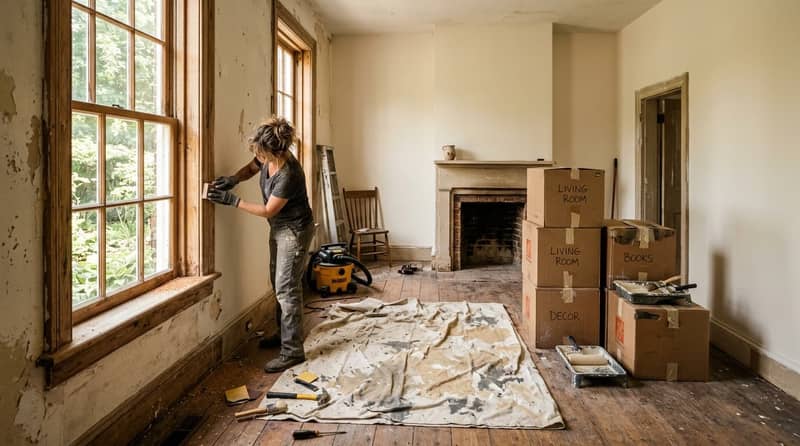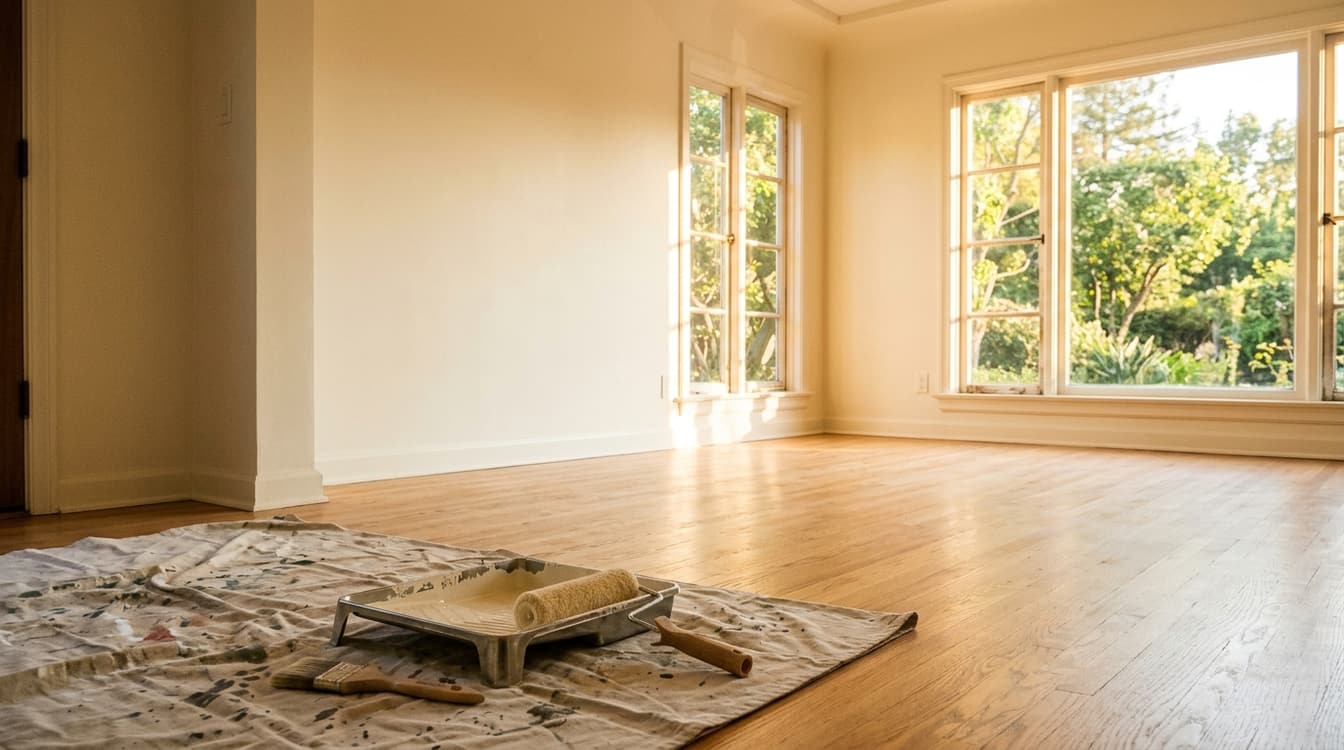
Yes — paint before you move in if you have any choice in the matter. An empty room lets you roll walls edge-to-edge without shuffling furniture, tape baseboards without crawling under beds, and lay drop cloths flat without worrying about rugs. Painters typically work 20–30% faster in empty rooms, and touch-up jobs shrink dramatically because nothing is bumped or scuffed during the move itself. The one actual exception: if your possession date leaves you with fewer than two to three days before the truck arrives, the drying timeline may force you to paint after.
Why painting an empty house almost always makes sense
Every professional painter will tell you the same thing: walls are easiest to cut in when you can see the full baseboard, the full ceiling line, and every corner. With furniture in a room, you end up painting around and over things, which means more masking, more repositioning, and more risk of drips on items you care about.
There's also a practical floor-protection argument. Movers protecting your floors use pads and runners — but fresh paint on walls is far more vulnerable to a chair back or a doorknob than a finished floor is. Getting the paint fully cured before the truck arrives means the walls are essentially bulletproof by move-in day.
If you're moving into a new build, the builder's standard "white box" finish is often a low-grade flat paint that shows every mark. Our guide to moving into a new-build home covers exactly when to schedule trades (including painters) relative to your possession date — it's worth reading alongside this one.
How long does paint actually need to dry before you move in?
Dry time and cure time are two different things, and confusing them is the most common painting mistake new homeowners make.
| Paint type | Touch-dry | Recoat | Light use (move-in safe) | Full cure |
|---|---|---|---|---|
| Latex / water-based | 1–2 hours | 4 hours | 24–48 hours | 30 days |
| Zero-VOC latex | 30–60 min | 2–4 hours | 24 hours | 30 days |
| Oil-based / alkyd | 6–8 hours | 24 hours | 72+ hours | 60–90 days |
| Chalk / mineral | 1 hour | 4 hours | 24 hours | 28 days |
Move-in safe means you can bring furniture into the room without immediately marring the finish. It does not mean the paint is fully hardened — that takes weeks regardless of brand. During the first 30 days, avoid scrubbing walls and be gentle when sliding furniture into place.
Practical rule: if you use a standard latex or low-VOC paint and the room is well-ventilated, 48 hours between final coat and furniture placement is a comfortable minimum. Give oil-based paints at least 72 hours, ideally a full week, before the room fills up.
Humidity and temperature matter. Paint dries slowly in high humidity or temperatures below about 50°F. If you're painting in winter or in a humid climate (think coastal Florida or the Gulf South), add an extra day to every stage of your timeline.
What's the right order of work before moving in?
Painting is one task among several that are dramatically easier in an empty house. Here's the sequence most renovation-savvy homeowners follow:
- Repairs first. Patch drywall holes, fill nail pops, caulk gaps around trim and windows. Paint won't hide a bulge or a crack — it highlights them.
- Prime where needed. New drywall, stain-prone walls, and dramatic color changes all need primer. Skip it and you'll need extra coats of finish paint.
- Paint ceilings before walls. Drips land on the wall, not the finished ceiling. Roll ceilings first, let them dry, then cut in and roll walls.
- Paint walls before trim. Trim is the last surface you paint, because it's easiest to tape off a crisp line against a finished wall.
- Floors last (if refinishing). If you're refinishing hardwood or installing new flooring, that work should happen after painting but before furniture arrives. Flooring contractors hate working around furniture just as much as painters do.
- Cleaning before move-in. Once paint and floors are done, do a full clean — walls, windows, inside every cabinet — before the first box comes in.
If you're coordinating movers alongside this work, building a solid moving timeline will help you sequence painting, cleaning, and delivery windows so nothing overlaps.
What if you can't paint before moving in?
Sometimes the keys come on moving day, or the previous owners painted last week in a color you hate and you just can't stomach living with it. Here are your realistic options:
- Paint room by room, starting with bedrooms. Sleep in a finished room from night one. Tackle common areas after the bedroom is done — you can live out of boxes in the living room more easily than you can breathe paint fumes while trying to sleep.
- Use low-VOC or zero-VOC paint. It dries faster, smells less, and is safer if you have children or pets in the house. Worth the modest price premium when you're painting with people in residence.
- Paint before unpacking each room. Boxes stacked in a hallway are much easier to work around than assembled furniture. Resist the urge to unpack fully until the room is painted.
- Hire it out. Professional painters work faster than most DIYers and can often complete a room in a single day. If your moving budget allows it, check mover reviews alongside painter reviews so you're comparing apples to apples on who to trust.
While you’re reading
Skip the research — let Robert match you with movers.
Free quotes from movers in your area. Pick whichever is easiest.
Room-by-room priority: where to paint first
Not all rooms are equal when it comes to painting priority before a move-in. Here's how to triage:
Paint these before moving in (non-negotiable if you have time):
- Primary bedroom — you'll want it livable immediately
- Kids' bedrooms — especially if they have strong colors to cover
- Bathrooms — small rooms, quick to paint, high impact
Paint these before moving in (strongly recommended):
- Kitchen — appliances and cabinets make painting later an actual ordeal
- Living room — large walls that require moving every piece of furniture if you wait
Paint these after moving in if needed:
- Hallways — paint-friendly even with some furniture present
- Garage — low priority, easy to paint any time
- Basement — often skipped entirely; a sealing coat matters more than color
Ventilation, fumes, and sleeping in a freshly painted room
Water-based latex paints used today have far lower VOC (volatile organic compound) levels than paints from a generation ago. For most standard latex paints, 24–48 hours of good ventilation — open windows, fans running — is enough to make a room comfortable for adults to sleep in. For children, pregnant women, or anyone with respiratory sensitivities, give it an extra day and choose a zero-VOC formula.
Oil-based paints are a different story. The solvent fumes from alkyd paints can linger for several days. If you're using oil-based paint anywhere (often used for trim and cabinets), ventilate aggressively and keep occupants out of that room for at least 72 hours.
A quick note on coordinating with your movers
If you're painting before the truck arrives, let your moving crew know the walls are fresh, especially within the first 30 days. Good movers already use floor and doorway protection, but wall protection is rarer. A quick heads-up means they'll be more deliberate around tight corners and stairwells. You can find movers in your area and confirm their protection practices before booking — ask specifically what they use on walls and door frames when navigating furniture through tight spaces.
Frequently asked questions
Can I sleep in a room that was painted today?
For most standard latex paints, sleeping in the room after one full day (24 hours) of ventilation is typically fine for healthy adults, provided windows or fans kept air moving during drying. Zero-VOC paints give you extra margin. For oil-based paints, wait at least 72 hours. If you have asthma, respiratory sensitivities, or young children, add an extra night and choose a zero-VOC product.
How many days before my move-in date should I start painting?
For a standard latex or low-VOC paint, finish your final coat at least two to three days before the truck arrives. That gives walls 48–72 hours before anything leans against them. If you're painting multiple rooms or using oil-based paint for trim, start five to seven days out.
Does new paint need to fully cure before furniture touches the walls?
Yes, but full cure (30 days for latex, up to 90 for oil-based) doesn't mean you can't move in. It means you should avoid pressing heavy furniture flush against walls, scrubbing the surface, or stacking items that will leave marks during that window. Light contact is fine after 48–72 hours; aggressive contact should wait.
Should I paint before or after installing new flooring?
Paint before new flooring, always. Drips and splatters on subfloor are irrelevant; drips on brand-new hardwood or LVP are a problem. Have your painter complete all wall and ceiling work, let it dry, then bring in the flooring contractor.
Is it worth hiring a painter, or should I DIY before moving in?
It depends on the scope. A single bedroom with walls already in good condition is an easy DIY project. A whole house with repairs needed, multiple coats, and trim work is a job where professional painters often save time (and sometimes money, once you factor in materials, equipment rental, and your own hours). Get two or three quotes before deciding.
What if I hate the color after I move in — can I repaint right over fresh paint?
Yes — you can repaint over cured latex as soon as it reaches full cure (typically 30 days), and in a pinch you can recoat as early as 4 hours after the previous coat. Just make sure the existing paint is fully dry to the touch, clean, and free of dust before you roll another color over it. No primer is needed if you're staying in the same sheen family.
Ready to coordinate the rest of your move? Our after-the-move checklist covers everything to tackle in the first week once the painting is done and the boxes are in. And if you're still lining up a moving crew, browse movers by state to find licensed carriers near you — or connect with Robert, our moving concierge, for personalized help narrowing down your options.
Tagged