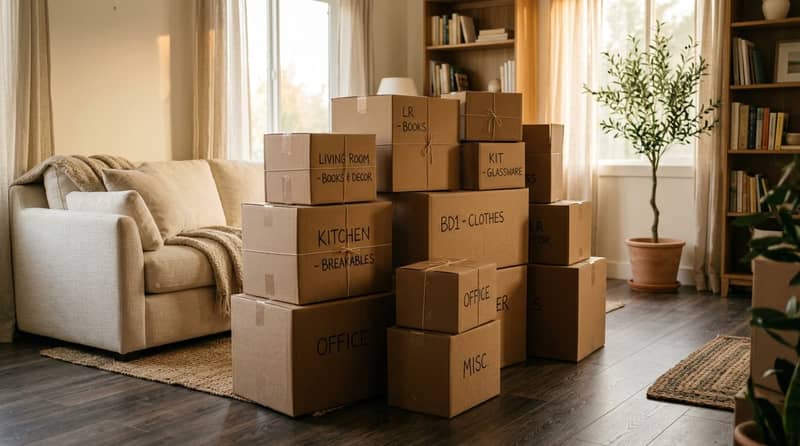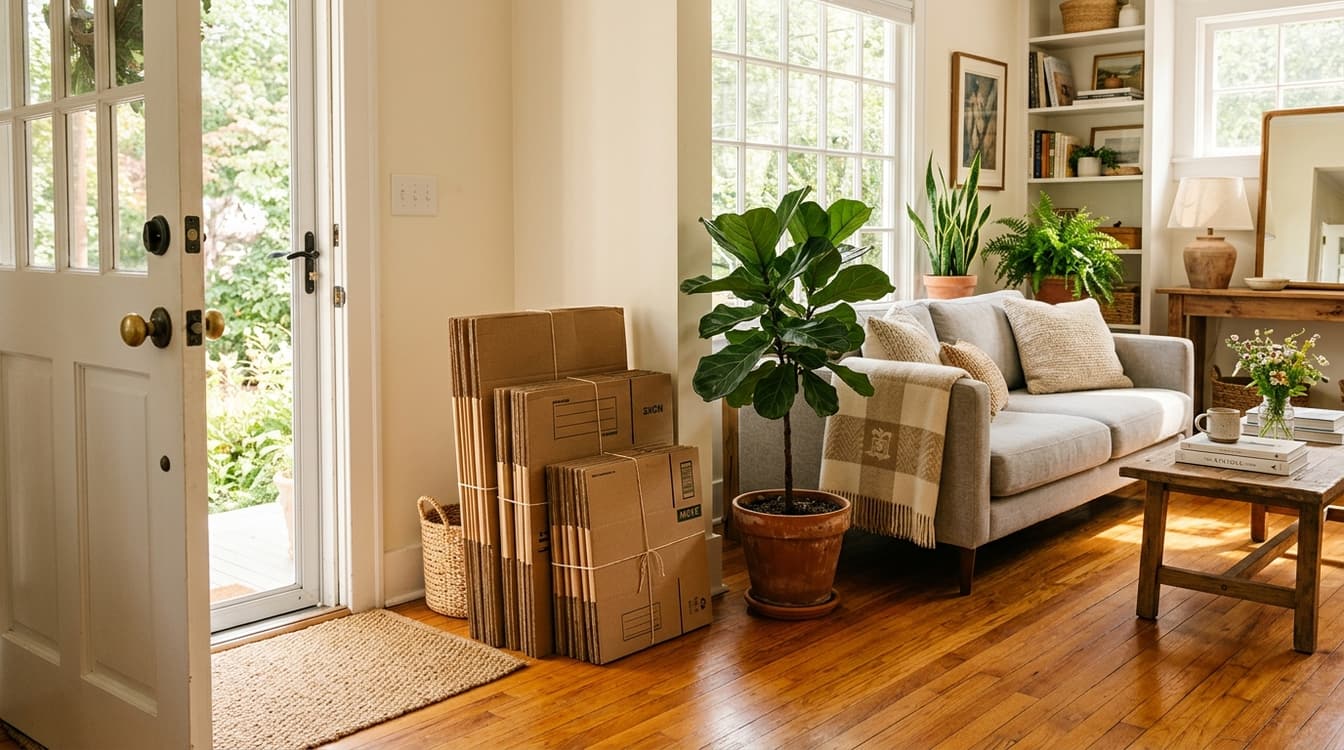
Once you're done unpacking, the best things to do with moving boxes are: sell or give them away online (you can often recoup $30–$100 for a full set in good condition), donate them to a local charity or community group, schedule a cardboard recycling pickup, or flatten and store a handful for future use. The option that's right for you depends on how fast you need them gone, whether the boxes are in resale condition, and how much effort you want to spend.
Should You Sell, Give Away, Recycle, or Keep Your Boxes?
Before you break down a single box, take five minutes to sort your stack. Run through this quick triage:
- Sell or give away if the boxes are clean, unripped, and have intact bottom flaps. These are worth something to someone moving in the next few weeks.
- Donate if the boxes are solid but not quite pristine — community groups, schools, and theaters always need them.
- Recycle if the boxes are wet, crushed, greasy, or have compromised seams.
- Keep a few if you have an attic, basement, or garage and anticipate another move, a renovation, or seasonal storage needs.
This triage takes ten minutes and will save you the frustration of dragging wet cardboard to a donation center — or tossing perfectly good boxes that someone would have paid you for.
How to Sell Your Moving Boxes (and What They're Worth)
Good-quality moving boxes in a range of sizes can sell quickly, especially in cities where moving season runs nearly year-round — places like Houston, Chicago, and Los Angeles have active buyer communities.
Where to list:
- Facebook Marketplace — the most active platform for used boxes. List as a bundle ("full set, ~40 boxes, various sizes") with a photo. Price boxes at roughly 25–40% of new retail value.
- Nextdoor — hyperlocal, so pickup is easy. Free listings.
- Craigslist "free" or "for sale" section — still effective for bulk cardboard.
- Local moving Facebook groups — search "[your city] moving" for groups where people post and look for supplies constantly.
Realistic price ranges for used boxes in good condition:
| Box type | New price (approx.) | Used resale price (approx.) |
|---|---|---|
| Small (1.5 cu ft) | $2–$4 each | $0.50–$1.50 each |
| Medium (3 cu ft) | $3–$5 each | $1–$2 each |
| Large (4.5 cu ft) | $4–$7 each | $1.50–$3 each |
| Wardrobe box | $12–$20 each | $4–$8 each |
| Full set (~40 boxes) | $150–$250 | $30–$100 as a lot |
Tip: Buyers move fast. Post the day after move-in if possible — demand is highest before weekends.
Where to Give Boxes Away for Free (and Feel Good About It)
If you'd rather skip the transaction, free channels move boxes out the door just as fast.
- List on Nextdoor or Facebook Marketplace as "free" — expect messages within hours.
- Buy Nothing Project groups — hyperlocal gift economy groups on Facebook where free boxes disappear in minutes.
- Local schools and daycares — teachers use cardboard constantly for projects and room dividers.
- Community theaters — set construction eats cardboard.
- Local food banks and shelters — call first; some accept boxes for repacking donations, others don't.
- U-Haul's Box Exchange program — U-Haul lets customers post free boxes on a regional board. Drop yours off or arrange a pickup.
- Ask your building manager — in apartment complexes, a "free boxes" note in the lobby or on the community board usually clears them within 24 hours.
Before you even finish unpacking, check out what mover reviews say about services that include box pickup or take-back programs — some full-service companies or container services offer this, and it's worth noting for your next move.
How to Recycle Moving Boxes
Cardboard is one of the most recyclable materials around, but a few rules apply:
- Flatten every box before recycling. Most curbside programs won't accept boxes that are still assembled — they take up too much truck space.
- Remove all tape, labels, and packing material. Packing tape does not need to be surgically removed, but large strips should come off. Bubble wrap, foam peanuts, and crumpled paper go separately.
- Keep cardboard dry. Wet cardboard is often rejected because it clogs recycling machinery. If it rained on your move-in day, let boxes dry completely before recycling.
- Check your local program. Most US municipalities accept corrugated cardboard curbside. Check your city's waste management website — some have a cardboard-only pickup day or a drop-off center.
- For very large volumes, look for a cardboard dumpster at a nearby grocery store, home improvement store, or big-box retailer. Many allow community drop-offs. Call ahead.
What can't be recycled: Wax-coated boxes (rare in moving supplies but common from produce), boxes soaked with food grease, and anything laminated.
While you’re reading
Skip the research — let Robert match you with movers.
Free quotes from movers in your area. Pick whichever is easiest.
Smart Ways to Reuse Boxes Before They Go
Even if your final destination is the recycling bin, boxes can earn their keep for a few weeks first.
- Protect floors during furniture rearranging. Flatten a few boxes and lay them over hardwood while you drag furniture into its final position — no scratches, no sliders needed.
- Line garage shelves or the bottom of new closets while you're still deciding on storage solutions.
- Moving with kids? A few large boxes become a fort, a castle, or a rocket ship for exactly zero dollars. Let the kids destroy them, then recycle what's left.
- Garden mulch base. Flatten boxes and lay them under a new mulch bed as a weed barrier — fully biodegradable.
- Packing future shipments. Keep two or three medium boxes for shipping holiday gifts or returning online orders.
- Staging overflow. If you're still waiting on furniture deliveries, boxes make surprisingly sturdy makeshift shelves or nightstands for a few days.
What to Do With Specialty Boxes (Wardrobe, Mirror, Dish Packs)
These deserve special attention because they have actual value and limited availability.
- Wardrobe boxes ($12–$20 new) are worth selling or keeping. They double as seasonal clothing storage and are hard to find free. If you're keeping them, remove the hanging rod, flatten, and store flat.
- Mirror and picture boxes are adjustable and reusable. Sell or donate to anyone moving art. Packing mirrors for a move is one of the trickier tasks movers face, and these boxes are genuinely helpful.
- Dish-pack boxes (heavy double-wall) are excellent for future storage of breakables. Keep one or two.
- Wardrobe and specialty boxes from your mover: If a company provided them as part of a packing service, confirm ownership. Most movers sell or provide boxes outright, but some rental programs expect them back — check your contract.
A Note on Box Condition and What Buyers Expect
Used-box buyers are practical people — they don't expect perfection. They do expect:
- All flaps intact (top and bottom).
- No visible mold, soft spots, or water damage.
- Reasonable cleanliness — a little tape residue is fine, a box that smells like the inside of a gym bag is not.
- Honest sizing information in your listing.
Boxes that moved books are usually in worse shape than boxes that moved clothes — heavy loads stress the bottom seams. Inspect before you list.
Frequently Asked Questions
How do I get rid of moving boxes fast?
The fastest method is posting a free listing on Facebook Marketplace or Nextdoor with a photo. In most cities, a set of 30–50 boxes listed as free will have takers within a few hours. Alternatively, flatten them and put them at the curb with a "free" sign on pickup day — most disappear before the truck arrives.
Can I put moving boxes in the recycling bin?
Yes, in most US cities, corrugated cardboard is accepted curbside. Flatten the boxes first, keep them dry, and remove packing tape where possible. For large volumes, a cardboard drop-off point at a grocery or home improvement store is often the quickest option.
Is it worth selling used moving boxes?
For boxes in good condition, yes. A full set of 40 mixed-size boxes typically sells for $30–$100 on Facebook Marketplace — not a fortune, but enough to offset some of your moving costs. Wardrobe boxes and heavy-duty dish packs command the highest prices.
Should I keep any moving boxes after the move?
Keep two to five medium or large boxes and one or two wardrobe boxes if you have storage space. They're useful for shipping, seasonal storage, and future moves. Beyond that, they take up room you probably need.
What do I do with boxes that are too damaged to sell or donate?
Flatten them and recycle them — as long as they're not wet, greasy, or wax-coated. If your curbside program doesn't accept large cardboard, most home improvement stores have a cardboard compactor area open to the public.
Do moving companies take boxes back?
Some do, especially companies that sell or rent box kits as part of their service. Check your contract or simply ask your mover. It's not a universal practice, but it's increasingly common with full-service movers. If you used a company you found through our mover directory, reach out to them directly — policies vary.
Getting rid of boxes is the last step of unpacking, and it's easier than most people expect. Sell what you can, give away what's left, recycle the rest, and hold onto a handful for the inevitable future use. If you're already thinking about your next move — or helping someone else plan theirs — browse movers by state to find licensed carriers in your area, or connect with Robert, our moving concierge, for personalized guidance on next steps.
Tagged