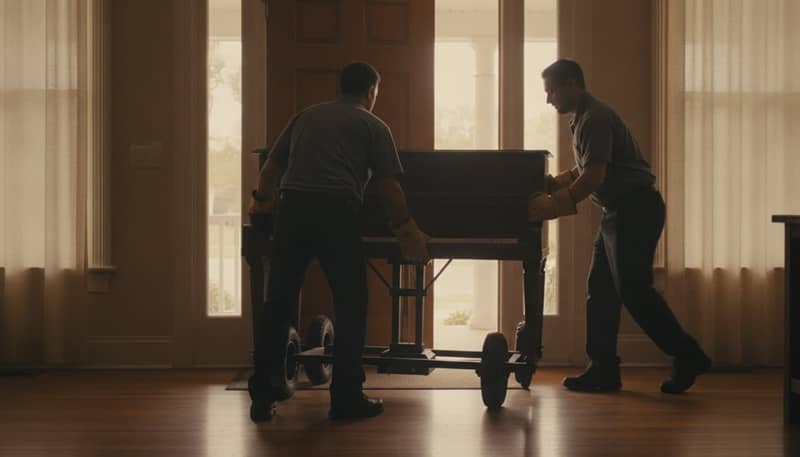
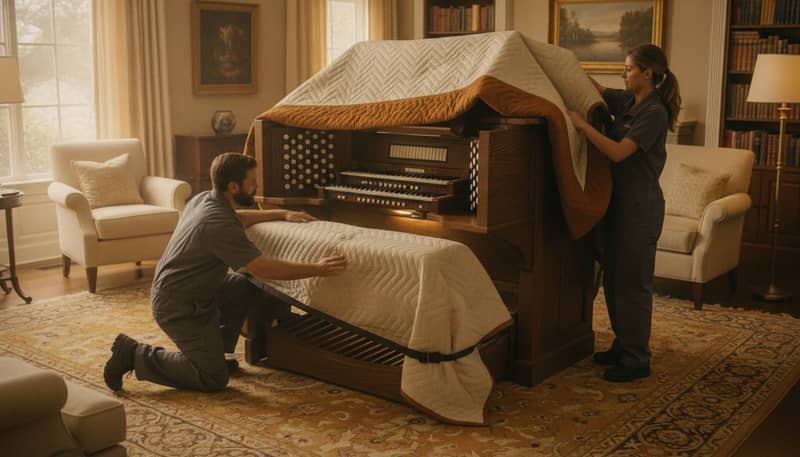
Moving a harp safely requires a specialist mover, purpose-built padding or a custom flight case, and a climate-controlled vehicle — a standard moving crew treating it like an oversized piece of furniture will almost certainly damage the neck, strings, or soundboard. A pedal harp in playable condition typically costs $5,000 to $20,000 or more; some concert instruments are irreplaceable. The prep steps below, combined with the right mover, are what actually protect it.
Why a harp is unlike any other instrument you'll move
A concert pedal harp weighs between 65 and 90 pounds and stands nearly six feet tall, but weight is the least of the challenge. The neck — the curved arm at the top — is the most structurally vulnerable part. It carries the tension of 47 strings (up to roughly 1,000 pounds of combined string tension on a full pedal harp) and can crack if the instrument is tilted at the wrong angle, jolted, or allowed to rest on a hard surface without support. The soundboard is a thin spruce panel that dents or cracks under point pressure. The pedal mechanism at the base has 14 moving rods running up through the column; a sharp impact can bend them out of alignment.
A lever harp (folk harp) is lighter — typically 20 to 40 pounds — and has no pedal mechanism, which makes it somewhat simpler to move, but the same structural warnings apply to the neck and soundboard.
What to do before the movers arrive
1. Detune the strings — but carefully
Loosen the strings by roughly two to three semitones before the move. This reduces tension on the neck and soundboard during vibration from road travel. Do not remove the strings entirely; full detuning can cause the neck to warp. If you are not comfortable doing this yourself, ask your harp technician to do it at your pre-move tuning appointment.
2. Engage the pedals (pedal harps only)
Set all seven pedals to the middle (natural) position and leave them there. This keeps the discs engaged and reduces stress on the rods during transit.
3. Protect the strings
Wrap the entire string column loosely in a strip of soft fleece or felt before any outer padding goes on. This prevents string-on-string abrasion and keeps the tuning pins from catching on blankets.
4. Cover the soundboard
Place a sheet of dense foam — at least half an inch thick — over the soundboard before wrapping. This is the step most general movers skip, and it is the most common cause of dents on arrival.
5. Pad the neck and column
The neck needs its own wrap of moving blanket or high-density foam, separate from the column. Tape the padding with stretch wrap, never with packing tape directly on the wood or finish.
6. Decide: padded move or flight case
| Option | Best for | Approximate cost |
|---|---|---|
| Padded blanket wrap (specialty mover) | Local or regional moves, instruments in good condition | Included in move quote or $50–$150 extra |
| Soft padded harp bag | Lever harps, short moves | $100–$400 to purchase |
| Hard-shell flight case | Long-distance, air freight, international moves | $800–$3,000+ to purchase or rent |
| Custom crating (wood) | Antique or concert-grade pedal harps, long-distance | $300–$600+ built by the mover |
For cross-country or interstate moves, our team — which includes an operator who ran a moving company for 18 years — has consistently seen that flight cases or custom crating dramatically reduce claim rates on harps compared to blanket-only moves.
Who should actually move a harp
A general household moving crew can move a lot of specialty items safely with the right prep. A harp is one of the few instruments where we recommend going further and finding a mover with documented experience moving musical instruments — specifically harps — or a fine-arts mover.
When you search for movers, find movers on our directory and filter for specialty or white-glove services. Then ask each mover directly:
- Have you moved a pedal harp before?
- Do you use a padded cart or will the harp ride upright or on its side?
- Is the truck climate-controlled or temperature-regulated?
- What valuation or insurance do you carry for instruments?
On the last point: confirm the mover's USDOT number yourself on the FMCSA search tool — look for "Motor Carrier of Household Goods" (they move you directly) versus "Broker of Household Goods" (they hand you to another carrier). Never rely on a mover's self-description alone.
You can also read mover reviews on our site to look for instrument-move experience specifically — search for mentions of pianos, harps, or fine arts in the review text.
How much does moving a harp cost?
Cost depends heavily on distance, instrument type, and whether crating is needed.
| Move type | Typical cost range |
|---|---|
| Local (same city, lever harp) | $150–$400 |
| Local (same city, pedal harp) | $250–$600 |
| Regional (up to 300 miles, pedal harp) | $400–$900 |
| Long-distance / cross-country (pedal harp, blanketed) | $800–$2,000+ |
| Long-distance with custom crating | $1,200–$3,500+ |
| Air freight (flight case required) | $500–$2,000+ (freight only) |
These are typical ranges based on market data; your quote will depend on origin, destination, stair access, and the specific mover. For long-distance interstate moves, ask whether the quote is binding or non-binding — under federal FMCSA rules, every estimate must state which type it is. A binding estimate means you pay that amount at delivery (plus any services you added after signing); a non-binding estimate means the final bill is based on actual weight, and at delivery you pay no more than 110% of the estimated amount — the balance, if any, is billed after 30 days from delivery.
For more on how estimate types work, see our guide to binding vs. non-binding moving estimates.
While you’re reading
Skip the research — let Robert match you with movers.
Free quotes from movers in your area. Pick whichever is easiest.
Valuation and insurance for a harp
Standard household goods valuation may not adequately cover a high-value instrument. Under federal rules for interstate moves, Full Value Protection applies automatically — the mover must repair, replace, or pay replacement value for items damaged in their care. Released Value (60 cents per pound per article) is the free alternative, but it means a 70-pound harp damaged beyond repair would yield only $42 — far short of its value.
Before booking, ask:
- Does your valuation cover musical instruments at replacement value?
- Do I need to declare the instrument's value separately and pay an additional premium?
- Do you require a separate instrument rider or fine-arts policy?
Some specialty movers require a separate fine-arts floater policy for instruments above a certain value. Check with your homeowner's or renter's insurer as well — some policies extend to items in transit. Our coverage types guide walks through how moving valuation and third-party insurance differ.
How the harp should ride in the truck
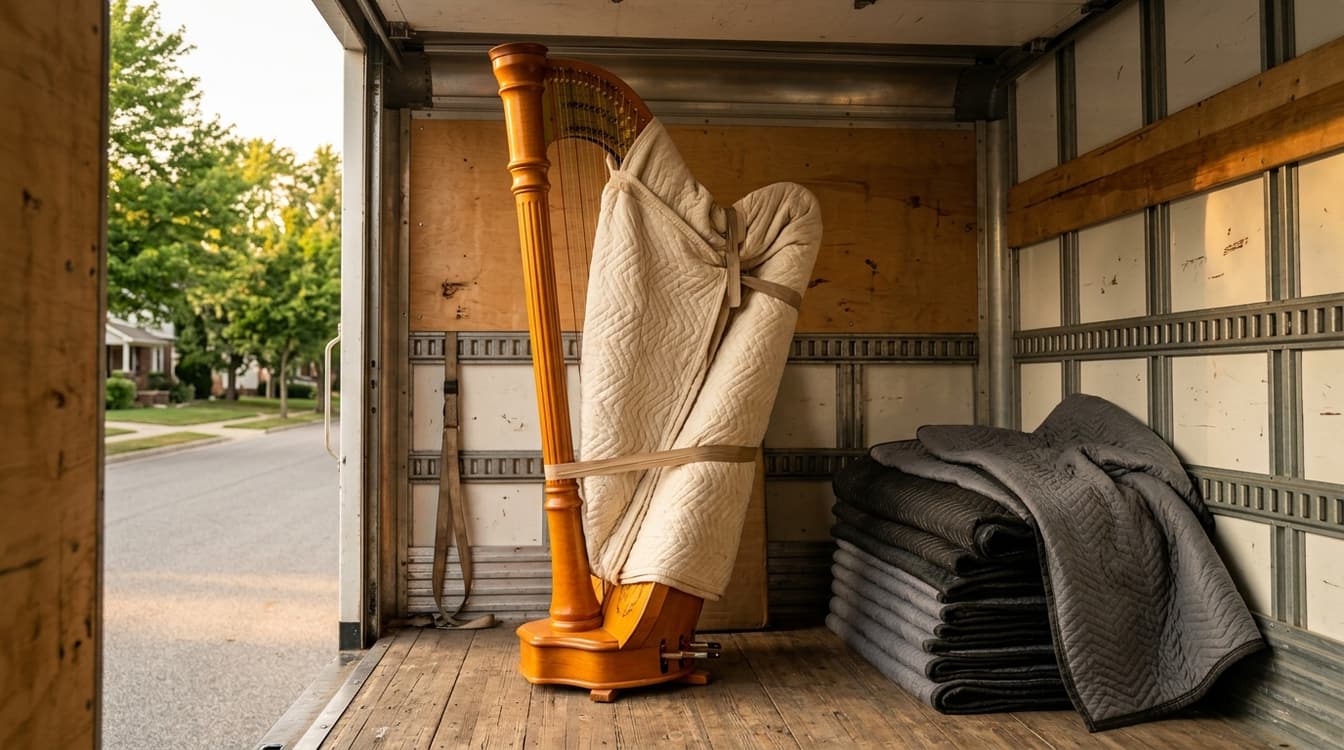
A pedal harp should travel upright on its base, leaning slightly back against a padded wall — the same position it rests in when played. It should never be laid on its side, which puts lateral stress on the neck. It should be secured with two sets of straps: one around the column near the base, one around the column just below the neck. The straps must be padded where they contact the instrument.
The harp should not share a wall with appliances, furniture without padding, or anything that could shift. For long-distance moves, a climate-controlled or at minimum a sealed (not open-sided) truck matters: temperature swings cause wood to expand and contract, loosening glue joints and stressing the soundboard.
Compare this to what goes into moving other sensitive instruments — the guide to moving guitars, keyboards, and brass is a useful companion read — but know that a harp's size and string tension put it in the same care tier as a grand piano. See how specialists approach grand piano moving for reference on what that standard of care looks like.
If you're moving to or from a major metro
Harp teachers, conservatory students, and professional musicians moving between cities like Nashville, Chicago, or Los Angeles are often the ones searching this topic. If you are relocating to a city where you need to find a local specialist mover quickly, browse movers by state to narrow your search geographically before calling anyone.
Frequently asked questions
Can a regular moving company move a harp?
A general mover can move a lever harp with proper prep — good padding, an upright position in the truck, and careful handling. For a full-size pedal harp, most standard crews lack the instrument-specific knowledge to position and secure it correctly. We recommend hiring a mover with documented experience moving harps or high-value musical instruments, or a fine-arts moving specialist.
Should I detune my harp before moving?
Yes — loosen the strings by two to three semitones to reduce tension on the neck and soundboard during road vibration. Do not remove the strings entirely. If you are not confident doing this, have your harp technician handle it before moving day.
How do movers transport a harp — upright or on its side?
Always upright on its base, leaning slightly back as it normally rests, secured with padded straps. Laying a harp on its side puts lateral stress on the neck and can bend internal pedal rods.
Does standard moving valuation cover a harp's full value?
Not always. Full Value Protection on an interstate move requires the mover to pay replacement value, but some movers cap liability for high-value items unless you declare them and pay an additional premium. Ask before signing anything, and check your homeowner's or renter's insurance policy for in-transit coverage.
How far in advance should I book a harp mover?
For a specialty or fine-arts mover, book at least four to six weeks ahead for local moves, and eight to twelve weeks for long-distance or cross-country moves. These movers have fewer available trucks and smaller crews, and demand is higher than most people expect. See our guide on how far in advance to book movers for general booking timelines.
What should I do if the harp is damaged during the move?
Document the damage with photos immediately, before anything is moved or touched. For interstate moves, file a written claim with the mover within nine months of delivery — a note on the delivery receipt is not a claim. The mover must acknowledge within 30 days and pay, decline, or make a settlement offer within 120 days. See our guide to filing a moving damage claim for step-by-step instructions.
Ready to find a mover with the experience a harp deserves? Search our directory to compare specialty and fine-arts movers near you, read mover reviews for instrument-move experience, or connect with Robert, our moving concierge, for help narrowing down the right mover for your instrument and your timeline.
Tagged