Most licensed movers will transport sealed, non-perishable canned goods and dry pantry items — but they routinely refuse perishables, open containers, and anything that could leak, spoil, or attract pests in a hot truck. Knowing which category each item falls into saves you from a moving-day argument at the front door and a mildewed box at your destination.
Do movers actually load canned goods?
Yes, in most cases. Sealed, commercially canned food — beans, soup, vegetables, tomatoes, tuna — is treated like any other boxed household item. It's heavy, it stacks well, and it doesn't pose a safety or liability issue for the mover.
What movers push back on is everything else: anything perishable, anything open, anything frozen, and anything in glass that might shatter and contaminate other boxes. Our team has 35+ years of hands-on service-provider experience, including an operator who ran a moving company for 18 years, and the most common pantry-related complaint we hear isn't "they refused my cans" — it's "I wish someone had told me earlier what they would refuse."
Quick rule of thumb: If it's sealed, shelf-stable, and commercially packaged, most movers will take it. If it needs refrigeration, is already open, or is in fragile glass, plan to handle it yourself.
What movers typically will and won't load
| Item type | Will most movers load it? | Notes |
|---|---|---|
| Sealed canned goods (metal) | ✅ Yes | Pack tightly; heavy boxes cause back injuries and box failures |
| Sealed dry goods (pasta, rice, flour in original packaging) | ✅ Yes | Double-bag flour and sugar in case of tears |
| Sealed condiments and sauces (glass or plastic) | ⚠️ Often, if sealed | Glass can break; plastic can bulge in heat — wrap well |
| Unopened wine, spirits, beer | ⚠️ Varies | Many movers decline alcohol entirely; check your mover's policy |
| Refrigerated or frozen food | ❌ Rarely | Virtually no mover will load a full freezer or fridge |
| Open containers (peanut butter, olive oil, spices) | ❌ Rarely | Leaks, odors, and contamination risk |
| Produce and fresh food | ❌ No | Spoilage and pest risk in a sealed truck |
| Homemade preserves or unlabeled jars | ⚠️ Gray area | Movers may decline; glass breakage is a concern |
Why movers draw the line at perishables
A moving truck is not a refrigerated vehicle. Interior temperatures can climb well above 90°F in summer, even on a short local haul. A load of frozen meat or fresh produce will spoil — and if it leaks, the smell and contamination can reach furniture, mattresses, and clothing packed nearby.
From a liability standpoint, most mover contracts explicitly exclude food items, and a mover is not going to accept responsibility for a box of yogurt that turns by the time the truck reaches your new address. If you're unclear on what your specific mover will or won't carry, ask before loading day — don't find out at the door.
How to handle your pantry before the movers arrive
Starting this process two to three weeks out gives you time to actually use what you have instead of trashing it.
-
Take full inventory. Pull everything out of cabinets and the freezer. Check expiration dates while you're at it — moving is the best time to purge the 2021 coconut flour.
-
Sort into four piles: Move it | Eat it before the move | Donate it | Toss it.
-
Plan a "pantry meals" week. Cook through perishables, open cans, and anything in the fridge two weeks before the move. Soups, stir-fries, and pasta dishes are good formats for this. Your food budget benefits too.
-
Donate unopened non-perishables you won't move. Food banks, churches, and community fridges all accept sealed, unexpired canned and dry goods. Call ahead — some organizations have drop-off hours.
-
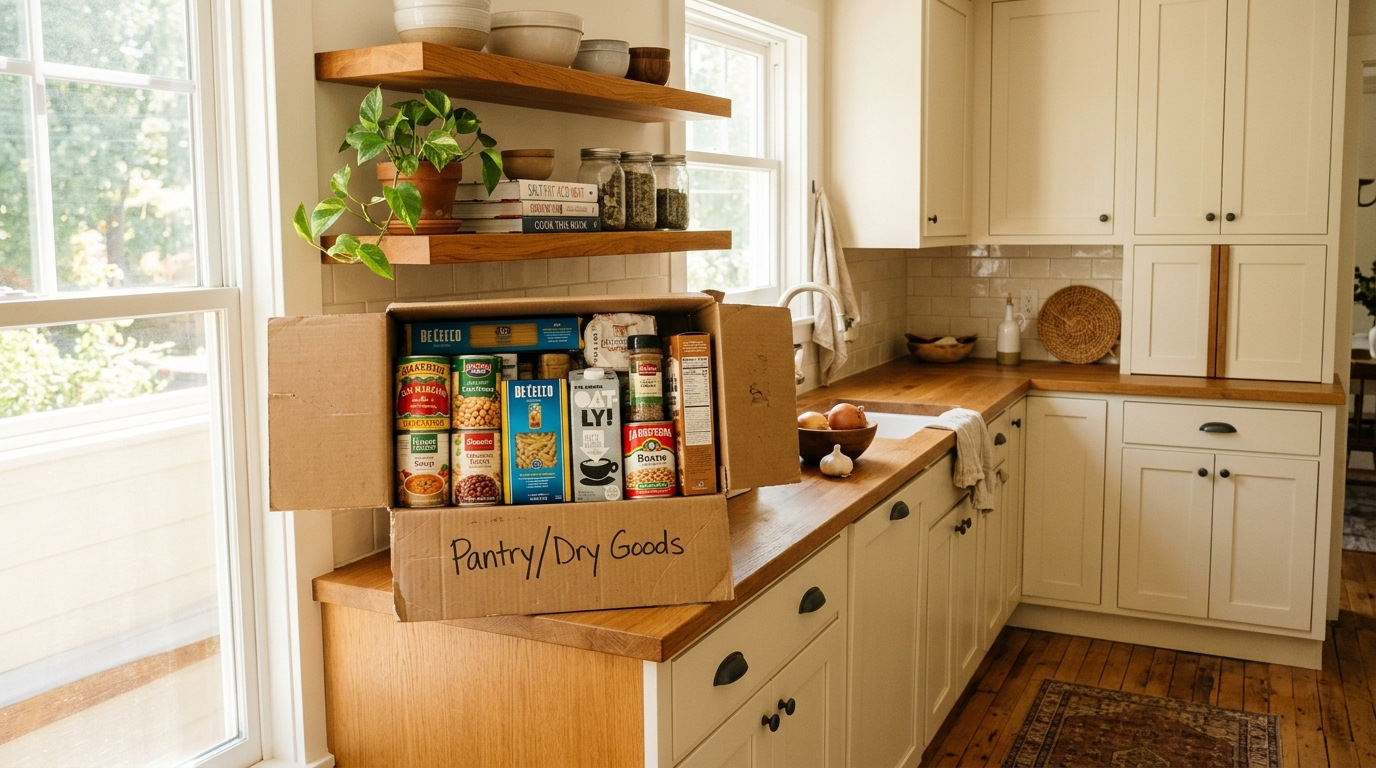
Box what you're moving yourself, separately. Put canned goods in small or medium boxes (a full case of canned tomatoes runs 20–25 lbs — heavy enough). Label them "PANTRY — HEAVY" so movers load them on the truck floor.
-
Pack a travel cooler for the road. Whatever perishables you want to keep — condiments you love, cheese, leftovers — load them into a cooler you transport in your own car. This is the simplest solution.
-
Empty and defrost the freezer at least 24 hours before loading. Movers generally won't move a frost-filled freezer regardless of what's in it, and a dripping appliance can damage floors and other items. See our guide on how to move a refrigerator, washer, dryer, or stove for the full appliance prep checklist.
How to pack canned goods so nothing gets crushed
Canned goods are forgiving, but a poorly packed box causes actual problems — a box that's too heavy blows out the bottom, and cans rattling loose can puncture other boxes.
- Use small or medium boxes only. A 1.5-cubic-foot box filled with cans is about right. Large boxes become back-breaking and risk structural failure.
- Line the bottom with packing paper. One layer between the box and the floor adds cushion and absorbs any minor moisture.
- Fill gaps with crumpled paper. Cans that shift can dent or puncture their neighbors. Tight packing prevents movement.
- Wrap glass jars individually. Bubble wrap or two sheets of packing paper per jar, then pack upright.
- Double-seal the box bottom. Run tape in both directions across the bottom flaps — H-tape pattern — before loading anything.
- Mark weight on the outside. "HEAVY" labels aren't just for movers; they're for you at the other end when you're deciding what to carry first.
For tips on packing the rest of the kitchen — the glassware, cookware, and appliances — our guide on how to pack a kitchen in 48 hours walks through every cabinet.
While you’re reading
Skip the research — let Robert match you with movers.
Free quotes from movers in your area. Pick whichever is easiest.
What about spices, oils, and open condiments?
These are the items that most often end up causing regret. A half-used bottle of fish sauce or a leaking olive oil container can ruin an entire box and everything next to it in the truck.
Our honest recommendation: For anything open and liquid, decide whether it's worth moving. A $4 bottle of soy sauce is not worth the risk to your belongings. High-value oils, specialty vinegars, or expensive hot sauces are worth wrapping and carrying in your car — not in the truck.
If you do pack open dry goods (an open bag of rice, partially used spices), transfer them to zip-lock bags and tape the outside of the container closed before boxing. Double-bag anything with a powder or fine grain.
Long-distance moves: additional considerations
On an interstate move, your goods may spend one or more nights on the truck or in a warehouse before delivery. A long-distance delivery window can stretch from a few days to a couple of weeks depending on distance, route, and the mover's schedule.
That timeline matters for food:
- Even sealed cans are fine over any distance — they're shelf-stable.
- Glass jars face more vibration risk over long hauls; wrap them more carefully.
- Anything temperature-sensitive should not be on the truck at all.
If you're moving cross-country, it's often easier to ship a small USPS fixed-price box of beloved pantry items (specialty spices, hard-to-find sauces) than to deal with the truck logistics. The post office ships food; your mover may not want to deal with it.
Before the movers arrive: a pantry-specific checklist
Use this in the final week:
- Freezer emptied and defrosted 24 hours before loading
- Fridge contents eaten, donated, or moved to travel cooler
- Open liquids and sauces either tossed or packed in a personal bag
- Canned goods in small boxes, double-taped, labeled HEAVY
- Glass jars individually wrapped and packed upright
- Non-perishable donations dropped off
- Spices transferred to zip-lock bags if containers are open
- Travel cooler packed and in your vehicle, not on the truck
Getting this sorted before moving day means one less thing to negotiate at the door. If you want help with the broader moving-day prep, getting your home ready before the movers arrive covers every room, not just the kitchen.
Find movers who communicate clearly about what they'll carry
Every mover has its own policy on food items, and the best time to learn theirs is when you're getting your quote — not when they're standing in your kitchen. When you find movers in your area, look at their policies on prohibited or restricted items and ask directly: What food items will you not load? A mover who answers that question clearly is a mover who communicates well across the board.
You can also browse mover reviews to see whether other customers mention issues with food-related policies or surprises on loading day.
Have questions about your specific situation? Connect with Robert, our moving concierge, for a no-pressure conversation about what to expect.
Frequently asked questions
Will movers move canned goods across state lines?
Yes, in most cases. Sealed commercially canned food is shelf-stable and poses no safety or contamination risk, so most interstate movers will load it without issue. Confirm with your specific mover when you get your estimate, especially if you have a large quantity — a lot of cans adds meaningful weight to your shipment, which affects cost on a non-binding estimate.
Can movers legally refuse to move food?
Yes. There is no federal or state law requiring movers to transport food. Most mover contracts list food — especially perishables, open containers, and alcohol — as items they may decline at their discretion. This is a contractual policy, not a regulatory one.
What should I do with my freezer food before moving?
Eat through it in the weeks leading up to your move, donate sealed frozen items to neighbors or a food bank, or plan a final freezer-clearing meal the night before loading. Virtually no mover will transport a freezer with food still inside, and you'll need the appliance defrosted at least 24 hours before loading day regardless.
Will movers move alcohol?
Policies vary widely. Some movers will transport sealed, commercially bottled wine and spirits; others decline alcohol entirely due to liability and state laws that vary by route. Ask your mover directly when booking — don't assume it's included.
How do I pack canned goods so the boxes don't break?
Use small or medium boxes only, since a full box of cans can easily hit 30–40 lbs. Double-tape the bottom in an H-pattern, pack cans upright and tightly with crumpled paper filling gaps, and label the outside "HEAVY." Never load canned goods into a large box — the bottom will fail.
What pantry items should I just toss before a move?
Anything open and liquid (oils, sauces, condiments), anything expired, any homemade or unlabeled preserves, produce, and frozen food. The cost of replacing a half-used bottle of ranch dressing is far lower than the cost of cleaning a truck-leaked mess off your furniture.
Tagged