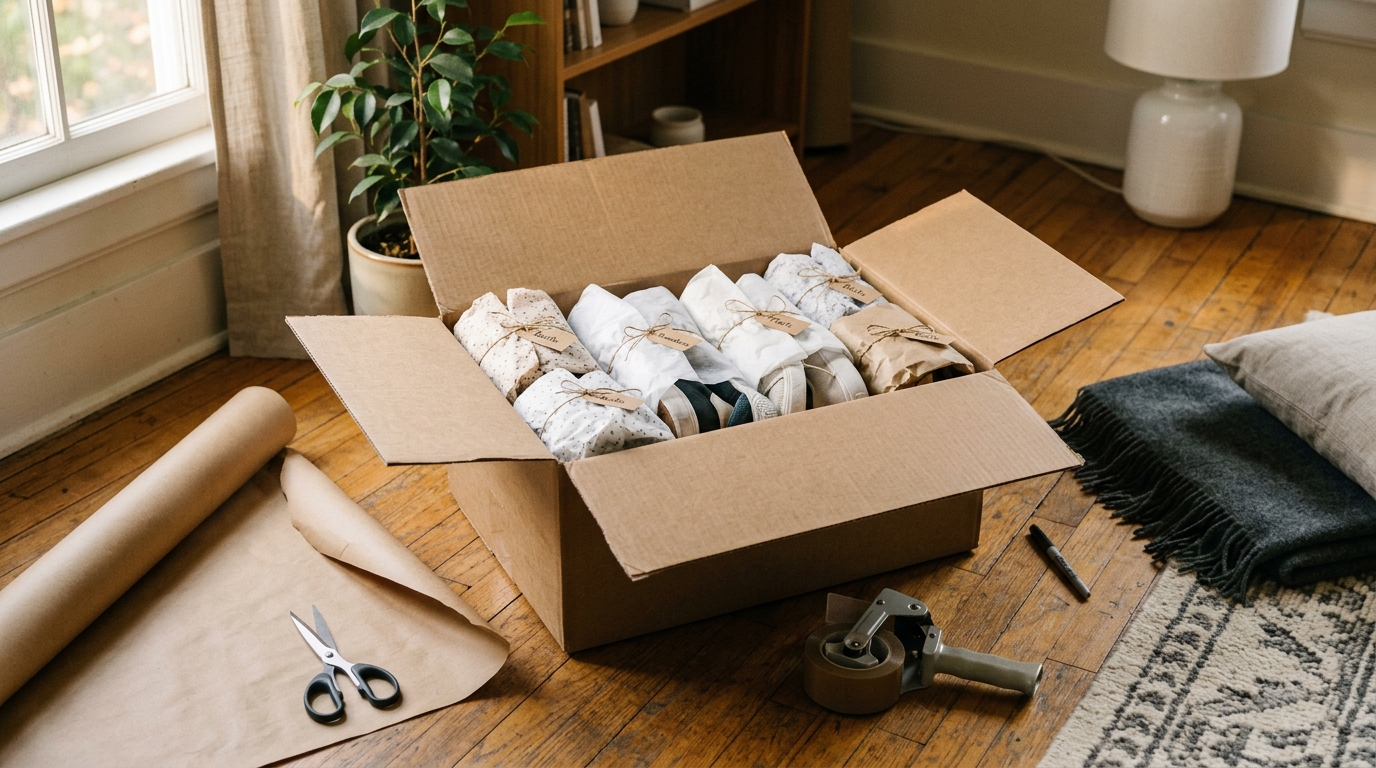
Pack shoes heel-to-toe in small or medium moving boxes, stuff the toes with tissue or socks to hold their shape, and wrap leather or delicate pairs individually before boxing. A standard small box (1.5 cubic feet) holds roughly four to six pairs stacked two layers deep — enough to keep the box light enough to lift safely. Done right, shoes arrive in the same condition they left.
What supplies do you actually need to pack shoes?
You don't need anything exotic. Here's what works:
| Supply | What it's for | Approximate cost |
|---|---|---|
| Small moving boxes (1.5 cu ft) | Everyday shoes, sneakers, flats | $1–$3 each |
| Medium boxes (3 cu ft) | Boots, wedges, bulky footwear | $2–$4 each |
| Tissue paper or newsprint | Wrapping leather, suede, delicate pairs | $5–$10 per pack |
| Packing paper (unprinted) | Stuffing toes, gap-filling | $8–$15 per pack |
| Resealable plastic bags | Loose buckles, straps, accessories | Already at home |
| Wardrobe boxes or garment bags | Tall boots that can hang | $10–$20 each |
| Original shoe boxes | Best option if you kept them | Free |
Skip the giant box. A box loaded with 20 pairs of shoes will weigh 40–60 pounds and is a back injury and a torn bottom waiting to happen. Keep shoe boxes at 30 pounds or under.
For the full rundown on box sizes and which to use for what, see our guide on how to choose moving boxes and packing supplies.
How do you pack everyday shoes (sneakers, flats, loafers)?
- Knock off dirt. Mud or grit on the soles will transfer to everything else in the box. A quick wipe-down takes 30 seconds.
- Pair them up. Rubber-band, zip-tie, or tie the laces together so pairs stay matched.
- Stuff the toes. Roll a sheet of packing paper or tuck a clean sock inside each toe. This keeps the shoe from collapsing under the weight of other pairs.
- Go heel-to-toe. Lay one shoe with its toe pointing toward the heel of its partner. This is the most space-efficient orientation and lets you stack two clean layers in a small box.
- Fill gaps. Crumple packing paper in any empty space so shoes can't shift.
- Label the box. Write "SHOES — BEDROOM CLOSET" and add an arrow showing which side is up. Your future self will thank you.
How do you pack leather, suede, and dress shoes without damaging them?
Leather creases if it's compressed without support. Suede scuffs and picks up texture from whatever it touches. Give these pairs more attention:
- Stuff toes firmly with tissue paper — not newspaper, which can transfer ink.
- Wrap each shoe individually in a full sheet of tissue or acid-free paper before pairing them together.
- Use the original shoe box if you have it — it's the right size and provides a rigid shell. Stack original boxes inside a larger moving box for extra protection.
- Place dress shoes on top of heavier sneakers or boots in the moving box, never underneath.
- Add a cedar shoe tree inside each shoe if you have them; they preserve shape better than paper during a long haul.
For leather goods in general, the same principles that protect shoes also apply to bags and belts — check our room-by-room guide to packing valuables safely for the full picture.
How do you pack boots and high heels?
Boots present a different challenge: they're tall, they tip over, and the shafts collapse without support.
Tall boots (knee-high, over-the-knee):
- Stuff the shaft with rolled packing paper or a pool noodle cut to length — this prevents permanent creasing.
- Stand them upright in a medium box or hang them in a wardrobe box using boot hangers or a clip hanger through the loop tabs.
- Alternatively, lay them sole-to-sole and wrap both together in a large sheet of paper.
Ankle boots and booties:
- Treat like dress shoes: stuff, wrap, pair sole-to-sole.
High heels:
- Protect the heel post — it's the most fragile part. Wrap each heel individually with an extra layer of paper or bubble wrap before wrapping the whole shoe.
- Pack heels pointing downward (toe up) so the heel post doesn't bear weight.
- Never stack heavy items on top of a box containing heeled shoes.
While you’re reading
Skip the research — let Robert match you with movers.
Free quotes from movers in your area. Pick whichever is easiest.
How do you save space when packing shoes?
Shoes are bulky, but there are actual ways to reduce how many boxes they take up:
- Wear your bulkiest pair on moving day. Hiking boots, snow boots, or chunky sneakers take up the most box real estate — wearing them on the truck ride costs nothing.
- Stuff shoes with socks. Instead of packing socks separately, roll pairs and tuck them inside shoes. Dual purpose, zero wasted space.
- Declutter first. Moving is the best time to let go of shoes you haven't worn in a year. Donate before you pack — a $30 pair of shoes isn't worth the moving weight it adds. Our decluttering guide has a system that takes under two hours per closet.
- Use the original boxes stacked in a wardrobe box. Original shoe boxes stack neatly and a wardrobe box can hold 15–20 pairs this way, standing upright and fully protected.
How do you pack a whole closet of shoes efficiently?
If you're tackling a full closet — which can easily mean 30–50+ pairs — work in categories, not at random:
- Sort by type: everyday, athletic, dress, seasonal, specialty.
- Pack seasonal and specialty first. Winter boots in July? Box them, tape them, label them "OPEN LAST." They'll stay buried in the closet at the new place.
- Pack everyday shoes last. These are the ones you'll want within the first 24 hours of arrival — keep them in a clearly labeled "FIRST NIGHT" box or bag.
- Label every box with location AND category: "SHOES — MASTER CLOSET — DRESS" beats a plain "SHOES" label every time. For a proven labeling system that saves time on unpacking day, see how to label moving boxes like a pro.
If your closet is a full packing project in itself, our guide on packing and organizing your bedroom closet before a move covers shelves, hanging clothes, and accessories as a single workflow.
Should you let movers pack your shoes?
Full-service movers will pack shoes if you ask them to — and they're fast at it. But shoes are one of the easiest categories to handle yourself, and self-packing saves money. If you're hiring packers for fragile or high-value items, direct them to artwork, dishes, and electronics first, then tackle shoes on your own.
If you're curious what professional packing actually costs, how much movers charge to pack for you breaks down the hourly rates and per-room estimates.
Ready to find movers for your upcoming move? Browse licensed, reviewed movers on our directory and compare options that fit your timeline and budget.
Frequently asked questions
How many pairs of shoes fit in a small moving box?
A standard small moving box (roughly 16" × 12" × 12") holds four to six pairs of everyday shoes in two layers, packed heel-to-toe. Bulkier shoes like boots or high-tops reduce that count to two or three pairs per layer. Keep the box under 30 pounds — shoes are denser than they look.
Should shoes be packed in their original boxes or loose?
Original shoe boxes are the best option when you have them: they're the right size, provide a rigid shell, and stack neatly inside a larger moving box. If you've discarded the originals, pair shoes sole-to-sole, stuff the toes, and wrap them individually in tissue or packing paper before placing them in a moving box.
Can shoes go in a wardrobe box?
Yes — a wardrobe box works well for tall boots (hung by their tabs or loop clips) and for stacking original shoe boxes vertically. It's not the most efficient use of space for flat shoes or sneakers, which pack more tightly in small boxes.
Will movers move shoes without packing them?
Most movers will place an open shoe rack or organizer directly into the truck if it's small enough, but loose shoes on a rack can fall, scuff each other, or get lost in transit. Boxing shoes — even loosely — is worth the 20 minutes it takes. Check with your specific mover about what they'll move unpacked.
How do you pack white shoes without yellowing them?
Store white sneakers and white leather shoes away from newspaper (ink transfer can cause yellowing). Use unprinted packing paper or clean white tissue paper for wrapping. Avoid plastic bags, which can trap moisture and cause discoloration during transit, especially on longer moves.
What goes in the "first night" box for shoes?
Pack the shoes you'll wear the day after moving in — typically your everyday sneakers or flats — along with any shoes required for work or a commitment in the first few days. Label this box clearly and load it last so it comes off the truck first. Everything else can wait.
Tagged