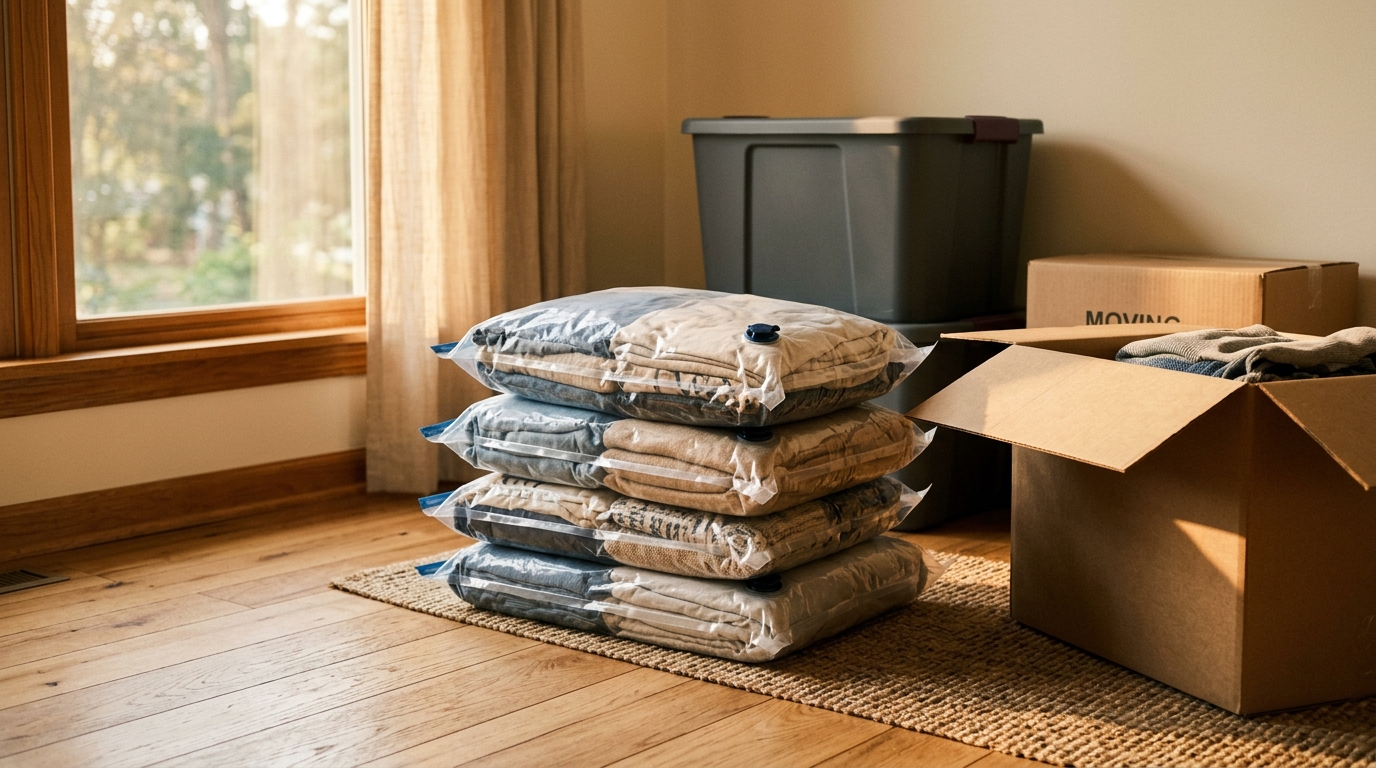
To pack a vacuum seal bag correctly: fold your item flat, load the bag without overstuffing, seal the zipper completely, then use a standard vacuum hose or the hand-pump valve (depending on bag type) to remove the air until the bag is firm and flat. Done right, vacuum seal bags can reduce the packed volume of soft goods — comforters, winter coats, pillows — by roughly half, which translates directly into fewer boxes and a lighter load. Done wrong, they permanently crease delicate fabrics, compress down until it loses its loft, and give you a false sense of security about items that need more protection than plastic and suction can provide.
What Vacuum Seal Bags Actually Do (and Don't Do)
Vacuum seal bags remove air from around compressible soft items, shrinking their volume dramatically. They do not protect against moisture, impact, or crushing weight — so stacking heavy boxes on top of a vacuum-sealed bag of sweaters can flatten those sweaters just as badly as skipping the bag entirely.
They also do nothing for rigid items. Books, dishes, electronics, and anything that cannot compress should never go in a vacuum bag.
What to Pack in Vacuum Seal Bags — and What to Leave Out
Items that pack well in vacuum seal bags
- Comforters, duvets, and thick blankets — the single best use case; a king comforter can compress to the size of a throw pillow
- Pillows (synthetic fill only — see below)
- Winter coats and heavy jackets
- Sweaters, sweatshirts, and hoodies
- Towels and bath linens
- Off-season clothing in general
- Sleeping bags
Items to keep out of vacuum seal bags
| Item | Why to avoid |
|---|---|
| Down comforters / down jackets | Compressing down long-term damages the fill clusters; loft may not fully recover |
| Wool sweaters or suits | Compression causes permanent creasing in structured or fine-woven fabric |
| Leather or faux-leather garments | Seals out the air that keeps leather supple; causes cracking |
| Delicate or embellished items | Beading, embroidery, and appliqués get crushed or snagged in the zipper |
| Anything damp | Sealing in moisture accelerates mildew — everything must be bone-dry |
| Stuffed animals with electronics | Batteries and circuits don't compress safely |
If you're packing delicate items like embroidered textiles or heirloom clothing, the room-by-room guide to moving valuables safely covers better options for those pieces.
How to Pack a Vacuum Seal Bag: Step by Step
-
Choose the right bag size. Manufacturers typically offer small (sweaters, two to three items), medium (jackets, towels), large (comforters, sleeping bags), and extra-large (king bedding). Overfilling a bag prevents the zipper from sealing — leave two to three inches at the top.
-
Fold items flat before loading. Loose, crumpled packing wastes the space vacuum compression creates. Fold sweaters the same way a retailer would — flat panels, no bunching. For comforters, fold in thirds lengthwise, then roll loosely before placing in the bag.
-
Check for debris near the zipper. A single loose thread caught in the seal track will break the vacuum within hours. Run a dry cloth along the zipper channel before closing.
-
Seal the zipper completely. Most bags have a double-zip slider. Run it slowly from one end to the other, then run it back. Press along the track with your fingers to confirm it's fully closed.
-
Connect your vacuum. Standard bags have a one-way valve that fits a household vacuum hose. Hold the hose firmly over the valve — there's no locking mechanism, so light pressure the whole time is required. Valve-only (hand-pump) bags are slower but work anywhere; useful for bags you'll reseal on arrival.
-
Stop when the bag is firm and flat, not rock-hard. Over-compressing makes bags brittle and harder to fit into boxes. Aim for the thickness of a folded bath towel.
-
Label the bag immediately. Write the contents and destination room on a strip of painter's tape stuck to the outside. Sealed bags all look identical once compressed — you will not remember which one has the winter coats.
-
Place the bag in a box or bin, then pad the top. A compressed bag is not puncture-proof. Put it inside a box or a hard-sided bin. If you stack additional boxes on top, keep weight light.
For a broader look at how labeling fits into your overall system, the guide on how to label moving boxes so you can find everything on day one pairs naturally with this step.
While you’re reading
Skip the research — let Robert match you with movers.
Free quotes from movers in your area. Pick whichever is easiest.
Choosing the Right Vacuum Seal Bags
Not all bags are created equal. Thin single-layer bags puncture easily and lose their seal in transit. Look for these features:
- Thickness of at least 80 microns (most reputable brands list this on the packaging)
- Double-zip closure rather than a single track
- Multi-directional valve so you can re-seal after reopening
- Textured interior — helps air escape evenly and prevents fabric from sticking to the plastic
Cost: Basic sets of 5–10 mixed-size bags typically run $12–$25 at major retailers. Travel-grade or heavy-duty sets run $30–$60 and hold a seal better over a multi-day move.
Pump vs. vacuum-powered: Built-in hand-pump bags cost a little more but are worth it if you're using a moving container or freight shipment where you may need to reopen bags at a transfer stop. For a standard full-service move where bags go straight from your home to the truck, a standard valve and your household vacuum works fine.
If you're still building out your full packing supply list, how to choose moving boxes and packing supplies covers what else you actually need versus what's a waste of money.
How Vacuum Seal Bags Fit Into Your Overall Packing Strategy
Vacuum bags solve a specific problem — bulk soft goods — and work best when they're one tool in a larger system, not the whole system.
What they replace: Multiple wardrobe boxes for off-season clothing; the "we'll just stuff it in the back seat" approach for bedding.
What they don't replace: Proper wrapping for fragile items, dish boxes for kitchenware, or wardrobe boxes for clothes you want to arrive wrinkle-free. If you want your hanging clothes to travel wrinkle-free, a wardrobe box is still the right call — vacuum sealing dress shirts or suit jackets is a recipe for an ironing marathon at the other end.
Space math: A standard queen comforter typically takes up about 3–4 cubic feet in a box. In a large vacuum bag, it often compresses to under 1.5 cubic feet. Over a 3-bedroom move, compressing all bedding and heavy soft goods can free up the equivalent of three to four medium boxes — which, if you're paying movers by weight or volume, can translate to a meaningful cost difference. For more on how movers price loads, see moving quotes by weight vs. cubic feet.
Vacuum Seal Bags and Your Movers
If a professional crew is loading your truck, let them know bags are in your boxes. Experienced crews know not to puncture plastic, but a heads-up saves any ambiguity. You can also keep the hand pump accessible so you can re-inflate or re-compress any bag that gets opened during the move.
One more thing: if you're comparing moving companies and want to see how others have handled packing-related issues, mover reviews are a useful place to start — just read them critically, since reviews reflect individual experiences rather than universal policies. And when you're ready to find carriers, browse movers by state to see who operates in your area.
Frequently Asked Questions
Can I use vacuum seal bags for a long-distance move?
Yes — they're especially useful for long-distance and cross-country moves where you're packing weeks in advance and want to store compressed items before loading day. Just confirm every bag holds its seal 24 hours after packing before the truck arrives.
Do vacuum seal bags keep bugs and moisture out?
A properly sealed bag does provide a barrier against both, but it's not a guarantee. If you're moving into a storage unit between homes, a hard plastic bin is a better outer layer than relying on the bag alone.
How long can clothes stay in a vacuum seal bag?
For a move, a few days to a few weeks is fine for most garments. For long-term storage (months), avoid compressing fine wool, silk, or structured clothing — compression over time causes permanent fiber damage in those materials.
Will vacuum seal bags set off alarms on a moving truck or in storage?
No. The bags contain only air (or the absence of it) and fabric. They don't trigger any sensors.
What if my bag loses its seal in transit?
It will re-expand — your clothes or bedding will simply take up more space than expected. Re-seal it with the hand pump if you have one, or transfer the contents to a standard box. A lost seal isn't a disaster; it's just inconvenient.
Are there items movers won't transport in vacuum bags?
Movers generally have no objection to vacuum-sealed bags as a packing method. Their restrictions are around the contents — flammables, liquids, certain plants, and other prohibited items — not the packaging format. For a full list of what typically can't go on the truck regardless of how it's packed, the guide on what movers won't put on the truck covers that in detail.
Vacuum seal bags are one of the genuinely useful packing tools for a move — specific, cheap, and effective when used on the right items. If you want help thinking through the rest of your packing plan, find movers in your area to get started, or reach out to Robert, our moving concierge, for a quick, no-pressure conversation about your move.
Tagged