Professional movers rely on a core set of equipment — upright and platform dollies, furniture straps, floor sliders, moving blankets, and corner guards — to move heavy furniture without damaging it or the home. Knowing what each tool does helps you spot a prepared crew, ask the right questions before moving day, and understand why a trained mover can safely handle a 300-pound armoire that two friends with a pickup truck cannot.
The Core Equipment on Every Professional Moving Truck
1. Upright (Appliance) Dolly
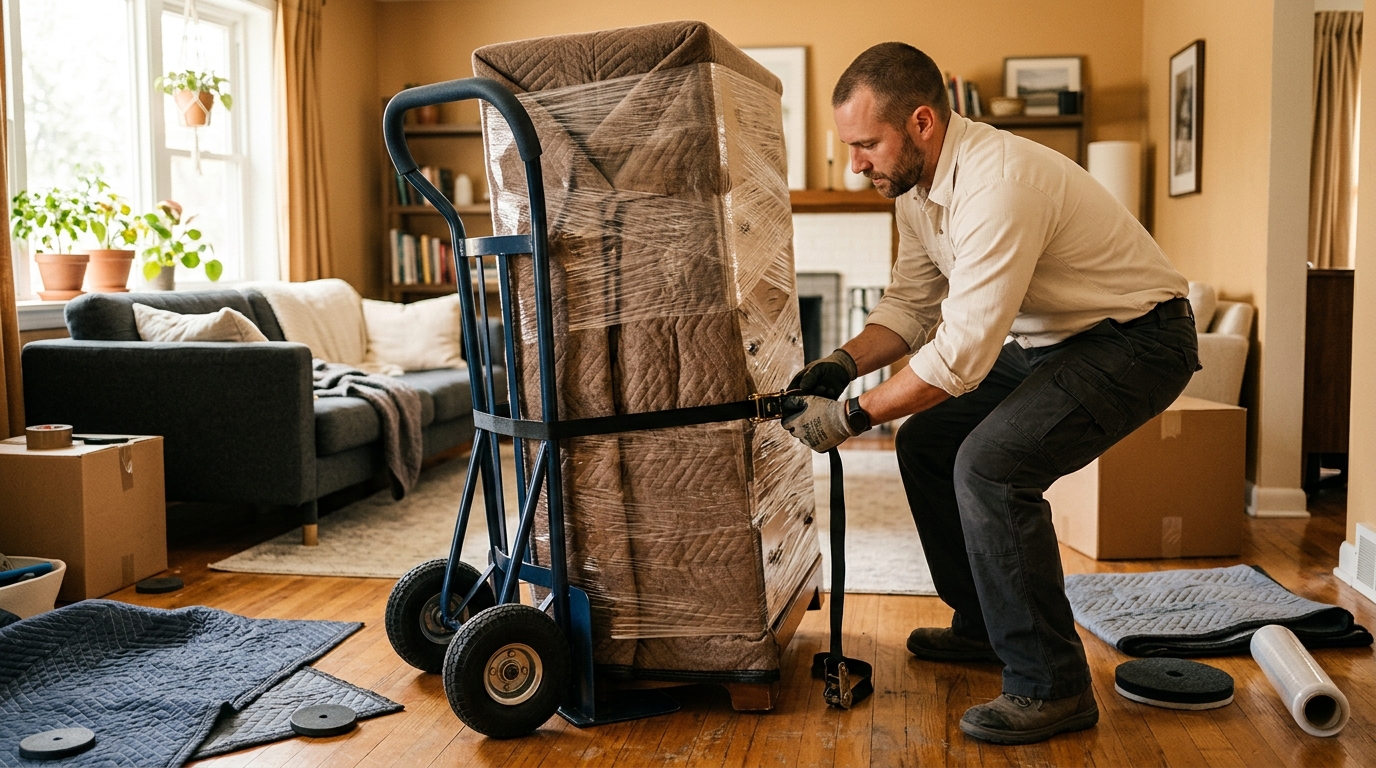
The upright dolly — sometimes called a hand truck — is the workhorse of furniture moving. It has two large wheels, a narrow base plate, and a vertical frame with a strap or loop at the top. A mover tilts the item back onto the base plate, secures it with the strap, and rolls it upright.
Best for: Refrigerators, washers, dryers, tall bookcases, file cabinets, and any tall, dense item that can be tilted without damage. Our team has 35+ years of hands-on service-provider experience, including an operator who ran a moving company for 18 years, and the upright dolly remains the single most-used piece of equipment on a local move.
What it protects: Keeps movers from carrying massive weight on their backs across long hallways, reducing both injury risk and the chance of a dropped item.
2. Four-Wheel Platform (Furniture) Dolly
A platform dolly is a low, flat board — typically 18″×27″ or larger — mounted on four swivel casters. Movers set a piece of furniture on it, strap it down if needed, and roll it smoothly across flat surfaces.
Best for: Sofas, dressers, dining tables, large boxes stacked together, and anything too wide or oddly shaped for an upright dolly.
What it protects: Eliminates dragging, which scuffs both furniture legs and floors. On hardwood or tile, platform dollies are far gentler than carrying.
3. Stair Rollers and Stair-Climbing Dollies
Standard dollies don't climb stairs — that's where stair rollers and powered stair-climbing dollies come in. Stair rollers attach to a standard upright dolly and let it "walk" down steps one at a time using a rotating tri-wheel mechanism. Powered stair climbers use an electric motor to do the same.
Best for: Multi-story homes and walk-up apartments with no elevator. If your building has stairs, ask specifically whether the mover carries stair-roller attachments.
What it protects: Staircases are where most furniture damage and mover injuries happen. The right equipment here is not optional — it's essential.
4. Furniture Straps and Forearm Forklifts
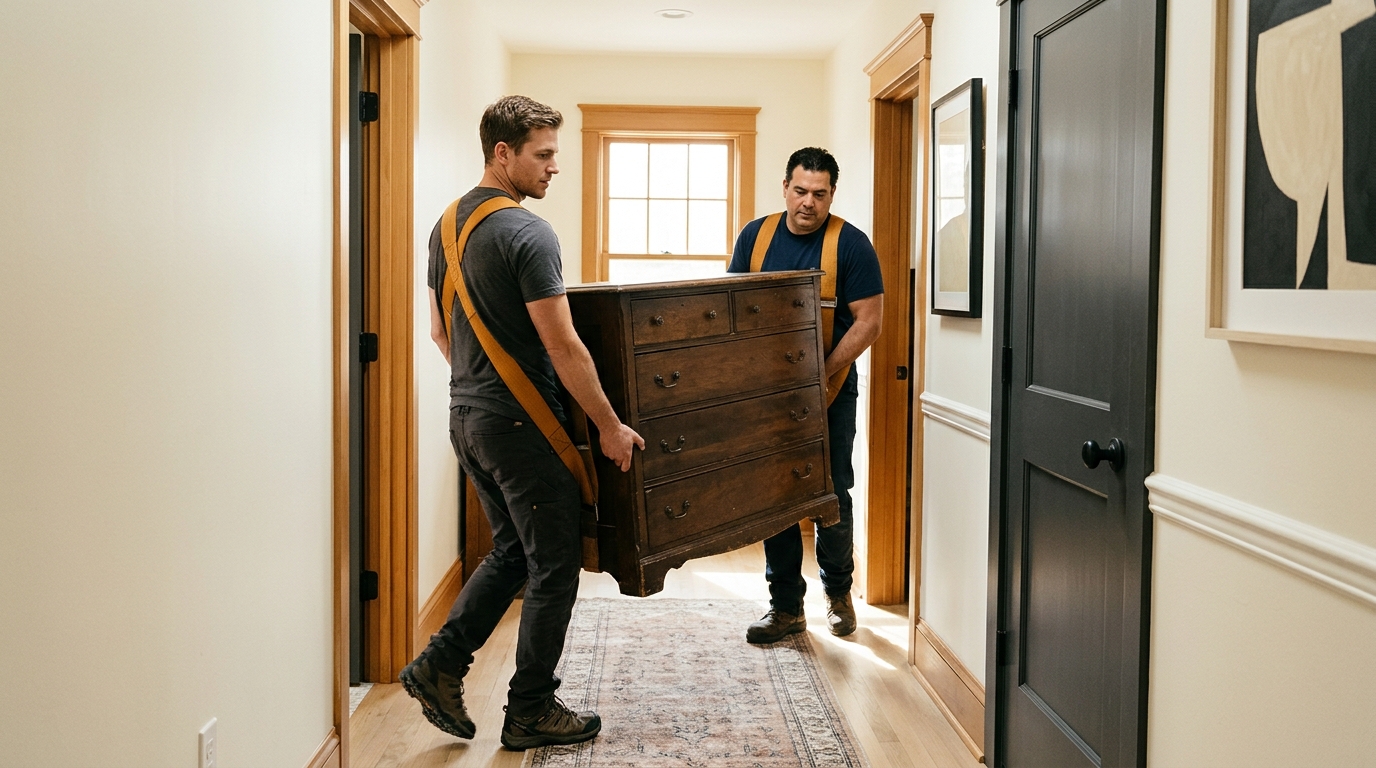
Moving straps — also called lifting straps or forearm forklifts — are woven nylon loops that distribute the weight of a heavy item across two movers' forearms and shoulders rather than their wrists and lower backs.
Best for: Mattresses, large sectional sofas, dining tables, and any item too large to dolly through a tight doorway.
What it protects: The movers, primarily. But a fatigued mover is a mover who drops things — so better ergonomics directly protects your furniture.
5. Floor Sliders (Furniture Glides)
Sliders are smooth pads — hard plastic on carpet, soft felt or rubber on hardwood — placed under furniture legs to let movers push items across a floor without lifting at all.
Best for: Short repositioning moves within a room, or slides from the center of a room to just inside a door where a dolly can take over.
What it protects: Hardwood floors, tile grout, and carpet pile. Dragging without sliders is one of the most common causes of floor damage on moving day. You'll notice many movers combine sliders with the guidance in our post on getting your home ready before the movers arrive.
6. Moving Blankets (Furniture Pads)
Moving blankets are heavy quilted pads — typically 72″×80″, woven from recycled cotton — that wrap around furniture to absorb shocks and prevent scratches during transit. Professional movers carry dozens of them; a well-equipped truck typically has 30–50 pads on board.
Best for: Every piece of wood furniture, glass, framed artwork, and any item with a finished surface. For more on costs if you need to source your own, see Moving Blankets: What They Cost to Rent or Buy — and When You Actually Need Them.
What it protects: Finished surfaces from rubbing, corners from chipping, and glass panels from vibration cracks in transit.
7. Stretch Wrap (Shrink Wrap)
Stretch wrap — clear plastic film, similar to heavy-duty cling wrap — is wound tightly around wrapped furniture to hold the moving blankets in place and protect drawer faces, doors, and upholstery from dust and moisture.
Best for: Securing blankets on dressers, wrapping sofa arms, and bundling loose hardware like drawer pulls.
What it protects: Keeps pads from slipping during loading and prevents upholstery from collecting grime during a long haul.
8. Corner Guards and Edge Protectors
Rigid cardboard or rubber corner guards are taped onto doorframe corners, stair banisters, and wall edges before any large furniture passes through. They're cheap but frequently skipped by less-prepared movers.
Best for: Any move where furniture must navigate tight hallways or 90-degree turns.
What it protects: Your home, not your furniture — without corner guards, a sofa corner can gouge drywall or strip paint from a doorframe in a single pass.
How the Equipment Differs by Move Type
| Move type | Dollies used | Blankets needed | Extra gear to ask about |
|---|---|---|---|
| Studio / 1-bedroom local | 1 upright + 1 platform | 10–20 | Floor sliders, stretch wrap |
| 3–4 bedroom local | 2–3 dollies of each type | 30–50 | Stair rollers, corner guards |
| Long-distance | Same as above | 40–60+ | Tie-down straps inside truck |
| Apartment with elevator | Platform dollies primary | 20–40 | Elevator padding (building's) |
| Walk-up apartment | Stair-climbing dolly critical | 20–40 | Extra straps for stairwell |
| Heavy specialty items (piano, safe) | Specialty board + skates | Custom wrapping | See specialty mover section below |
While you’re reading
Skip the research — let Robert match you with movers.
Free quotes from movers in your area. Pick whichever is easiest.
Specialty Equipment for Pianos, Safes, and Oversized Items
Standard dollies don't cut it for a baby grand or a 600-pound gun safe. Specialty items require:
- Piano board and skid board: A padded, low-profile board with strap slots that slides under an upright piano's legs, keeping it level while it's rolled.
- Piano skates (piano dollies): Four-wheel low dollies with rubber wheels, designed to roll a piano smoothly on any surface without tipping.
- Safe-moving dollies: Extra-heavy-duty platform dollies rated for 1,000+ lbs, used with motorized stair climbers for safes on upper floors.
If you're moving a piano or heavy safe, these items warrant a dedicated specialist — our post on moving a piano and our guide to moving a safe or oversized furniture cover exactly what to expect.
What Well-Equipped Movers Do That Underprepared Ones Don't
A legitimate, prepared mover arrives with all of this equipment loaded. Warning signs that a crew may be cutting corners:
- No moving blankets visible — or too few. Ask before they start loading how many pads they carry.
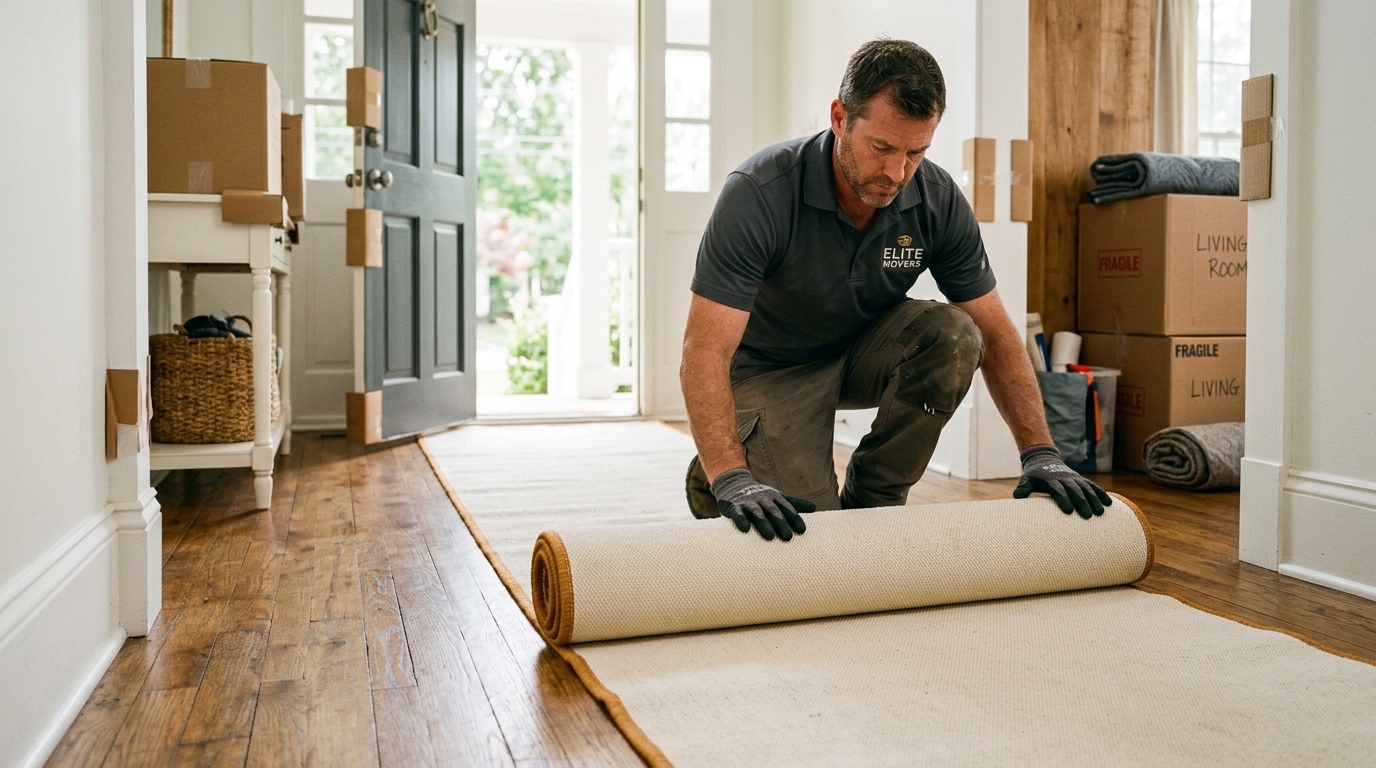
- No floor protection — movers should lay runners or use sliders; walking on bare hardwood with furniture straps dragging is a floor-damage risk.
- No stair rollers for a walk-up job — carrying without the right equipment through stairs is how furniture gets dropped and doorframes get gouged.
- No corner guards on narrow hallways — a small piece of cardboard prevents hundreds of dollars in drywall repair.
Before you book, it's worth checking mover reviews to see whether past customers mention damaged walls or floors — that's often a signal about equipment quality, not just carelessness.
Questions to Ask Your Mover About Equipment
- How many moving blankets do you carry per truck? (30–50 is a solid answer for a 2–3 bedroom move.)
- Do you use stair rollers or a powered stair climber? (Critical for walk-ups.)
- What do you use to protect hardwood floors and carpets during the move?
- Do you carry specialty equipment for pianos or heavy safes, or do you subcontract that?
- Will you use stretch wrap on upholstered items?
You can find movers in our directory and compare notes on equipment before booking — and always verify a mover's USDOT number yourself on the FMCSA website before signing anything.
How Equipment Connects to Your Bill
On a local hourly move, the time it takes a crew to properly pad and wrap furniture is billed to you — but it's time well spent. A 10-minute blanket job on a dining table prevents a $400 refinishing bill. On a long-distance move, the mover's equipment quality also affects your valuation claim: if damage occurs to properly wrapped furniture, the burden of proof shifts toward the mover. For a clear picture of how local hourly billing works, see how movers charge by the hour.
To browse movers by state and find carriers who specify their equipment standards, start with your state's listings and filter for full-service moves.
Frequently Asked Questions
What do movers use to slide heavy furniture across hardwood floors?
Movers use floor sliders — smooth pads placed under furniture legs or bases. On hardwood or tile, soft felt or rubber sliders are used; on carpet, hard plastic sliders work better. They allow a mover to push rather than lift or drag, which protects both the floor's finish and the furniture itself.
Do movers bring their own dollies and blankets, or do I need to provide them?
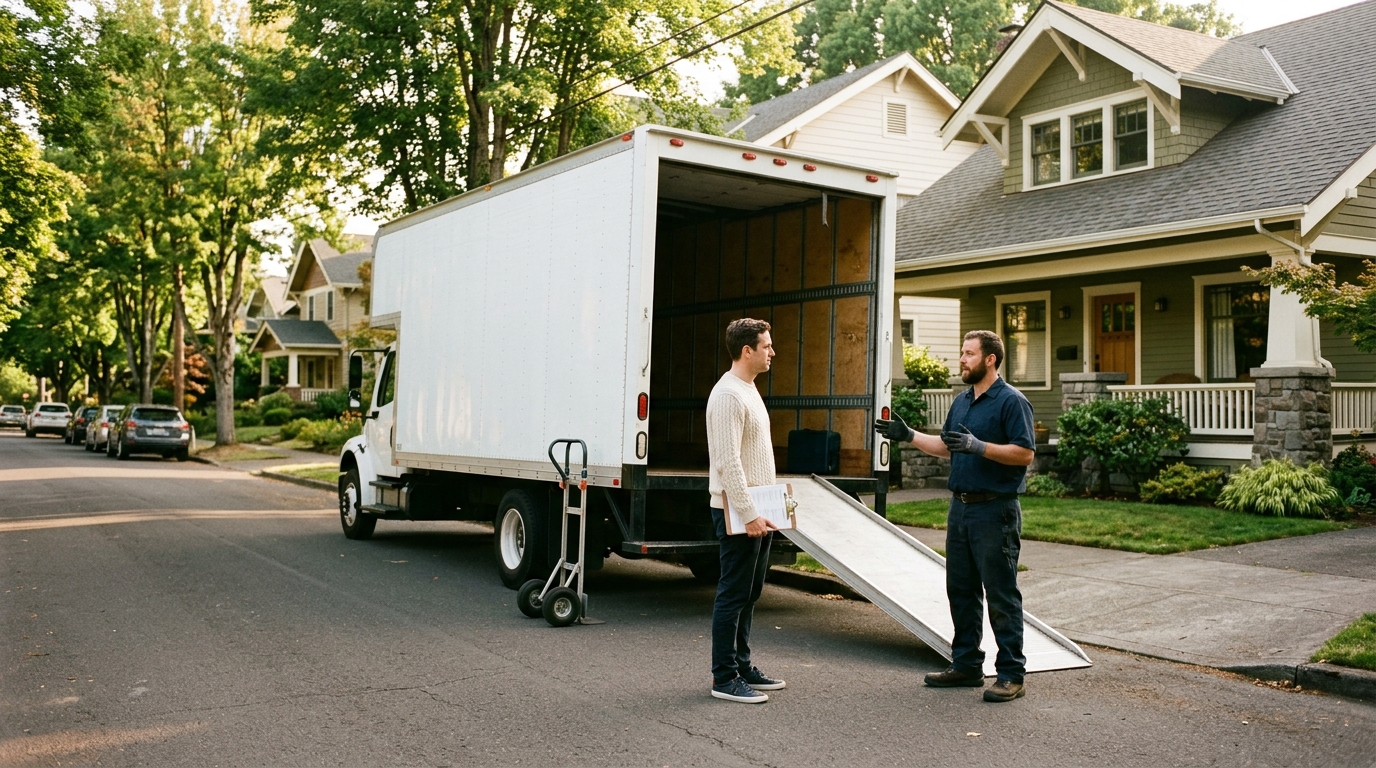
Full-service movers bring all of their own equipment — dollies, moving blankets, stretch wrap, straps, and corner guards are standard in a professional moving truck. You should not need to provide any of it. If a mover asks you to supply blankets or dollies, that's worth clarifying before the job starts.
What kind of dolly do movers use for a sofa?
For sofas, movers most often use a four-wheel platform dolly, which lets the sofa sit flat and roll without tipping. If the hallway is too tight for a dolly, movers use lifting straps to carry the sofa and may use sliders to reposition it within a room first.
How do movers protect hardwood floors on moving day?
Professional movers typically use a combination of tools: floor sliders under furniture legs, rubber or canvas floor runners laid in high-traffic paths, platform dollies (which roll rather than drag), and corner guards on doorframes to prevent scrapes. Asking about floor protection specifically before the job is a good habit.
Do movers wrap furniture before loading it into the truck?
Yes — wrapping happens before loading, typically at the origin. Movers place moving blankets around each piece, secure them with stretch wrap or packing tape, then load the wrapped item onto the truck. Furniture should not travel unwrapped; bare wood and finished surfaces can scratch against each other during transit.
What equipment do movers use for a piano specifically?
Upright pianos are moved using a padded piano board (also called a piano skid board) and low-profile piano skates (dollies). Grand pianos require the legs to be removed, the body wrapped and placed on a piano board, and then loaded on its side using a specialized rolling skid. This is specialty work — not all movers carry piano equipment, so confirm in advance.
Ready to find a mover who shows up with the right gear? Search the directory or connect with Robert, our moving concierge, for guidance on what to ask before you book.
Tagged