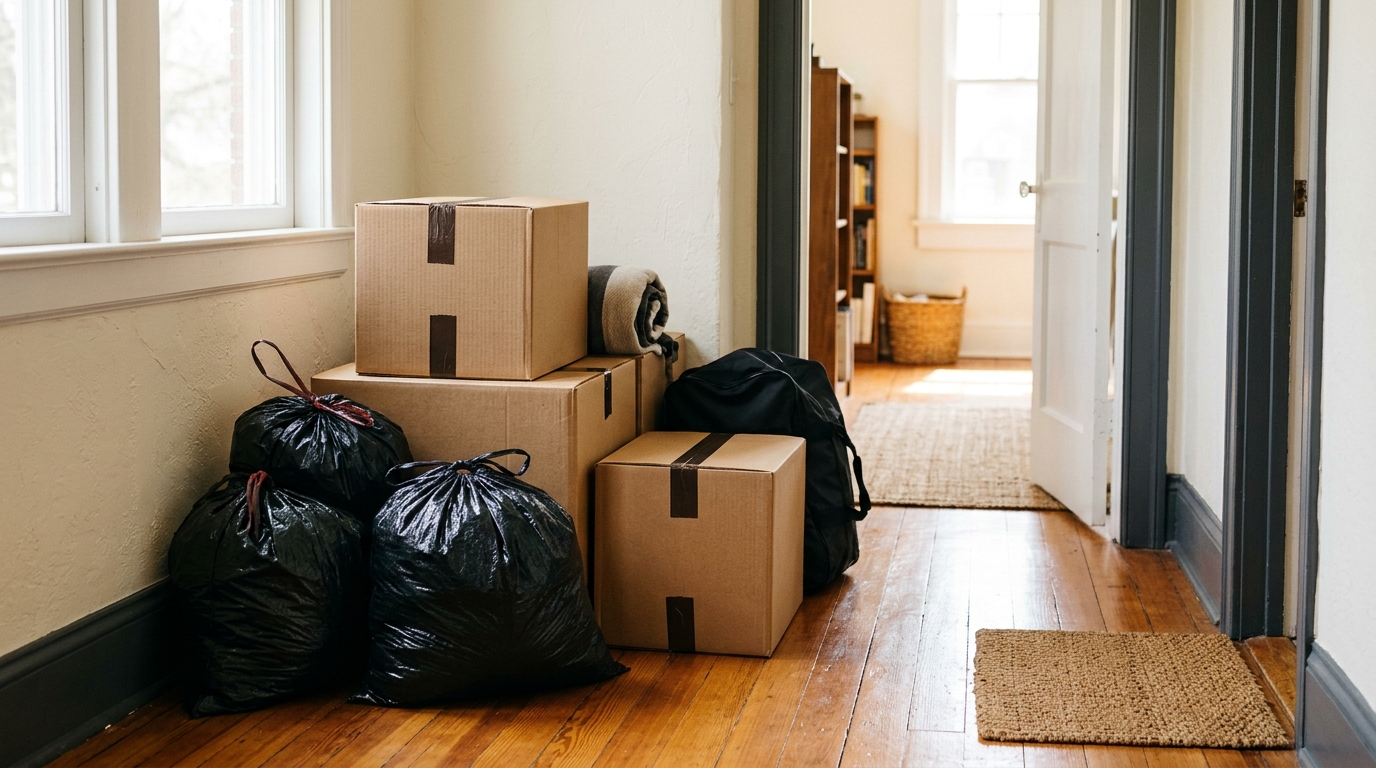
Moving out at 18 typically costs between $1,500 and $5,000 all-in for a local move — covering a mover or truck rental, security deposit, first month's rent, and basic furnishings. That range widens fast if you're moving across the country, furnishing from scratch, or in a high-cost city. The most important thing you can do right now is build a realistic budget before you sign a lease or book a mover — not after.
What Does It Actually Cost to Move Out at 18?
Most 18-year-olds are moving a bedroom's worth of belongings — clothes, electronics, a desk, maybe a bed frame. That's a studio or one-bedroom situation. Here's what to plan for:
Upfront move-in costs (before you unpack a single box)
| Item | Typical Range |
|---|---|
| Security deposit | 1–2 months' rent |
| First month's rent | Varies by city |
| Last month's rent (if required) | Varies |
| Utility deposits | $100–$300 total |
| Renter's insurance | $10–$20/month |
| Moving help or truck rental | $200–$1,200 |
| Basic furnishings (if starting from zero) | $500–$2,500 |
In a mid-size city — think Nashville, Austin, or Columbus — a modest one-bedroom might run $1,100–$1,500/month. In Chicago or any coastal metro, $1,800–$2,500 is common. Budget at least 3 months of rent saved before you move so you aren't scrambling after month one.
Moving costs: hired movers vs. doing it yourself
| Move type | What you pay | Best for |
|---|---|---|
| Hired local movers (2 movers, 2–3 hrs) | $300–$600 | Anyone with a bed frame, couch, or more than 10 boxes |
| Truck rental + help from friends | $150–$350 | Very light loads, short distances |
| Portable container | $400–$900 (local) | Flexible schedule, mid-size load |
| Full-service movers (packing included) | $800–$2,000+ | Larger moves, cross-country |
For a typical bedroom-sized move within the same city, a two-person crew for two to three hours is usually the sweet spot. Our guide to how movers charge by the hour breaks down exactly what drives that bill — travel time, stairs, long carries — so you're not surprised at the end.
Step 1: Nail Down Your Budget Before You Search for a Place
Write out your monthly number first:
- Gross monthly income (or expected income)
- Subtract taxes (roughly 20–25% for most entry-level W-2 jobs; more if you freelance)
- Subtract fixed costs: rent, utilities (electric, gas, internet — budget $120–$200/month combined for a small unit), phone, renter's insurance, groceries ($250–$400/month), transportation
- What's left is your discretionary budget — if it's less than $200, the place may be too expensive
A common rule of thumb is keeping rent at or under 30% of gross income. It's a target, not a law — but if you're at 45–50%, one bad month can put you behind.
Step 2: Understand Your Lease Before You Sign
Your lease is a legal contract. Read it fully before signing. Key things to check:
- Security deposit amount and return conditions — most states require landlords to return it within 14–30 days of move-out, less documented deductions
- Early termination clause — leaving before your lease ends can cost 1–2 months' rent as a penalty
- Pet policy, subletting rules, and guest policies
- Who pays which utilities — some landlords include water or trash; most don't include electric or internet
- Noise and move-in hours — apartment buildings often restrict elevator use and move-in to specific hours. Check building rules before booking your mover so your crew doesn't show up and have nowhere to park.
Step 3: Decide How You're Moving Your Stuff
If you're moving locally and have typical bedroom contents, you have three options:
Option A — Hire local movers. For anything with a bed frame, dresser, couch, or more than 15 boxes, this is usually worth it. Browse movers in your area and get at least two written quotes. Avoid phone quotes with no in-person or video survey — FMCSA flags that as a red flag for interstate moves, and it's a sign of sloppy quoting on local ones too.
Option B — Rent a truck and recruit friends. Works well if your load is genuinely light and your friends will actually show up. Budget for fuel, the rental, moving blankets, and a thank-you meal. Read what truck rental companies don't tell you about hidden fees before you book.
Option C — Hybrid move. Rent a truck for large items; let a labor-only crew do the lifting. This is often the cheapest full-service option for a small move.
What about a cross-country move at 18?
If you're moving to a different state — for school, a job, or a fresh start — the math and the rules change significantly. Interstate moves are regulated by the federal FMCSA. You'll want a binding estimate or a not-to-exceed price so your bill doesn't balloon based on final weight. A non-binding estimate means you pay based on actual weight at delivery; you must pay 110% of the estimate at delivery, with any remaining balance billed afterward. Our long-distance cost breakdown shows what a studio or one-bedroom cross-country move typically costs — usually $1,500–$4,000 depending on distance and weight.
While you’re reading
Skip the research — let Robert match you with movers.
Free quotes from movers in your area. Pick whichever is easiest.
Step 4: Vet Any Mover Before You Hand Over Money
This is where 18-year-olds (and plenty of adults) get burned. A few fast checks:
- Look up their USDOT number at the FMCSA mover search tool — confirm they're registered as a "Motor Carrier of Household Goods," not just a broker who'll hand you off to a stranger
- Never pay a large cash deposit upfront — FMCSA flags this as a red flag; a small credit card deposit is normal
- Read recent reviews on verified review platforms — look for patterns in complaints, not just star averages. Spotting fake reviews is a skill worth developing before your first move
- Get everything in writing — especially the price, what's included, and the moving date. For mover reviews and licensed movers by state, you can start your search right here
Step 5: Handle the Admin (It's Not Optional)
Moving out means your records need to catch up. Don't skip these:
- Change your address with USPS, your bank, employer, and any subscriptions — ideally 2 weeks before your move date. Our complete change-of-address checklist walks through every agency and deadline
- Update your driver's license and vehicle registration — most states require this within 30–60 days of establishing a new address (check your specific state DMV; requirements vary)
- Set up renter's insurance — it typically costs $10–$20/month and covers your belongings if there's a fire, theft, or water damage. Your landlord's insurance covers the building, not your stuff
- Set up utilities before moving day — electric, gas, and internet can take 3–7 business days to activate. Our utilities setup checklist shows exactly who to call and when
Step 6: Build a Basic Moving Timeline
Scrambling at the last minute is expensive and stressful. Here's a lean version:
| Timeframe | What to do |
|---|---|
| 6–8 weeks out | Set budget, search apartments, apply |
| 4–6 weeks out | Sign lease, give notice at current address, book mover or truck |
| 3–4 weeks out | Start decluttering, gather boxes, begin packing non-essentials |
| 2 weeks out | Change address with USPS and key accounts |
| 1 week out | Confirm mover, pack almost everything, set aside "move day" bag |
| Moving day | Walk through old place before leaving, photograph any existing damage at new place |
| Week 1 in new place | Set up utilities, update documents, buy what you actually need (not everything at once) |
For a more detailed week-by-week version, see our full moving timeline checklist.
What to Buy First (and What to Wait On)
Don't furnish everything at once. Prioritize:
- Bed/mattress — non-negotiable; sleeping on the floor for weeks is miserable
- Basic kitchen supplies — plates, one good pan, utensils, a coffee maker if you drink it
- A shower curtain — apartments rarely come with one
- Internet — set up before you move in if possible
Wait on: a couch, TV stand, dining set, decorative items. Facebook Marketplace and local buy-nothing groups are full of perfectly good furniture from people who moved and didn't want to haul it.
Frequently Asked Questions
How much money should an 18-year-old have saved before moving out?
Most financial advisors recommend having at least 3 months of living expenses saved before moving out — that includes rent, utilities, groceries, and transportation. In practice, that often means $3,000–$6,000 depending on your city. At minimum, cover your security deposit, first and last month's rent, and one month of living expenses before you hand over keys.
Can an 18-year-old sign a lease?
Yes. In the United States, 18 is the age of majority in every state, which means you can legally sign a binding lease agreement. Some landlords may require a co-signer if you have little or no rental history or income — that's common for first-time renters and not a rejection.
Is it cheaper to hire movers or rent a truck when moving out at 18?
For a light, local move — one bedroom, short distance — a truck rental plus friends can run $150–$350. Hiring a two-person crew for two to three hours typically costs $300–$600 but saves significant physical effort and potential injury. If you have a bed frame, dresser, or more than 15 boxes, professional movers are usually worth the extra cost.
What happens if movers damage my stuff?
For an interstate move, you have the right to file a written claim within 9 months of delivery. The mover must acknowledge it within 30 days and resolve it within 120 days. How much you recover depends on the valuation option you chose — Full Value Protection means the mover repairs, replaces, or pays replacement value; Released Value pays only 60 cents per pound per article. For local (in-state) moves, rules vary by state — check with your mover and state regulator about what's included in your contract.
Do I need renter's insurance when I move out at 18?
Most landlords don't legally require it, but it's strongly worth getting. Renter's insurance typically costs $10–$20/month and covers your belongings against fire, theft, and certain water damage. Your landlord's policy covers the structure — not anything you own.
What's the biggest financial mistake first-time movers make?
Underestimating recurring monthly costs. The rent is visible; the electric bill, internet, renter's insurance, and grocery budget often aren't fully calculated until month two. Build a detailed monthly budget — including a small emergency fund contribution — before you commit to a lease amount.
Moving out at 18 is absolutely doable with the right preparation. The goal isn't to have every answer before you go — it's to not be blindsided by costs or paperwork once you're there. When you're ready to find a licensed mover for your first place, browse movers on Majestic Moving Companies and ask our moving concierge Robert any question you have along the way — he's there to help you think it through, not sell you anything.
Tagged