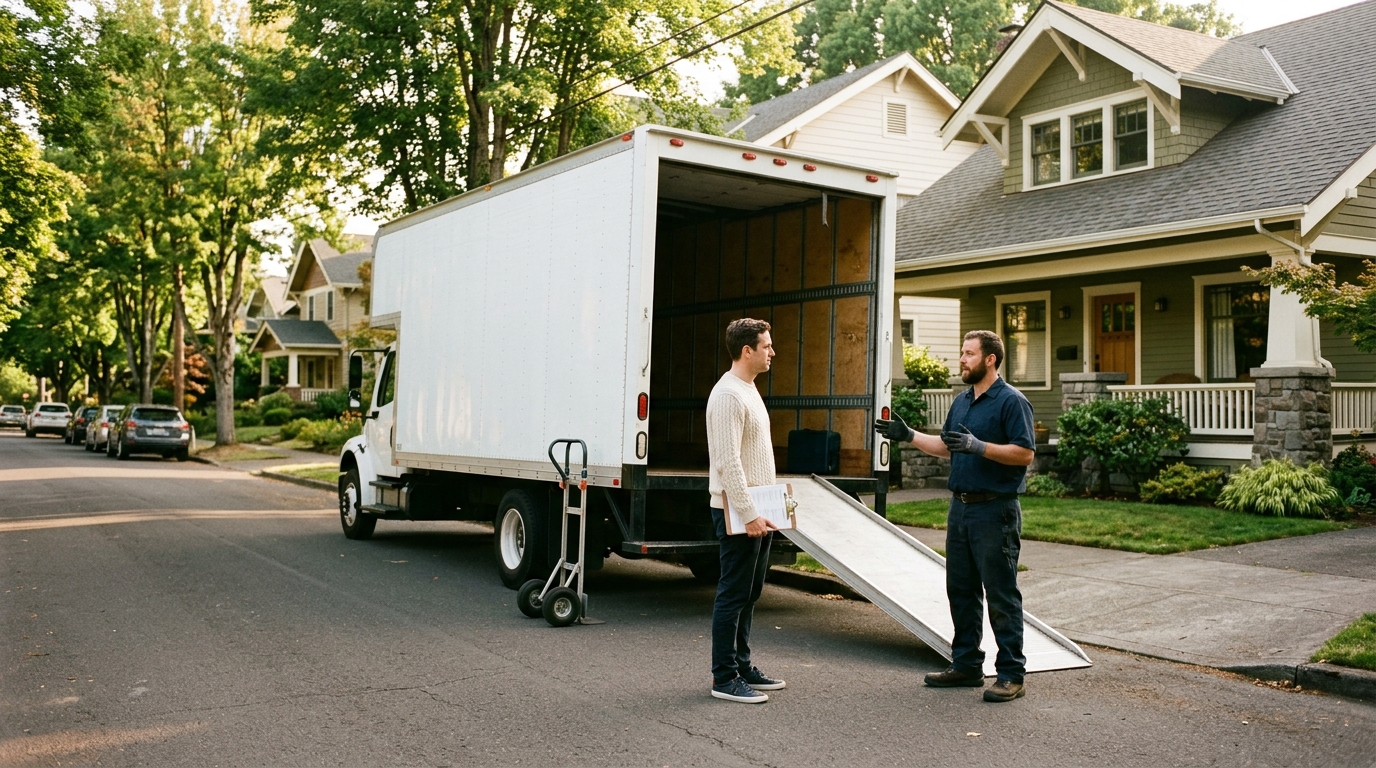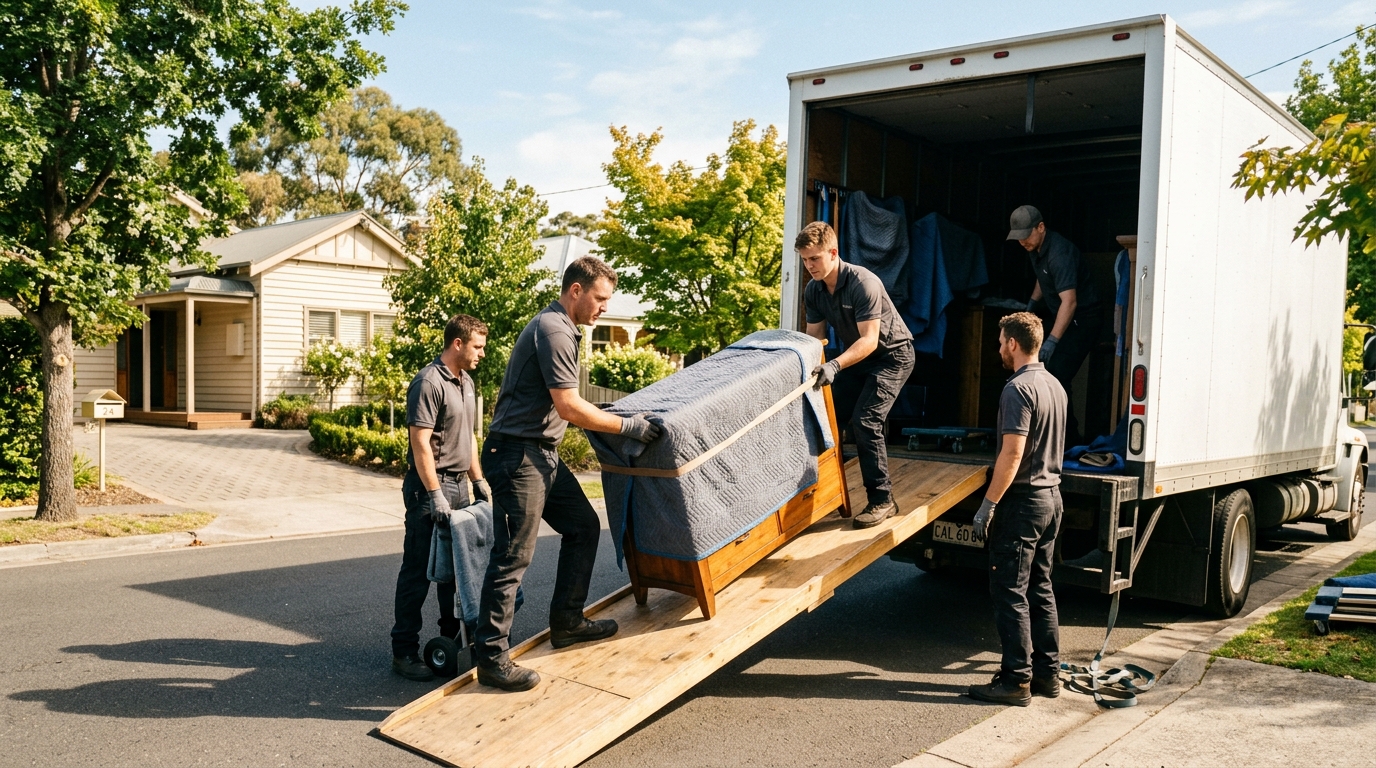
Movers load the heaviest, largest pieces first — furniture and appliances go against the front wall of the truck (the cab end), stacked floor to ceiling, secured tightly before anything else is touched. Every piece that follows is layered in descending weight and fragility, so nothing shifts during transit and nothing crushes what's underneath. Understanding this sequence helps you prepare your home, communicate with your crew, and know exactly what to expect on loading day.
Why Loading Order Matters
A moving truck isn't packed the way you'd load a car trunk. Weight distribution, balance, and stability during braking all depend on a deliberate sequence. Heavy items at the front (over the axles and close to the cab) keep the truck from becoming tail-heavy and tipping on corners. Items loaded last — near the door — are the lightest and most accessible, so they come off first at the destination.
If that sequence is ignored, furniture slides into boxes, boxes collapse under weight, and fragile items arrive broken. Our team has 35+ years of hands-on service-provider experience, including an operator who ran a moving company for 18 years, and a consistent, front-to-back loading order is one of the clearest markers of a professional crew.
The Full Truck-Loading Sequence, Step by Step
Step 1: Floor padding and track setup
Before a single item goes in, the crew lays rubber floor mats or cardboard on the truck floor and, on full-service moves, sets up load-bar tracks or straps along the walls. This five-minute setup prevents items from sliding and gives the crew anchor points for securing furniture later.
Step 2: Large, heavy furniture — against the cab wall
The first pieces to go in are the largest and densest:
- Sofas and sectionals (stood on end vertically to save floor space)
- Bed frames and headboards (disassembled, leaned flat against the wall)
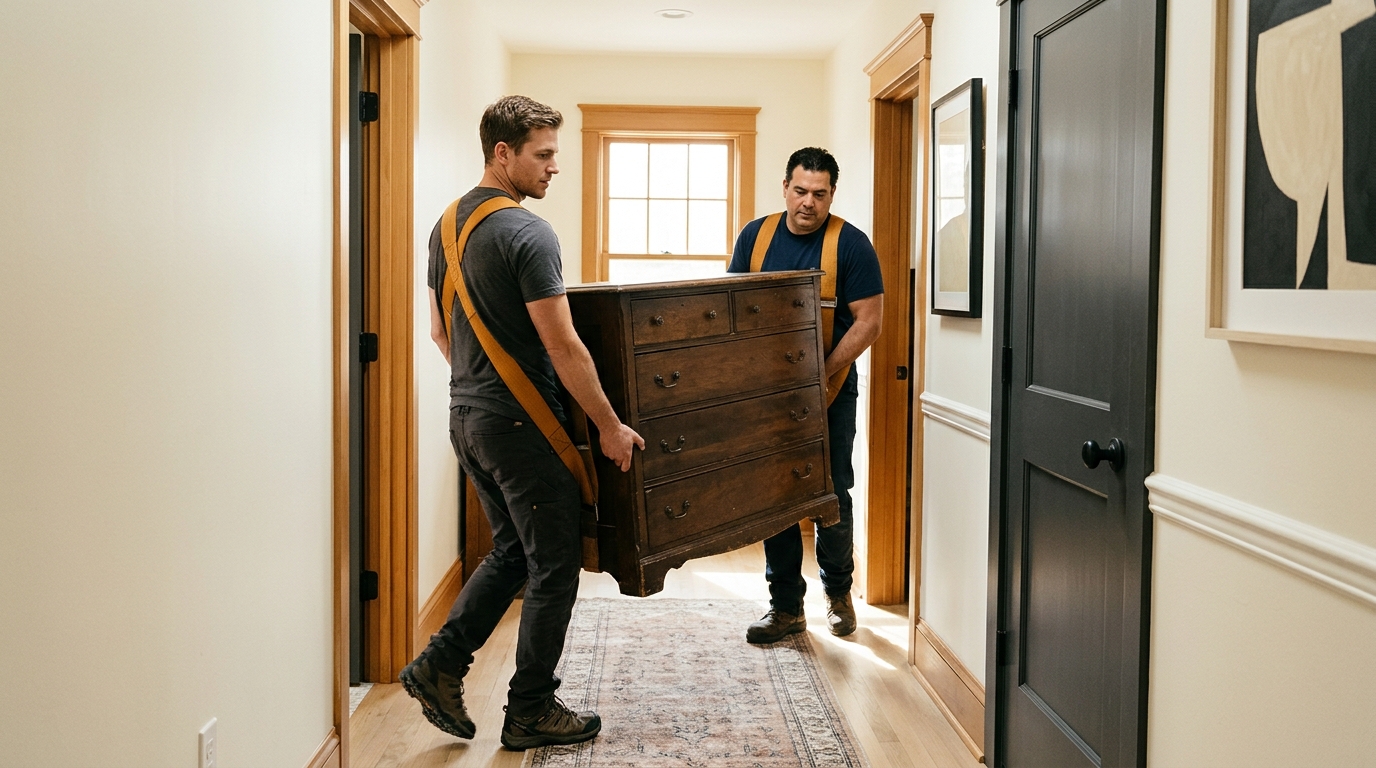
- Dressers and armoires (drawers removed or taped, placed face-to-face so hardware doesn't scratch)
- Dining tables (legs removed, tabletop wrapped in moving blankets and leaned upright)
- Desks and bookshelves (shelves removed, packed separately)
These go in floor to ceiling. The goal is a solid, interlocking wall of furniture with no gaps for shifting. Moving blankets are wrapped around every piece before it touches another surface — a good sign that the mover takes protecting your belongings during a move seriously.
Step 3: Large appliances
Refrigerators, washing machines, dryers, and dishwashers come in immediately after the furniture wall. They're strapped upright to the wall tracks. Refrigerators must stay upright (or the compressor oil can migrate into the lines); a competent crew knows this without being asked. If you're moving any of these yourself, our guide on moving large appliances covers what needs to happen before they touch the truck.
Step 4: Mattresses and box springs
Mattresses go in vertically, leaning against a wall of furniture or in a mattress carton if provided. They act as a soft buffer between hard furniture pieces and the next zone of the truck. A bare mattress should never rest on the floor of a truck — it absorbs moisture and grime quickly.
Step 5: Medium-weight boxes and totes — stacked in the middle zone
Once the heavy wall is set, the crew fills the middle section of the truck with mid-weight boxes (typically 30–50 lbs):
- Kitchen boxes (pots, pantry items, small appliances)
- Book boxes — these are heavy for their size; small boxes packed tight
- Electronics boxes (monitors, gaming gear, audio equipment)
- Toolboxes and garage items
Heavier boxes go on the floor; lighter ones stack on top. Boxes should be uniform in size where possible so they stack without wobbling. If you haven't already, labeling your moving boxes with a clear system tells the crew exactly where each box lands in the new home, which also determines where it gets set down in the truck.
Step 6: Lightweight boxes and soft items — near the door
The final zone, closest to the truck's rear door, holds the lightest and most fragile items:
- Lamp boxes and shades
- Wardrobe boxes (hanging clothing)
- Linen and pillow bags
- Artwork and mirrors (stood vertically in the corner, padded)
- Small plants (if the mover agrees to transport them)
These load last and unload first at the destination. Because they're closest to the door, they also get the most jostling from stops — which is exactly why nothing heavy goes here.
Step 7: Fill every gap
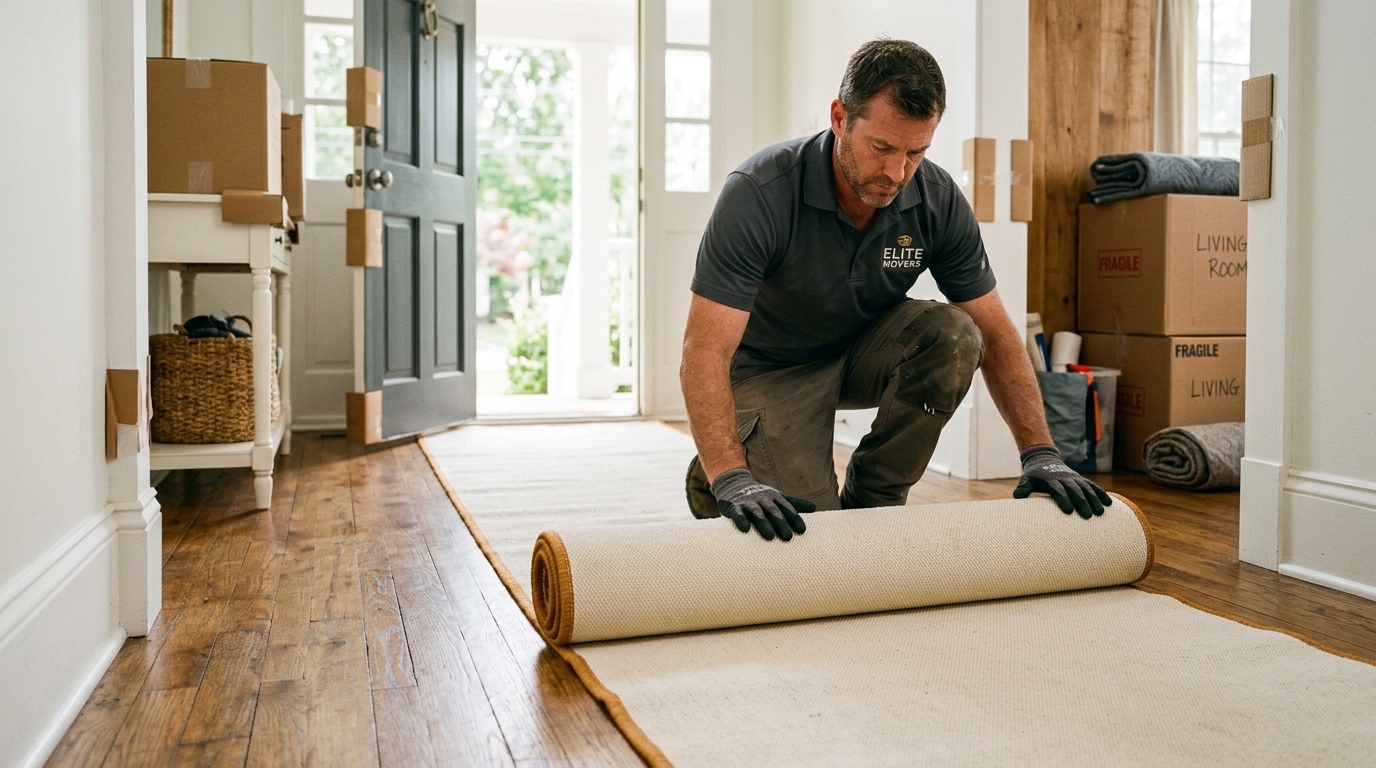
A skilled crew fills every void with soft goods — pillows, blankets, cushions, rolled rugs — so nothing has room to shift in transit. Empty space inside a truck is the enemy of a damage-free move. A rug, rolled tightly and banded, often goes in lengthwise along a side wall to fill a long gap and add a buffer layer.
What the Loading Order Looks Like as a Table
| Zone in truck | What goes there | Why |
|---|---|---|
| Front wall (cab end) | Large furniture, disassembled frames | Heaviest mass over axles; forms anchor wall |
| Adjacent to front wall | Large appliances (strapped upright) | Stable upright; secured to wall tracks |
| Front–middle transition | Mattresses and box springs (vertical) | Buffer between hard furniture and boxes |
| Middle zone | Heavy and medium boxes, electronics | Stacked floor to ceiling, heaviest on floor |
| Middle–rear transition | Soft items, wardrobe boxes | Lighter, less structurally rigid |
| Rear (door end) | Fragile boxes, lamps, artwork, plants | Loads last, unloads first; minimal weight on top |
| All gaps | Pillows, rugs, blankets, cushions | Eliminates void space; prevents shifting |
While you’re reading
Skip the research — let Robert match you with movers.
Free quotes from movers in your area. Pick whichever is easiest.
How This Changes for an Apartment vs. a House
In an apartment building with elevator access, the crew often works in shuttle loads — bringing items down via elevator before loading the truck in batches. The loading order inside the truck stays the same, but the pace and staging change. If you're moving out of a condo or apartment, check out how to move into an apartment building, including elevator and loading dock logistics — many of those rules apply on the way out, too.
For a large house, movers typically work room by room but load by item category, not by room. The master bedroom's king bed frame goes in with all other bed frames, not as a complete room-load at once. Your labeled boxes tell the crew the destination room; the loading position in the truck is determined by weight and size.
What You Can Do Before the Crew Arrives
The loading order works best when the home is already staged for it. A few things that speed up loading and reduce damage risk:
- Disassemble bed frames, dining tables, and shelving units the night before. Hardware goes into labeled zip-lock bags taped to the piece.
- Empty dresser drawers or confirm with your mover they'll move them full. Lighter drawers mean the dresser goes in faster and safer. (See whether you have to empty dresser drawers for the nuances.)
- Box and label everything that isn't furniture. Loose items that aren't boxed slow down loading and often get skipped or damaged.
- Clear a path from each room to the front door and from the door to the truck. Narrow hallways are where furniture gets scraped and movers get hurt.
- Know what the movers won't take. Hazardous materials, certain plants, and items that require special permits don't go on the truck. Review what movers won't put on the truck before loading day so nothing stalls the process.
Does the Loading Order Affect How Long Your Move Takes?
Yes, significantly. A crew that loads in the correct sequence typically works 20–30% faster than one that loads haphazardly, because they're not backtracking to rearrange items or wresting a sofa out from behind a tower of boxes. For local moves charged by the hour, a faster loading sequence directly reduces your bill. You can read more about how movers charge by the hour and what drives the bill if you're working with a local mover on an hourly rate.
Finding a Mover You Can Count On
Knowing the loading sequence is useful, but the best protection is a crew that already knows it cold. You can find movers in your area through our directory and check mover reviews to see what other customers say about how their belongings were handled. Look for comments about wrapping, padding, and care with heavy furniture — those details show up clearly in honest reviews.
If you want a hand sorting through options, reach out to Robert, our moving concierge.
Frequently Asked Questions
What goes on the truck first when moving?
The heaviest, largest pieces go first: sofas, bed frames, armoires, dressers, and dining tables. They're loaded against the front wall of the truck (the cab end), floor to ceiling, and secured before anything else is added.
Do movers load by room or by item type?
By item type, not by room. All large furniture goes in together, regardless of which room it came from. Boxes are then loaded by weight — heavier boxes in the middle section, lighter and fragile boxes near the rear door. Your labels tell the crew where each box goes at the destination.
Should appliances go in before or after furniture?
After the furniture wall is set, but before boxes. Appliances are strapped upright against the wall tracks, directly behind the furniture wall. This keeps them stable and prevents them from tipping into boxes during the drive.
Why do movers stand sofas and mattresses on end?
Vertical loading saves significant floor space and keeps long pieces from lying flat where they'd block the floor and prevent stacking. A sofa stood on end occupies roughly one-third the floor footprint it would need lying flat.
What goes in last on a moving truck?
The lightest and most fragile items load last: lamp boxes, wardrobe boxes, hanging artwork, mirrors, and soft goods like pillows and blankets. These items sit closest to the rear door, so they're also the first things off the truck at the destination.
Can I request that certain items be loaded last so I can access them at delivery?
Yes — tell your crew before loading begins. Items you'll need immediately at the new home (a coffee maker, a box of essentials, a child's car seat) can be flagged to load last and unload first. Some movers call this an "essentials box" or "first-night box." Pack it yourself and point it out clearly at the start of the day.
Tagged