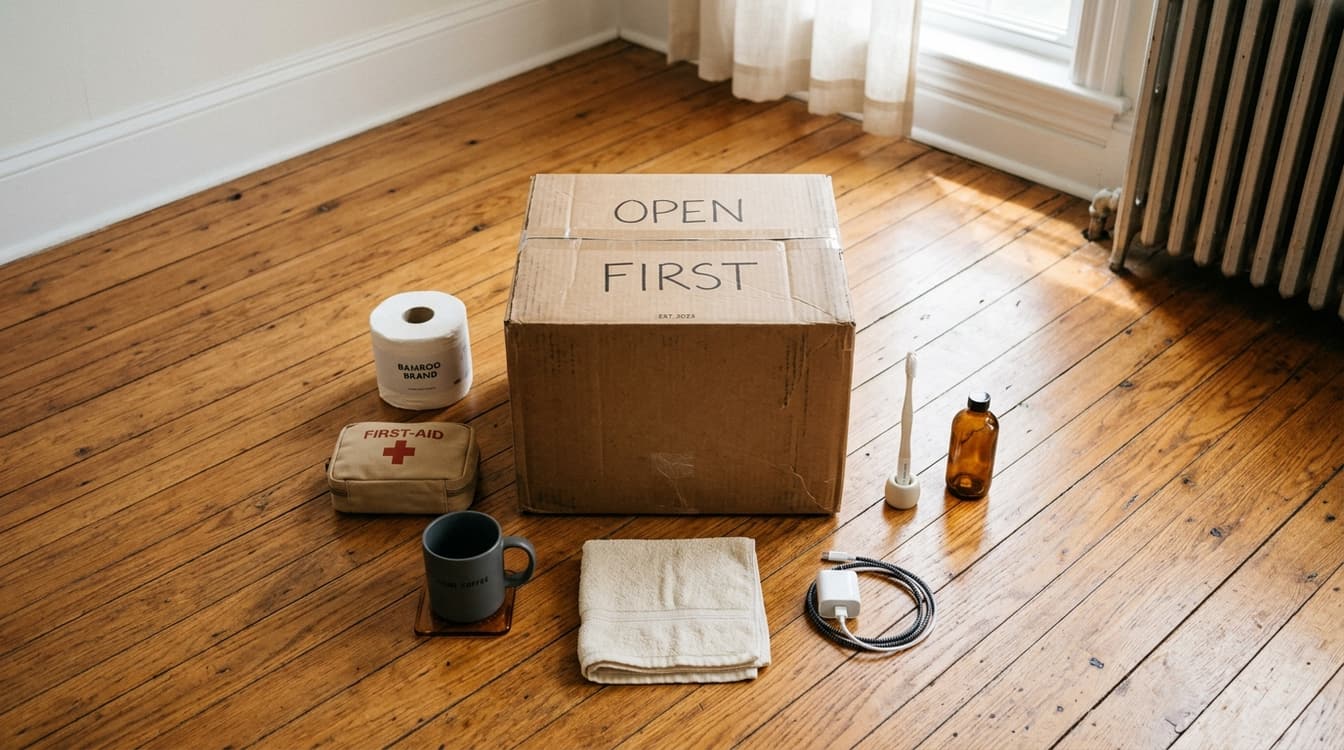
Your moving-day box — sometimes called the "open-first box" or "essentials box" — should hold everything you need for the next 12 to 24 hours without touching a single other box: toiletries, phone chargers, a change of clothes, bedding basics, snacks, and a few key documents. Pack it last so it rides in your car (not the truck), and open it first the moment you walk through the door.
That's the short answer. The longer one is about which specific items belong inside — and which common additions will just take up space you'll regret.
Why the open-first box matters more than most people expect
Moving trucks frequently arrive hours before or after you do, and even when timing is perfect, unloading and placing furniture takes time. If your toilet paper, phone charger, or prescription medication is packed somewhere in box 47, your first night in a new home becomes a frustrating scavenger hunt through stacked boxes in an unfamiliar space.
Our team has 35+ years of hands-on service-provider experience, including an operator who ran a moving company for 18 years. One of the most consistent pieces of feedback from people who've moved multiple times: the open-first box is the single prep step they wish they'd done sooner.
The rule is simple: if you'd reach for it within your first 24 hours at home, it goes in this box.
What to pack in your moving-day box: room by room
Bathroom essentials (pack these first — they're most urgent)
- Toilet paper (more than you think — at least one full roll per person)
- Hand soap or a small bottle of liquid soap
- Toothbrush, toothpaste, floss
- Travel-size shampoo and conditioner, or a small bottle of your regular brand
- Deodorant
- Any prescription medications or daily supplements — these should never go on the truck
- Contact lens solution and case, if applicable
- A bath towel and washcloth for each person
Bedroom and sleep
- Fitted sheet and flat sheet (or a sleeping bag if you prefer)
- One pillow per person with pillowcase
- Pajamas or comfortable clothes to sleep in
- A small nightlight or headlamp — overhead light switches in a new place aren't always where you expect them
For more on how to pack your bedding so it doesn't take up half a box, see Packing Bedding, Pillows, and Blankets for a Move: The Method That Works.
Clothing
- One full change of clothes per person for the next day
- Comfortable moving-day outfit if you haven't already changed
- Underwear and socks for two days (pack extra — you'll thank yourself)
Kitchen and food
- Coffee maker or electric kettle (whichever you can't function without), plus coffee/tea and a mug
- Paper plates, plastic cups, and disposable utensils — your kitchenware is boxed
- A small cutting board and one sharp knife if you plan to cook anything that first night
- Snacks for the move: granola bars, nuts, crackers, fruit that travels well
- Water bottles, filled before you leave the old place
- A can or two of easy food (soup, beans) with a manual can opener
- Paper towels and a small bottle of all-purpose cleaner — the new place may need a quick wipe-down before you unpack
Technology and documents
- Phone chargers and a portable power bank
- Laptop charger if you're working the next day
- A short extension cord or power strip — outlet locations in a new place are rarely where you need them
- Your moving binder or folder: lease or closing documents, the bill of lading from your mover, insurance cards, IDs, passports. If you haven't assembled one yet, Building a Moving Binder walks through exactly what to include.
- Cash for tipping movers, ordering delivery, or any immediate needs
Kids and pets
- Each child's favorite comfort item (stuffed animal, blanket, one small toy)
- Diapers, wipes, and formula if applicable
- Pet food and a food bowl for the first day, plus leash and any medication
- A treat or two for the pet — moving day is stressful for animals, too
First aid and safety
- A basic first aid kit: bandages, pain reliever, antacids
- Hand sanitizer
- Scissors or a box cutter (for opening other boxes — but keep it in this one so you can find it)
- A flashlight or headlamp with fresh batteries
How big should the open-first box be?
One medium-sized moving box (roughly 18" × 18" × 16") is usually enough for a single person. Couples or families of three or four typically fill one large box or two medium ones. Resist the urge to make it bigger — the whole point is that it stays manageable and travels in your vehicle, not on the truck.
Label the box clearly on all four sides and the top: "OPEN FIRST — DO NOT LOAD ON TRUCK." Use a different color marker or brightly colored tape so it stands out from every other box. Consistent box labeling across all your boxes also makes the first week of unpacking dramatically faster.
While you’re reading
Skip the research — let Robert match you with movers.
Free quotes from movers in your area. Pick whichever is easiest.
What to leave out of the open-first box
A few things people commonly throw in that don't actually belong:
| Item | Why to leave it out |
|---|---|
| Full-size toiletry bottles | Heavy and bulky; use travel sizes or decant into small bottles |
| Books or entertainment | You'll be too tired; your phone is enough |
| Decorative items | Nothing you need to function; unpack later |
| Cleaning supplies (more than one bottle) | One all-purpose spray is enough for night one |
| Bulky winter coats | Hang them in the car instead |
| Children's full toy collection | One comfort item per child; more creates clutter |
When the truck arrives: the box hierarchy
Your open-first box should come off the moving vehicle last (since it was likely loaded last) — or better yet, stay in your car entirely and never touch the truck. When movers unload, direct them to place furniture and large boxes in their destination rooms first. That way your living space takes shape before you start sorting smaller items.
Curious about the order movers work in? What Do Movers Load First? How a Moving Truck Gets Packed Piece by Piece explains the logic behind truck-loading order and how knowing it helps you stay out of the way at the right times.
Once you've made it through the first night, the next priority is usually the kitchen and bedrooms — in that order. For a full room-by-room unpacking sequence, How to Unpack After a Move: A Room-by-Room Guide to Settling In Fast gives you a practical framework.
A printable packing list at a glance
Bathroom: toilet paper, hand soap, toothbrush/paste, shampoo, deodorant, prescriptions, contacts, towels
Bedroom: sheets, pillow, pajamas, change of clothes, nightlight
Kitchen: coffee/kettle, mug, paper plates, utensils, snacks, water, one cleaning spray, paper towels
Tech/docs: phone charger, power bank, extension cord, moving documents, cash
Kids/pets: comfort item, diapers/formula, pet food/bowl/meds
Safety: first aid kit, scissors/box cutter, flashlight
Ready to find a mover who handles the logistics so you can focus on that first night?
Browse licensed movers near you at Majestic Moving Companies, or explore options by state if you're still deciding where you're headed. You can also read what other customers experienced before booking — mover reviews are a good starting point for narrowing your list (check the USDOT number of any carrier yourself on FMCSA's search tool before you commit).
If you'd prefer a hand walking through your options, reach out to Robert, our moving concierge.
Frequently asked questions
Does the open-first box go on the moving truck?
No — it should travel in your personal vehicle. Pack it last, label it clearly on all sides, and keep it with you. If it goes on the truck, there's no guarantee you'll be able to access it right when you arrive, and it may end up buried under heavier boxes.
How far in advance should I pack the open-first box?
Pack it the night before moving day, after everything else is boxed up. If you pack it too early, you'll raid it for things you're still using — toothbrush, charger, medication — and it won't be complete when you need it.
What's the most important thing to put in the open-first box?
Prescription medications, hands down. They should never go on the truck regardless, so the open-first box is the natural home for them. After that, toilet paper and phone chargers are what people most commonly wish they'd had immediately accessible.
Should each family member have their own open-first box?
For a couple, one medium-to-large box usually covers it. For families with young children, a second smaller box dedicated to kids' essentials (comfort items, diapers, snacks, a couple of small toys) makes moving-day logistics easier and keeps everything findable.
Can I use a suitcase instead of a box?
Absolutely — a rolling suitcase works even better for most people because it's easier to carry and you're already used to packing it. Some people use a suitcase for clothes and toiletries and a small tote bag for documents and tech. The container doesn't matter; what matters is that it stays with you, not on the truck.
What should I do with the open-first box after the first night?
Once you've unpacked the essentials into their permanent spots, break down the box and set it aside for reuse or recycling. If you're wondering what to do with all your moving boxes once you're settled, What to Do With All Those Moving Boxes After the Move covers your options — including selling, donating, and recycling.
Tagged