Bedding is one of the easiest categories to pack — and one of the easiest to pack badly. The best method: fold or roll each piece tightly, keep complete sets together in labeled large boxes or bags, and use pillows to cushion fragile items rather than wasting them in their own oversized boxes. Done right, your bed will be ready to sleep in within an hour of the truck leaving.
Why bedding packing actually matters
Bedding is bulky and light, which creates two problems on a moving truck. Loose or poorly packed bedding takes up disproportionate space, which can push up the cost of a weight-and-cubic-footage quote. And moisture trapped inside sealed plastic bags or compressed into tight corners can leave duvets and pillows smelling musty by arrival day. A little planning eliminates both issues.
What boxes and bags work best for bedding?
| Option | Best for | Rough cost (2026) | Watch out for |
|---|---|---|---|
| Large moving box (18×18×24 in) | Folded sheets, pillowcases, thin blankets | $2–$5 each | Don't overpack — 30–40 lbs max |
| Extra-large box (24×24×24 in) | Duvets, comforters, bulky quilts | $4–$7 each | Can get heavy if you add too much |
| Wardrobe box (with hanging bar) | Pillows stacked on the floor section | $10–$20 each | Overkill for sheets alone |
| Large zip-top plastic bag | Short-distance moves, protecting from dust | Free–$2 | Traps moisture on longer hauls |
| Space-saving vacuum bags | Compressing bulky duvets for truck space | $5–$15 per bag | Read the full cautions in our vacuum seal bag guide — down and wool can be damaged |
For most moves, two or three large boxes handle an entire bedroom's worth of bedding. If you're moving a studio, a single extra-large box typically does it.
How to pack bedding step by step
Step 1 — Wash everything first
Pack only clean bedding. Dirt and oils set in during transit, and there is nothing worse than making a bed on night one in a new city only to realize the sheets smell stale. Wash, dry completely, and pack immediately — don't let freshly washed items sit out gathering dust.
Step 2 — Sort by bed, then by size
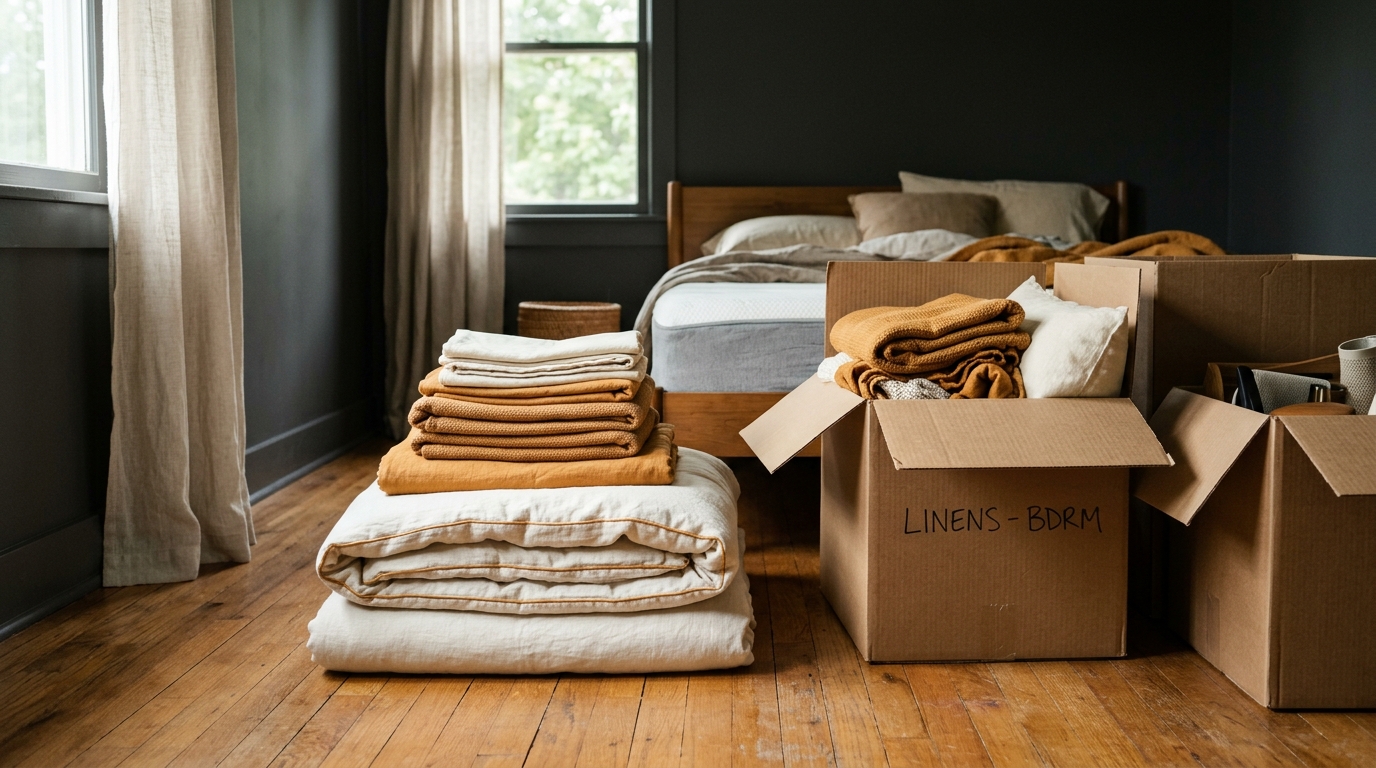
Keep queen sheets with queen sheets, king with king. The fastest way to unpack a bedroom is to pull out one labeled box and have everything for that bed inside it. Include fitted sheet, flat sheet, pillowcases, and any mattress protector all in the same box.
Step 3 — Fold sheets into their own pillowcase
The "burrito" method: fold your sheet set neatly, then stuff it into one of its matching pillowcases. You get one tidy bundle per set, nothing slips apart in the box, and unpacking takes thirty seconds. This is the single habit that makes the biggest difference on arrival day.
Step 4 — Roll blankets and quilts, don't fold flat
A tight roll compresses better than a flat fold and fits more efficiently into a rectangular box. Roll from one end, applying firm pressure, then stand the roll upright in the box or lay it across the bottom. A standard queen blanket rolled this way typically fits alongside a folded sheet set in one large box.
Step 5 — Handle duvets and comforters separately
Thick duvets need room to breathe. Don't compress a down comforter into a space that's too tight — the fill clusters and takes time to recover. Use an extra-large box rather than forcing it into a large one, and leave a little air space. If you're using a vacuum bag, check the care label first — down and certain synthetic fills can be permanently damaged by compression. The vacuum seal bag guide covers exactly which fills are safe to compress.
Step 6 — Use pillows as padding, not as passengers
Pillows are excellent free packing material. Place one at the bottom of a box of fragile items, or use two to sandwich a framed photo. For the pillows themselves: stuff them into large moving bags or the bottom section of a wardrobe box. A standard queen pillow fits neatly into an 18×18×24 box on its own or with a few folded pillow shams around it.
Step 7 — Label every box with the room AND the bed size
"Master Bedroom — Queen Set" tells whoever is unloading exactly where this box goes and which bed it belongs to. If you want to get more specific, the moving box labeling system used by experienced movers goes room by room and saves significant time. Don't just write "bedding" — that label tells you nothing useful at 10 p.m. on moving day.
Should you pack bedding in garbage bags?
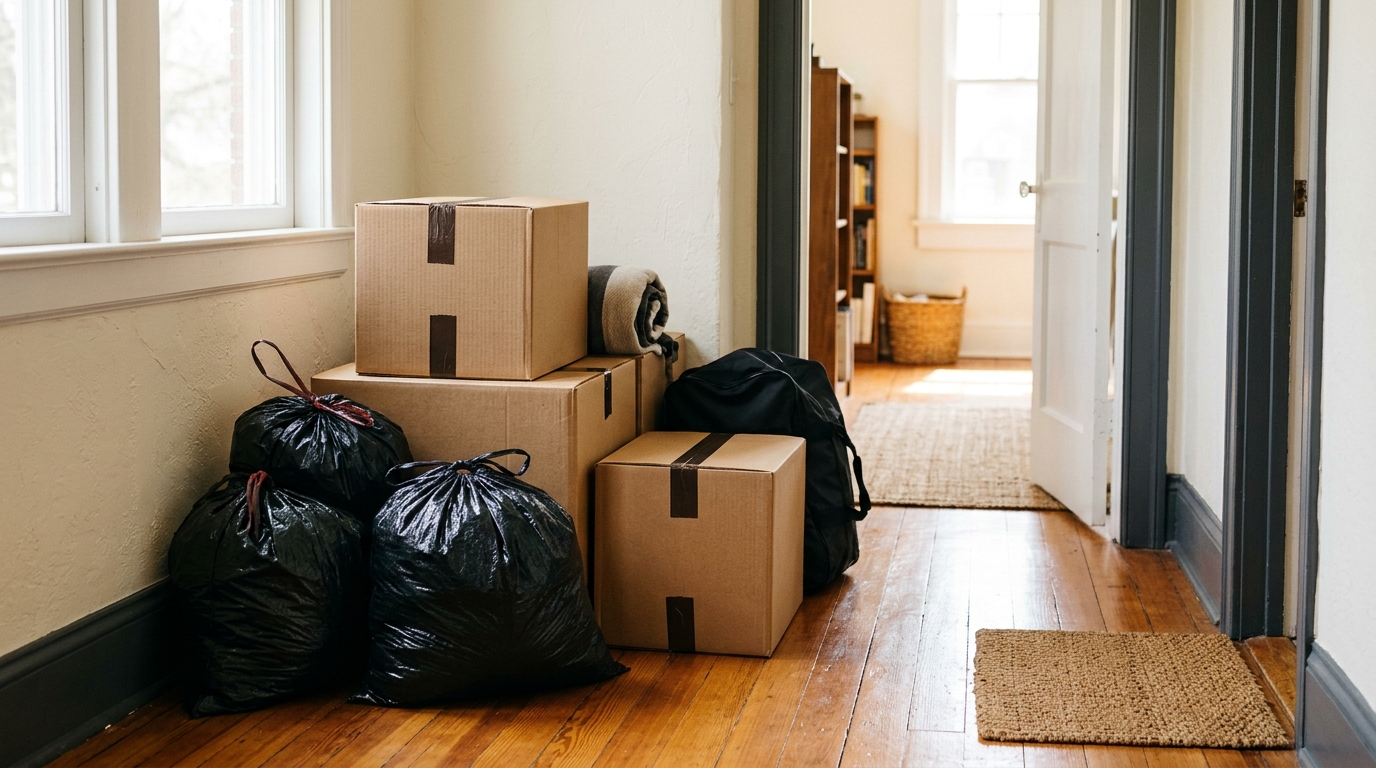
For very short, same-day local moves, clean garbage bags work fine as a fast, free option. For anything longer — especially if the truck will be in transit overnight or for multiple days — don't use garbage bags. They trap moisture, tear easily when loaded, and offer zero protection against dirt. Use proper boxes for any move where bedding will be loaded, transported, and unloaded across different days.
While you’re reading
Skip the research — let Robert match you with movers.
Free quotes from movers in your area. Pick whichever is easiest.
What about mattress protectors and toppers?
- Mattress protectors (thin, stretchy covers): fold like a fitted sheet and pack with the sheet set they belong to.
- Foam mattress toppers: roll tightly, secure with packing tape or plastic stretch wrap, and carry separately or lay flat on top of a box stack. Do not fold foam toppers — they crease and may not fully recover.
- The mattress itself: movers typically use a mattress bag (a large plastic sleeve, often available from your mover or a moving supply store for $5–$15) to keep it clean in the truck. If your mover will be disassembling and reassembling your bed frame, confirm whether mattress bags are included or whether you need to supply your own.
The "open first" box: your night-one kit
Pack one dedicated box or bag labeled "OPEN FIRST — BEDROOM" containing:
- One complete sheet set for each bed you'll sleep in on night one
- Two pillows per person
- One lightweight blanket
- Any nighttime medications or routines items
Movers typically unload larger items — furniture, appliances — before boxes, so this box should ride in your personal vehicle if possible, or be placed last on the truck so it comes off first. If you're curious about how loading order works, our guide to how movers pack a truck explains the sequence in detail.
Common bedding packing mistakes to avoid
- Mixing dirty and clean items — everything smells at the other end
- Overpacking large boxes — a box of bedding can still hit 50+ lbs if you're not careful; keep it under 40 lbs
- Packing bedding with shoes or hardware — keep all soft goods in their own boxes
- Forgetting mattress bags — the truck bed and floor can leave marks or moisture on an unprotected mattress
- Labeling boxes only on top — boxes stack in the truck; label the sides too so you can find them without moving everything
Frequently asked questions
How many boxes do I need for a bedroom's worth of bedding?
For a single bedroom, typically one large box handles sheets, pillowcases, and lighter blankets, and one extra-large box handles duvets or comforters. A master bedroom with multiple sets of bedding and decorative pillows might need three boxes. Pillows themselves often fit into a wardrobe box base or a third large box.
Can I leave sheets and blankets inside dresser drawers during the move?
Lightweight items like folded sheets and thin blankets are often fine to leave in dresser drawers for a local move — but only if your mover confirms it. Many movers prefer drawers emptied to reduce weight and prevent the drawer from shifting or the dresser from tipping. Check with your mover before loading day, and see whether you need to empty dresser drawers for the full rundown.
Is it safe to use vacuum bags for a down comforter?
It depends on the fill. Down and down-alternative fills can lose loft if compressed for more than a few hours. If your move is same-day or overnight, a vacuum bag is usually fine. For a long-distance move where bedding may be in transit for several days, use a large box instead and let the comforter sit with some air space around it.
Should I pack bedding last or first?
Pack bedding toward the end of your packing process — after furniture decisions are made and you know what's going and what's staying. But set aside your "open first" night-one kit before anything else so it doesn't get buried.
What if my mover is doing the packing for me?
If you've hired a full-service mover to pack your home, they'll handle bedding — typically bagging or boxing it the day before or morning of the move. You can still set aside your night-one kit in a bag you keep with you. Not sure what packing service actually covers? Find out what movers charge to pack for you before you book.
Does how I pack bedding affect my moving cost?
On weight-based quotes (common for long-distance moves), bedding packed in vacuum bags can reduce the overall cubic volume, but the weight barely changes since bedding is so light. The bigger impact is on truck space — loose, unpacked bedding can take up two to three times the space of properly boxed bedding, which occasionally affects cubic-footage-based pricing. Browse movers by state to compare quotes from carriers who price by weight vs. volume in your area.
Ready to find a mover who handles your bedding — and everything else — with care? Find licensed movers in your area through our directory, read mover reviews from other customers, and reach out to Robert, our moving concierge, if you'd like help narrowing down your options.
Tagged